Warp terminal open source move changes the game for developers

The world of coding just got a massive wake-up call. For a long time, the terminal was a stagnant piece of software. It was a black box with white text that had not changed much since the 1970s. Then came Warp. It was fast, it was sleek, and it was built with Rust. However, there was a big problem that kept many developers away. It was closed source. In a world where developers value transparency above almost everything else, being a closed source terminal was a bold and controversial choice. That era is now over. The official Warp terminal open source move has finally happened, and it is sending shockwaves through the tech community.
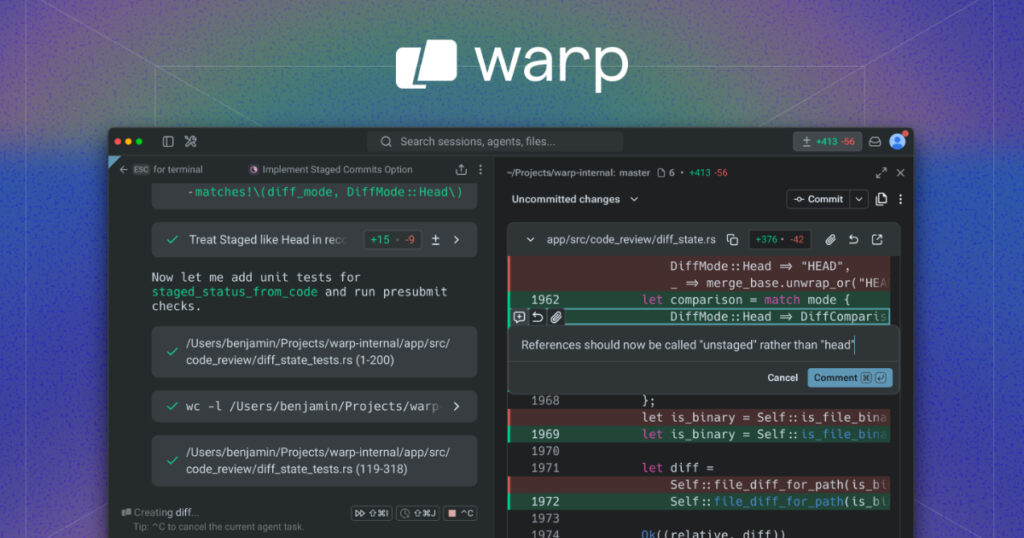
Warp has decided to open the “Warp Core,” which is the foundational part of their application. This means the code that handles the rendering, the text input, and the core terminal logic is now available for anyone to see, audit, and contribute to on GitHub. This is not just a small update. The Warp terminal open source move represents a fundamental shift in how the company interacts with its users. For years, the Linux community in particular has been vocal about their distrust of a terminal that required a login and kept its code hidden. This move is a direct response to those concerns.
The reality behind the Warp terminal open source move
Why did this take so long? To understand the Warp terminal open source move, you have to understand the business of software. Warp is not just a hobby project. It is a venture backed company that has raised millions of dollars. Their goal was to build a terminal that works like a modern collaborative tool, similar to Google Docs or Figma. Because of this, they built features that rely on the cloud, like “Warp Drive,” which lets teams share commands.
The closed source nature was a way to protect their intellectual property while they built out these complex features. However, they quickly realized that developers are a unique audience. A developer’s terminal is their most personal tool. It is where they handle sensitive keys, private code, and internal server access. If you cannot see the code of the tool you are using for your most sensitive work, it is hard to trust it. The Warp terminal open source move is a massive olive branch to the community. By opening the core of the app, they are proving that they are not hiding anything malicious in the way the terminal handles your data.
Why the Warp terminal open source move matters for Linux fans
Linux users are notoriously protective of their ecosystems. The standard for Linux software is “open source by default.” When Warp first launched its Linux version, it was met with a mix of excitement and hostility. People loved the speed of the Rust based engine, but they hated the mandatory account registration and the closed code. Many users refused to even install it.
The Warp terminal open source move changes that dynamic completely. By making the code accessible, Warp is allowing Linux distributions to package the terminal in their official repositories. This makes it much easier for users to install and update the software. More importantly, it allows the community to strip out features they might not like or create forks that focus purely on local performance without the cloud features. This level of freedom is what the Linux community thrives on. The Warp terminal open source move is essentially the “entry permit” that Warp needed to be taken seriously in the Linux world.
Privacy concerns and the Warp terminal open source move
One of the biggest criticisms leveled against Warp was its use of telemetry and the requirement to log in. In the original version, you could not even use the terminal without an account. For a tool that is supposed to be a basic utility, this felt like massive overreach to many. People were worried that their keystrokes or command history were being sent to a private server.
With the Warp terminal open source move, these privacy concerns are being addressed head on. Developers can now go into the source code and see exactly what data is being sent and when. The company has also been working on a “guest mode” that allows people to use the terminal without an account, but the open source move is the ultimate form of transparency. If there is a piece of code that tracks something it should not, the community will find it within hours. This forced honesty is a huge win for the end user. The Warp terminal open source move ensures that the company stays true to its word regarding user privacy.
Technical details of the Warp terminal open source move
Technically, the Warp terminal open source move involves the transition of the UI framework and the terminal engine. Warp is built using a custom UI framework that they also wrote in Rust. This framework is designed to use the GPU for rendering, which is why the terminal feels so much smoother than traditional emulators like iTerm2 or the default GNOME terminal.
By opening this code, Warp is also contributing back to the Rust ecosystem. Other developers can now look at how Warp handles complex text rendering and GPU acceleration to improve their own projects. This collaborative spirit is exactly what open source is about. The Warp terminal open source move is not just about one app; it is about raising the bar for all terminal software. We might see new terminals emerge that are built on top of the Warp Core, leading to a new era of high performance developer tools.
What is next after the Warp terminal open source move
While the core is now open, it is important to note that not every single part of Warp is public. The server side code that handles the collaborative features and the AI integration remains proprietary. This is a common model known as “open core.” It allows the company to have a sustainable business model while still giving the community the transparency they need for the local application.
The Warp terminal open source move is a signal that the company is maturing. They are no longer a “move fast and break things” startup. They are becoming a foundational part of the developer workflow. They are inviting the world to help them squash bugs, improve performance, and add new features. This will likely lead to a much faster development cycle as the community begins to submit pull requests and suggestions.