
Crimson Desert Review: A Stunning World, Combat That Rips, and the Flaws You Need to Know

Crimson Desert is Pearl Abyss’s most ambitious game after seven years of development. Critics gave it scores ranging from 10/10 to 6/10 in the same week. The world of Pywel is genuinely spectacular. The combat is expressive and satisfying. The story is underdeveloped and the controls take hours to become comfortable. Here is everything you need to know.
Seven Years in the Making: How Crimson Desert Became What It Is
Pearl Abyss first announced Crimson Desert in 2019, and what they showed that year looked very different from the game that shipped today. The original vision was a prequel to Black Desert Online, the South Korean studio’s flagship MMORPG. It was going to tell the story of the world of Pywel before the events of Black Desert, using similar mechanics in a connected universe.
Over the following years, the project changed significantly. Pearl Abyss gradually pivoted Crimson Desert away from the MMO prequel concept and toward a standalone single-player action RPG. The game became its own world, its own story, and its own design language, although the influence of the studio’s MMO roots remained visible in the sprawling world and the volume of side systems.
Crimson Desert was first scheduled to release in 2024. Pearl Abyss delayed it to ‘Late 2025’ and announced that new window at The Game Awards in December 2024. A second delay pushed it again, revealed during a quarterly earnings call, with a March 2026 date set at the PlayStation State of Play in September 2025. The game officially went gold in early 2026, confirming development was complete.
The extended timeline explains a lot about Crimson Desert’s character. Seven years of development produced a game of enormous scale and obvious technical ambition, but also one where the accumulated features and systems sometimes feel like they belong to different games. The scope is one of its greatest strengths and, according to several critics, also part of its problem.
What Is Crimson Desert? The Setup, the World, and Who You Play
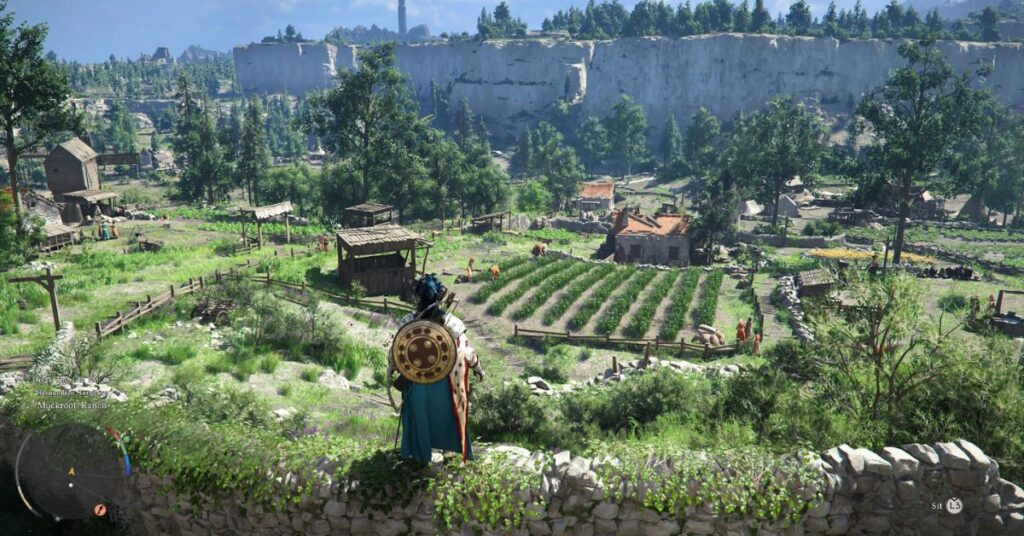
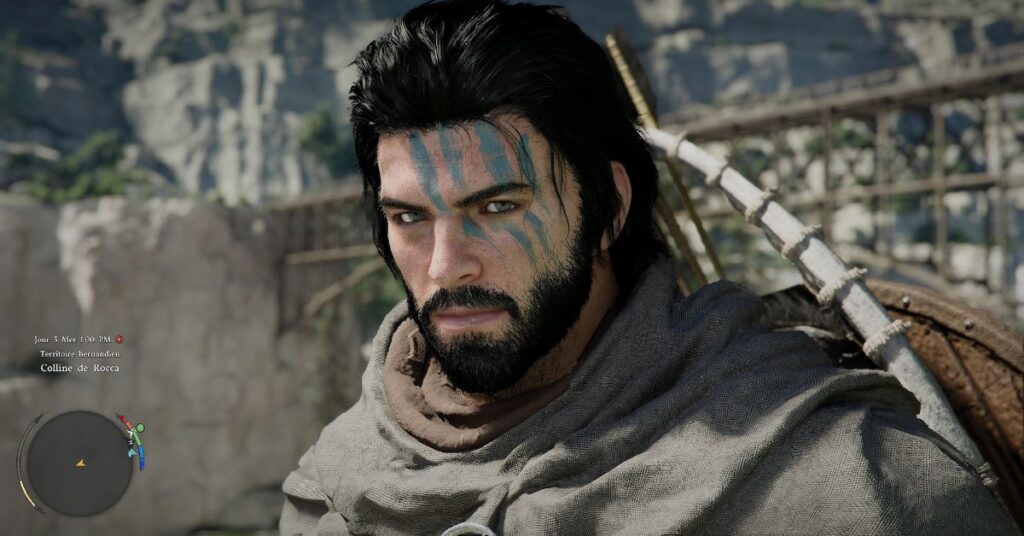
Crimson Desert is an open-world action RPG set on the continent of Pywel, a medieval fantasy world shaped by war, rival factions, mythical creatures, and mysterious arcane forces. You play as Kliff, a gruff Scottish mercenary and leader of the Greymanes, a band of sellswords trying to survive and prosper in a land where allegiances shift constantly.
The game opens with an ambush. The Greymanes are attacked by a rival outfit called the Black Bears and left for dead. Kliff survives a wound that should have killed him and finds himself pulled into the Abyss, a mysterious pocket dimension that grants him supernatural powers and a connection to forces larger than any one faction’s squabble. From there, the story follows Kliff as he rebuilds the Greymanes, navigates Pywel’s political conflicts, and unravels the mystery tied to the king’s unexplained coma.
The game runs on Pearl Abyss’s proprietary BlackSpace Engine, the same technology that powers Black Desert Online. It produces some of the most visually detailed environments in any game released in 2026, including forests thick with foliage and wildlife, red-hued desert plateaus, snow-capped mountain ranges, and underground caverns filled with bioluminescent creatures.
Kliff is voiced by Alec Newman, known to many players as Adam Smasher in Cyberpunk 2077. The voice performance is generally praised in reviews, with CGMagazine calling it excellent. The gruff Scottish delivery fits the character’s mercenary background and gives him a distinct personality even when the written story around him falls short.
The Metacritic 78 Score: What Critics Actually Argued About
Crimson Desert sits at 78 on Metacritic based on 82 critic reviews at launch, and 79 on OpenCritic. That score is lower than many players expected. Pre-release polls suggested most people anticipated something closer to 85. The score deserves some explanation because the reviews underneath it are unusually divided.
What the high scores are responding to
The reviewers who gave Crimson Desert 9 or 9.5 out of 10 focused on three things: the world, the combat, and the sheer scale of what Pearl Abyss built. Forbes’ Paul Tassi played over 100 hours and wrote that the question of whether Crimson Desert could really be that big and really play that well had an unequivocal yes as his answer. One Metacritic contributor who logged over 110 hours described 120 to 140 hours just for the main story and up to 400 hours for a completionist run, calling it a game that defies repetition.
GameSpot called the combat immediately satisfying, describing how Kliff chains combos that end with enemies skewered on his blade. PC Gamer simply wrote that the combat absolutely rips. The consensus among positive reviewers is that if you can get comfortable with the controls and buy into the world, Crimson Desert rewards that investment generously.
What the low scores are responding to
Critics who gave the game 6 or 7 out of 10 focused on four problems. The story and characters are the most-cited weakness. Polygon’s review-in-progress after ten hours reported that the massive open world had not shown a single interesting thing, a reaction tied to how the narrative parcels out information. GameSpot describes a story that ‘doesn’t show or tell,’ putting lore into menu blurbs rather than weaving it into the experience organically.
Controls are the second major criticism. Multiple reviewers, including NotebookCheck, note that the control layout is complex and takes many hours to feel comfortable. Remapping helps but does not fully solve the problem. IGN flagged a game-breaking progression bug that forced the reviewer to copy a save file from a colleague to continue. Additional bugs including companion pathfinding problems and hard crashes were reported at launch.
The third issue is quest design. Several critics describe side quests that feel like MMO-style checklists. This is unsurprising given Pearl Abyss’s background in Black Desert Online, but it stands out in a single-player RPG where quest quality shapes the narrative experience. Finally, inventory management and the healing system frustrate multiple reviewers as unnecessarily complex and punishing.
The score split matters for buyers. If you value combat depth, world exploration, and scale above narrative and ease of controls, Crimson Desert will likely land closer to the 9/10 reviews for you. If story and polished controls are your priorities, the 6 and 7 out of 10 reviews probably reflect your experience. Both camps are correct about what they experienced.
The Combat System: Why Critics Call It One of the Best Parts
Combat in Crimson Desert is built around a layered system of light attacks, heavy attacks, combos, and a stamina bar that governs how aggressively you can play. Light attacks are fast and low-cost. Heavy attacks deal more damage but consume stamina. Chaining them together in different sequences produces different combo animations, and discovering these chains is part of what makes the system feel expressive rather than mechanical.
The skill tree adds further depth. As you level up Kliff’s abilities, new combo options unlock. A specific button sequence lets you perform a quick forward stab to inflict bleed on an enemy. Another produces a sweeping arc that can send several enemies flying at once. One of the most praised combat discoveries in reviews is unarmed combat, with PC Gamer writing that being able to clothesline someone never got boring. Context-sensitive wrestling moves let you suplex enemies or perform surprise grapple attacks depending on positioning.
Horseback combat is fully functional and available throughout the game, not limited to specific sections. You can attack enemies from the saddle, which works well in open-field encounters against groups of weaker opponents.
Magic abilities add another layer. Force Push, described by reviews as Zelda-like, allows Kliff to manipulate objects in three dimensions and is used in both combat and environmental puzzles. The Force Palm ability is a charged palm strike that sends energy through multiple targets. Elemental effects can be applied to weapons for additional damage types.
The lock-on problem
Multiple reviews, including PC Gamer and NotebookCheck, flag the lock-on system as a recurring frustration. In fights against multiple enemies or large bosses, the lock-on does not always target the enemy you intended, and swapping targets can be disorienting. This issue is most noticeable in boss fights, particularly the 76 boss encounters across the game, which are a centerpiece of the experience. Pearl Abyss is aware of this feedback from the review period and has not yet addressed it at launch.
The World of Pywel: Why Critics Who Love It, Love It Deeply
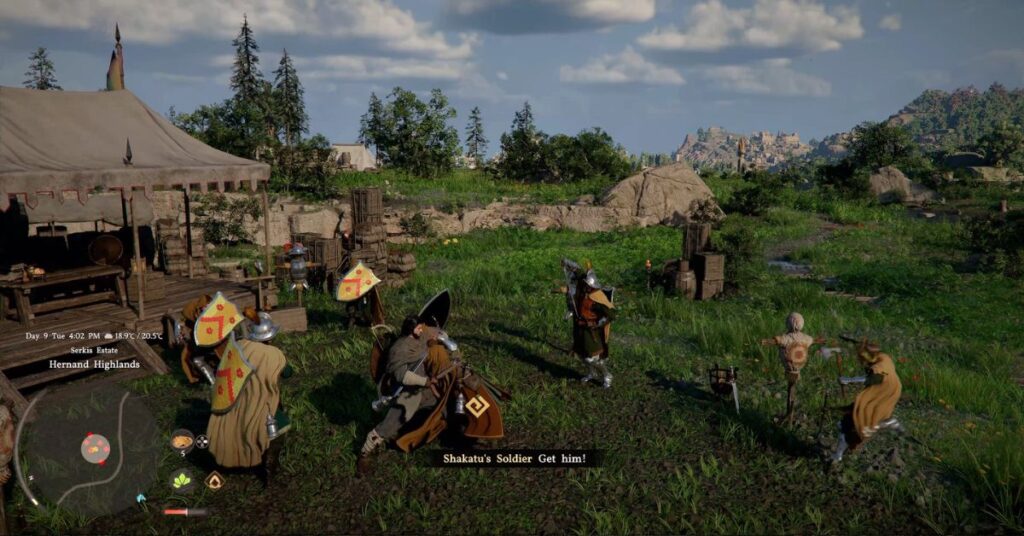
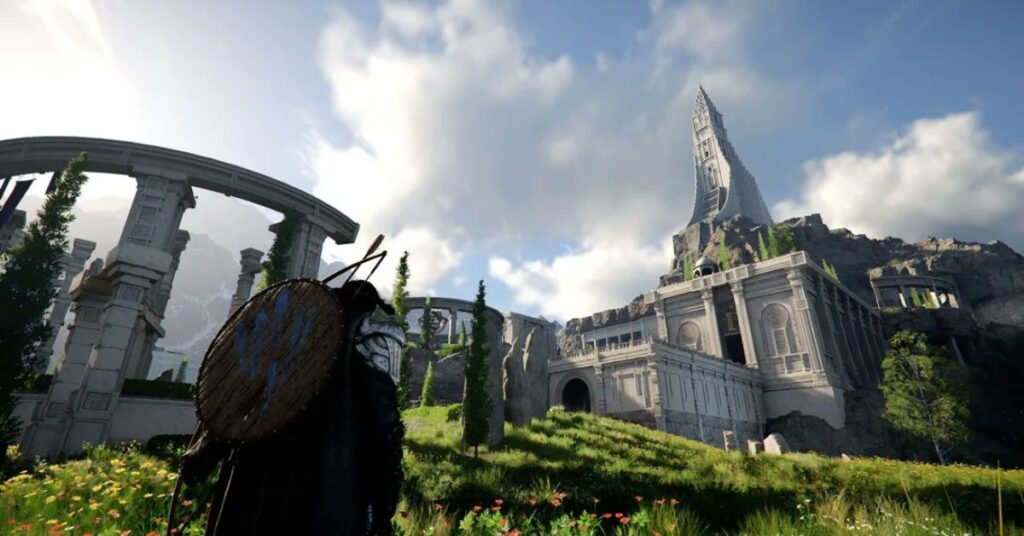
The continent of Pywel is the strongest argument for Crimson Desert. Every reviewer, including those who gave the game a 6, acknowledges that the world is visually and physically impressive in a way that few open worlds are.
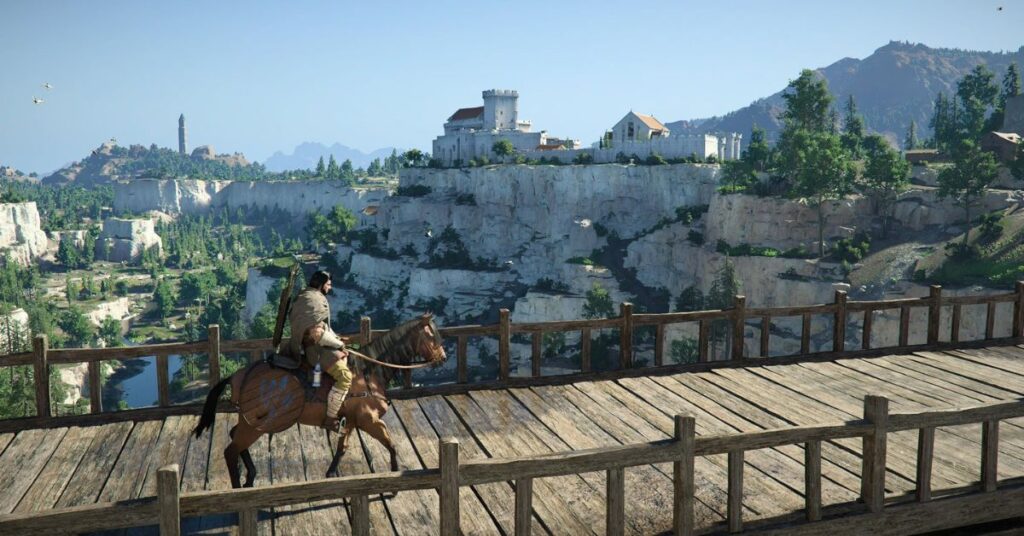
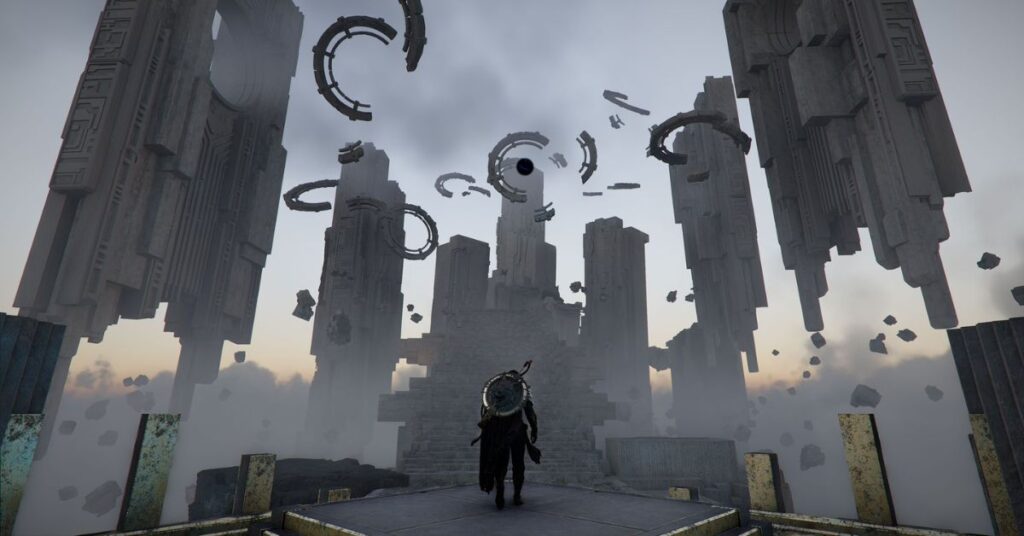
The biomes range from dense temperate forests with detailed canopy systems where individual trees fall in realistic physics-based ways when cut down, to vast red desert stretches that give the game its name, to snow-covered mountain ranges, underground cave networks, and what the Steam Deck HQ reviewer called ‘futuristic islands’ that hint at something beyond the medieval fantasy surface of Pywel.
The map is enormous. The Steam Deck HQ reviewer spent their first 30 hours on one large town and its surrounding areas, completing side quests and progressing through five story chapters, only to discover they had covered approximately 25 percent of the map. The sense of scale is reinforced by traversal mechanics that let you climb towers and see multiple biomes simultaneously from above.
The locations on the map are named with what GameSpot calls evocative names: Mistveil Forest, The Crimson Wall, Mountain of Frozen Souls, Rattlesnake Steppe. Even browsing the map before visiting these places creates a sense of anticipation. GameSpot describes this as ‘exactly the kind of open world’ that makes them explore for hours with no specific destination.
Activities and side systems
The volume of things to do outside the main story is exceptional. You can hunt bounty targets, gamble in parlour games, compete in arm wrestling, fight in hand-to-hand arenas, take archery duels, race horses (horse drifting became a viral clip before launch), trade goods based on market fluctuations, invest money in a bank to accrue interest, fish, cook, mine ore, chop trees, and manage the Greymanes camp as a base-building system that grows as you send members on missions.
The base building is more than decoration. Expanding the Greymanes camp raises the overall level of Kliff’s operation and feeds into the progression system. CGMagazine calls it a fun meta diversion to the main gameplay loop, while also noting that the management menus can feel messy.
The Story: An Honest Assessment Without Spoilers
The critical consensus on Crimson Desert’s story falls somewhere between disappointing and functional depending on how you weight narrative in your gaming experience. PC Gamer describes the narrative pacing as disorienting, likening it to being hit on the head every time a cutscene plays. GameSpot says the game ‘doesn’t show or tell,’ meaning important events and characters are referenced as though you should know them rather than introduced properly.
The voice acting, however, is widely praised. Kliff’s dialogue and performance are described as strong by multiple reviewers. The opening act, which establishes the Greymanes, the ambush, and the immediate aftermath, is called strong by CGMagazine. It is the later story beats, particularly as Pywel’s larger political and supernatural conflicts come into focus, where critics say the pacing becomes confusing.
A significant amount of lore and backstory lives in the Knowledge tab of the pause menu, where players can read blurbs about characters, factions, and locations. This approach suits players who enjoy reading lore in their own time but frustrates those who want narrative delivered through the game itself.
More optimistic reviewers argue that the story is not the point. The But Why Tho review describes Crimson Desert as being about immersion rather than plot, and notes that you could choose to ignore the main story entirely and spend hundreds of hours making your own path through Pywel. From this perspective, the weak narrative is less of a problem and more of a reason to focus on what the game does well.
How Big Is Crimson Desert? The Real Numbers from Critics
Scale is the word that appears in almost every Crimson Desert review, and it is worth quantifying with the actual numbers that reviewers have shared.
- Main story length: approximately 120 to 140 hours according to a Metacritic reviewer who played extensively before writing. This is a substantial main campaign by any measure.
- Completionist estimate: up to 400 hours according to the same source. This covers side quests, activities, exploration, and secondary systems.
- Map coverage: the Steam Deck HQ reviewer spent 30 hours covering approximately 25 percent of the map while doing side content and progressing through the first five story chapters.
- Boss encounters: 76 total bosses are confirmed in the game. Insider Gaming’s reviewer worked through 30 of them in 150 hours of play. Not all bosses are created equal, and reviewers note quality varies considerably.
- Reviewer hours at time of review: multiple critics reviewed the game in an ongoing state. Forbes logged over 100 hours. Steam Deck HQ logged over 70 hours. But Why Tho logged 150 hours. None had finished the main story at the time of their first publication.
The scale creates its own tension. Some reviewers describe the scope as the game’s greatest achievement. Others describe it as a source of the game’s unfocused feeling. The question is whether you want a game that gives you 400 hours of content or a game that is 40 hours long and perfectly crafted. Crimson Desert is the former.
No Microtransactions at Launch: Why This Is Significant for Pearl Abyss
Pearl Abyss confirmed before launch that Crimson Desert would have no microtransactions beyond the pre-order bonus. PC Gamer quoted the studio directly: ‘This is the premium experience, that is the transaction.’ For most developers, this would be a minor note. For Pearl Abyss, it is a meaningful statement.
Black Desert Online, the studio’s primary revenue source for over a decade, built a reputation for aggressive monetisation. The game includes outfit sales, pet systems, weight limits tied to currency purchases, and an extensive cash shop that some players describe as pay-to-progress and others describe as cosmetic. Reasonable people disagree about how intrusive the model is, but it has been central to how Pearl Abyss funds ongoing Black Desert Online development.
Crimson Desert’s $60 to $70 premium price with no microtransactions at launch represents a deliberate positioning choice. The studio clearly wants to be evaluated as a premium single-player game developer, not a live-service company.
The phrase ‘at launch’ carries some weight. Many games launch without microtransactions and introduce them later. Pearl Abyss has not made a permanent statement about the absence of post-launch monetisation. For buyers who are sensitive to this, it is worth monitoring the studio’s announcements after the initial launch period.
PC Requirements, Launch Bugs, and Whether to Buy Now or Wait
Crimson Desert requires approximately 150GB of storage space on PC. The minimum specifications target 1080p resolution at 60 frames per second and are described by GameSpot as not too demanding for that baseline. However, reaching 1440p or above requires significantly more powerful hardware, making mid-range PC owners the primary audience for the recommended specifications.
Launch bug reports
Several bugs were reported during the review period. The most serious was flagged by IGN: a game-breaking quest progression bug that prevented the reviewer from continuing and required copying a save file from a colleague. Pearl Abyss confirmed this bug was patched ahead of the public launch on March 19. Additional issues include companion character pathfinding (NPCs who follow you sometimes get stuck or navigate poorly) and multiple hard crashes that reviewers experienced on both PC and console.
The positive context here is that Pearl Abyss released multiple patches during the review period, which reviewers noted. The But Why Tho review described the studio as astoundingly dedicated to finding and fixing issues throughout the review window. For a game this large, some post-launch bugs are expected, but active developer engagement is a good sign for how quickly remaining issues will be addressed.
Should you buy now or wait?
The day-one argument: the main progression bug that affected IGN’s reviewer was patched before public launch. The game is complete and has received generally favorable reviews. If combat and world exploration are your priorities, there is no compelling reason to wait.
The wait argument: a game of this scale with a rushed final development period will almost certainly have additional bugs discovered in the first week of mass play. If you are sensitive to technical issues or if the story is a primary draw for you, waiting two to three weeks for post-launch patches is reasonable.
Who Is Crimson Desert For? A Buyer Guide by Player Type
Play it now if
- You love open-world exploration as the main activity. Pywel is described by multiple critics as one of the most believable and visually impressive open worlds in recent memory. If simply existing in a detailed world and discovering what is over the next hill is what you play games for, Crimson Desert is built for you.
- You want deep, demanding combat with a high skill ceiling. The combo system, the 76 boss fights, and the variety of fighting tools (weapons, unarmed, magic, horseback) reward players who invest time in learning the mechanics. Reviewers who put in 50 or more hours consistently describe the combat becoming more satisfying over time.
- You want a massive game with genuine replay value. 120 to 140 hours for the main story and up to 400 hours for completionists is a substantial offering at a premium price with no microtransactions.
- You enjoyed Black Desert Online but always wanted a version of it with a single-player campaign and a definitive narrative structure.
Wait for patches if
- You are on base PS5 or Xbox Series X and are concerned about performance. Review codes went out for PC only. The console experience was kept under wraps until just days before launch, which some community members flagged as a concern. Early console impressions from Digital Foundry were positive but full performance analysis is still emerging.
- You are sensitive to bugs and technical issues. The game shipped with known companion pathfinding problems and hard crashes. A few weeks of post-launch patches will likely resolve the most common issues.
Think carefully before buying if
- Story quality is your top priority in an RPG. The narrative is widely described as weak, confusing in its pacing, and reliant on menu-based lore delivery. If you are coming to Crimson Desert primarily for the story, critical reviews from Polygon, GameSpot, and PC Gamer suggest you may be disappointed.
- You find clunky or complex controls frustrating. The control scheme takes many hours to become comfortable with and the lock-on targeting has persistent issues. This is a genuine barrier, not a minor inconvenience.
- You prefer focused, shorter experiences over sprawling sandboxes. Crimson Desert’s 400-hour completionist scope comes with the unfocused, overstuffed feeling that some reviewers describe as the game’s main structural weakness.
In conclusion, Crimson Desert is a genuinely impressive open-world action RPG with combat that rewards mastery, a world that rewards exploration, and a scale that rewards patience. The Metacritic 78 is accurate in the sense that it reflects a game with real excellence and real weaknesses coexisting in the same experience.
If your tolerance for ambitious, slightly rough edges is high and you love getting lost in enormous worlds for hundreds of hours, Crimson Desert will likely be one of your favourite games of 2026. If story quality and polished controls are non-negotiable, the review consensus suggests tempering expectations significantly.






[…] Steam versions include support for modern controllers, which is a massive relief for anyone who has tried to map old DirectInput commands to an Xbox or […]