
READ THIS before you buy the Xiaomi Redmi Note 15 Pro+

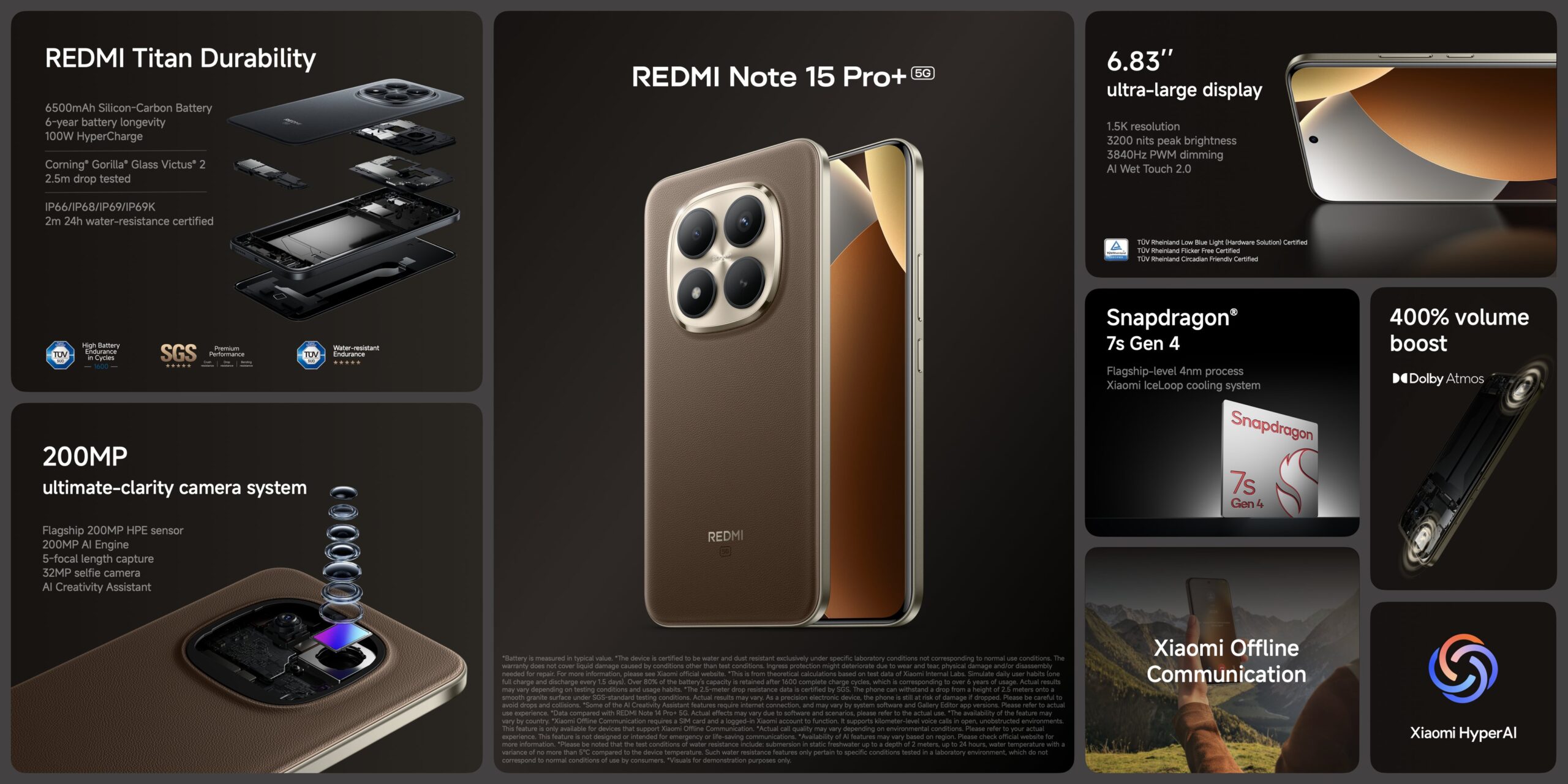
The Xiaomi Redmi Note 15 Pro+ costs around ₹52,500, which puts it in that awkward middle ground between proper mid-range and almost flagship territory. At first glance, the spec sheet looks rather impressive. There’s a 200MP camera, a 6500mAh battery, Corning Gorilla Glass Victus 2 protection on the front, Dolby Vision support, and a peak brightness of 3200 nits that Xiaomi wants you to get very excited about.
But here’s where things become interesting, and by interesting I mean the sort of interesting where you start asking questions that Xiaomi would rather you didn’t ask. The phone runs on a Snapdragon 7s Gen 4 processor paired with only 8GB of RAM and UFS 2.2 storage, which is the storage technology that was considered acceptable three years ago but has largely been replaced by UFS 3.1 or UFS 4.0 in phones costing significantly less.
This tells you something important about where Xiaomi decided to spend money and where they decided to save it, and whether those decisions actually make sense for the price they’re charging. Now, let’s go step by step and see wha exactly you can expect from the Xiaomi Redmi Note 15 Pro+ if you do indeed decide to buy it.
Let’s first talk about the performance
The Snapdragon 7s Gen 4 is Qualcomm’s toned-down version of the Snapdragon 7 Gen 4, and the “s” in the name stands for stripped-down, though Qualcomm would prefer you think of it as streamlined. The processor uses a 1+3+4 core configuration with one Cortex-A720 prime core running at 2.7 GHz, three Cortex-A720 performance cores at 2.4 GHz, and four Cortex-A520 efficiency cores at 1.8 GHz.
The Adreno 810 GPU handles graphics, and according to benchmark results, this combination achieves around 874,000 points on AnTuTu 10, which places it somewhere near the performance level of the old Snapdragon 888 from 2021.
Now, the Snapdragon 888 was a flagship processor in its day, so having that level of performance in a mid-range phone sounds reasonable until you remember that the Snapdragon 888 had serious overheating problems and thermal throttling issues that made it perform brilliantly for about five minutes before slowing down to protect itself from melting.
The Snapdragon 7s Gen 4 doesn’t have those same thermal problems because it runs at lower clock speeds, which means it performs consistently but never reaches the peak performance that the spec sheet might lead you to believe. For everyday tasks like browsing social media, watching videos, and running multiple apps, this processor handles everything smoothly without any noticeable lag.
For gaming, you can play most popular titles at medium to high settings, though demanding games like Genshin Impact will require you to lower the graphics settings if you want smooth frame rates, and you certainly won’t be running anything at maximum settings the way you could with the Snapdragon 8 Gen 5 in the iQOO Z11 Turbo that costs ₹21,000 less.
Storage and Multitasking
But here’s the real problem with this phone, and I mean the genuinely frustrating problem that makes you wonder what Xiaomi was thinking. The phone comes with only 8GB of RAM and uses UFS 2.2 storage.
UFS 2.2 has sequential read speeds of around 900 MB/s compared to UFS 3.1 which achieves 2100 MB/s, and UFS 4.0 which reaches 4200 MB/s. What this means in practice is that apps take longer to load, photos take longer to save, and the phone feels slower than it should given the processor inside. When you’re paying ₹52,500 for a phone, you have every right to expect UFS 3.1 at minimum, and preferably UFS 4.0 which has become standard in phones costing half as much.
The 8GB RAM limitation means the phone will struggle with heavy multitasking, and you’ll notice apps reloading more often when you switch between them because there simply isn’t enough memory to keep everything running in the background. Xiaomi offers only one configuration with 256GB storage and 8GB RAM, which gives you no option to upgrade even if you wanted to pay more for better specifications.
No microSD card slot means you’re stuck with 256GB, and while that’s adequate for most people, it’s frustrating to have no expansion options when phones used to routinely include microSD slots as standard equipment.
Battery Life
The battery situation is more straightforward and actually rather good. A 6500mAh battery in a phone this size means you’re getting two full days of moderate use or one very long day of heavy use. The 100W fast charging gets you from zero to full in under an hour, which makes the lack of wireless charging less annoying because wired charging is fast enough that you’re not standing around waiting.
Most people will charge this phone every other day rather than every day, which genuinely improves the ownership experience because you stop thinking about battery life and just use your phone the way you want to use it. The Silicon-Carbon battery technology helps keep the weight down to 207 grams, which is reasonable for a phone with a 6.83-inch display and this battery capacity.
Some phones with smaller batteries weigh more, so Xiaomi deserves credit for the engineering work that went into fitting a 6500mAh battery into a 7.9mm thick chassis.
Design, Display and Build quality
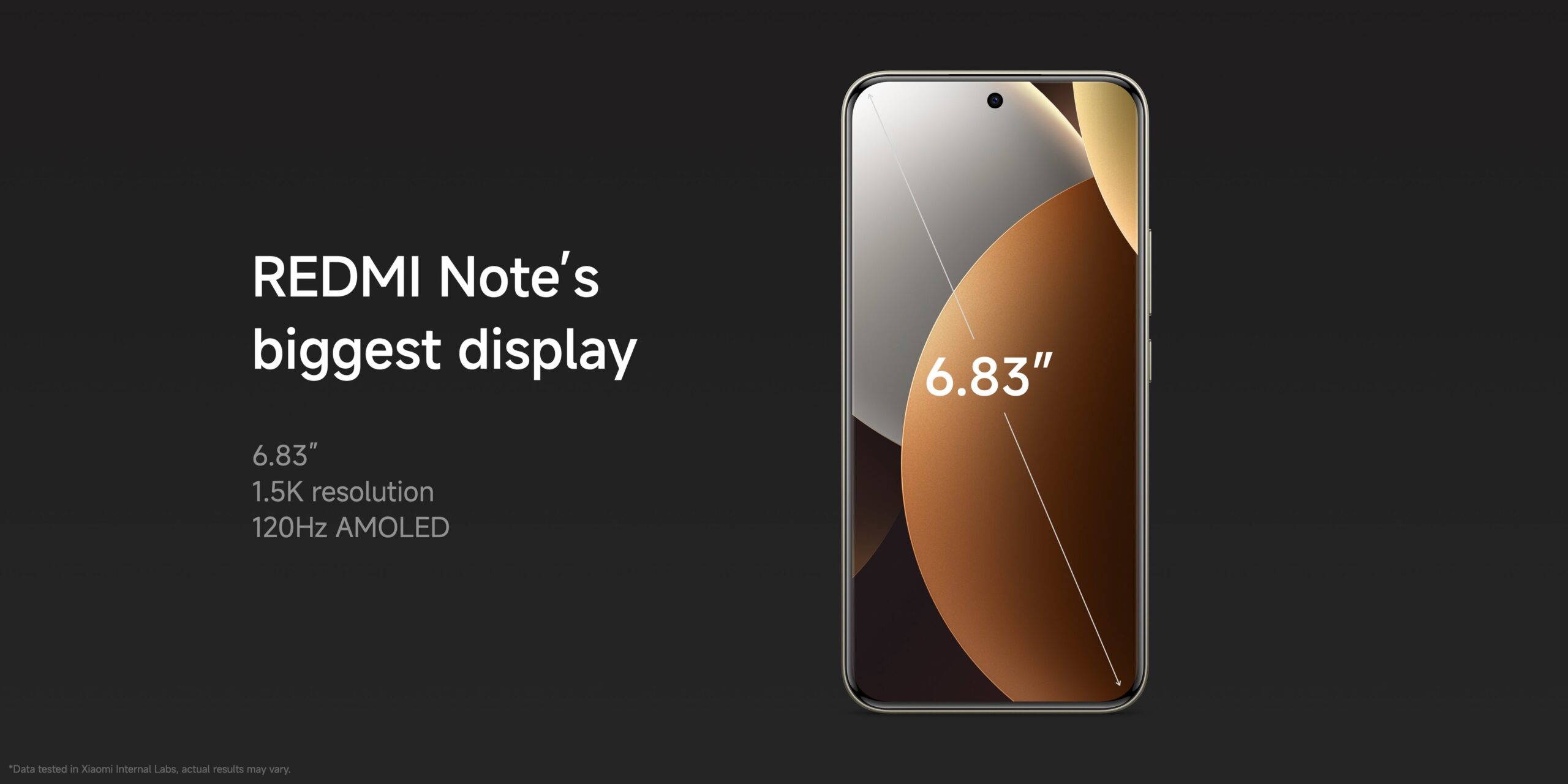
The display is a 6.83-inch AMOLED panel with 1280 x 2712 resolution, which works out to 439 pixels per inch. The 120Hz refresh rate is standard for this price range, and the display supports HDR10+ and Dolby Vision, which means Netflix and other streaming services will look properly vibrant with good contrast.
The 3840Hz PWM dimming helps reduce eye strain for people sensitive to screen flicker, and the peak brightness of 3200 nits sounds impressive until you realize that peak brightness only occurs in very specific conditions when displaying bright content in direct sunlight. Typical brightness levels are much lower, probably around 800 to 1000 nits in regular use, which is perfectly adequate but nothing special.
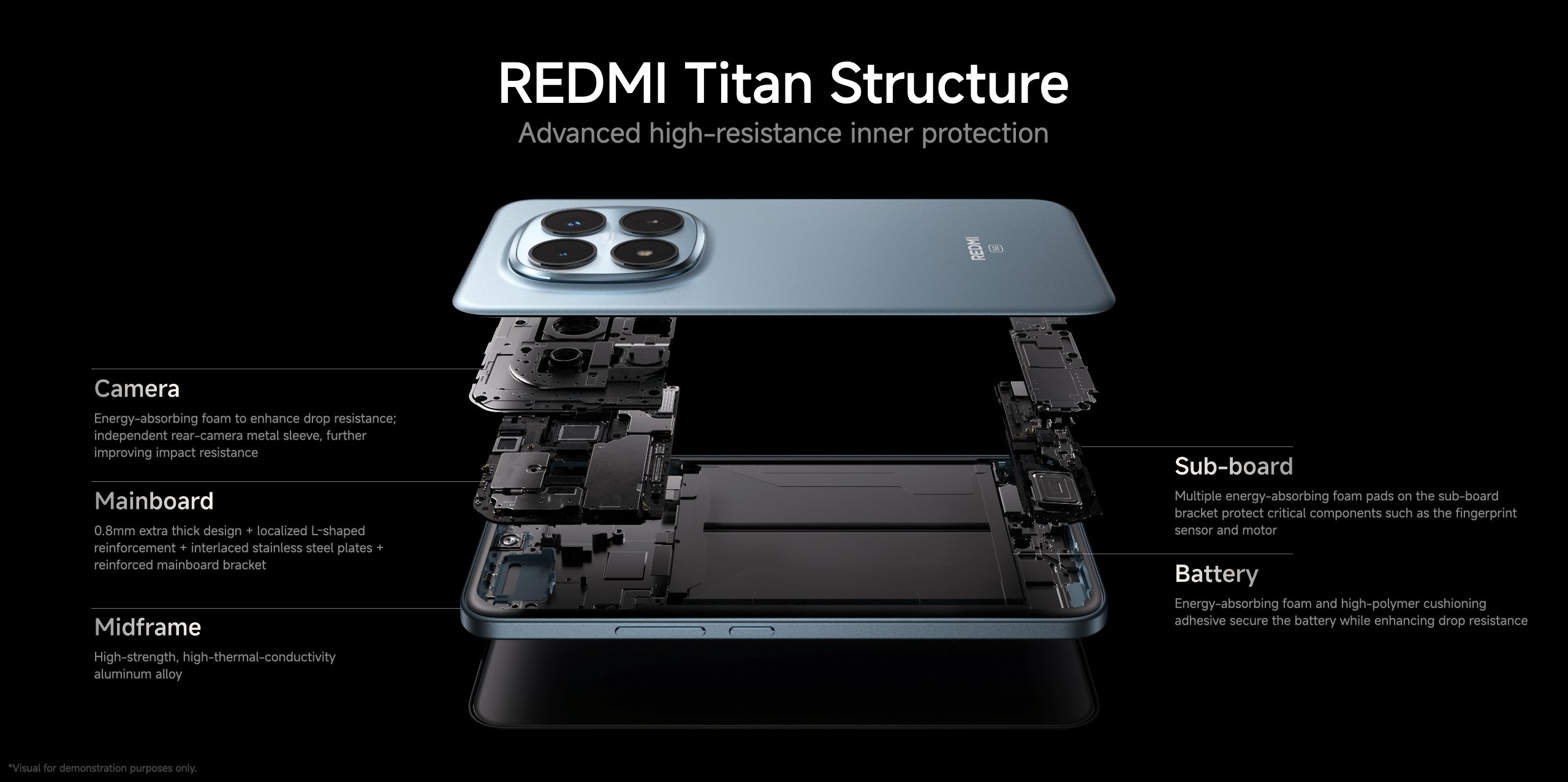
The Corning Gorilla Glass Victus 2 protection on the front is genuinely good and represents proper flagship-level screen protection that should resist scratches and survive drops better than cheaper glass. The back uses either Gorilla Glass 7i or a silicone polymer eco-leather finish depending on which color you choose, and the aluminum frame feels solid rather than cheap.
The IP68/IP69K rating means dust-tight protection and water resistance up to 1.5 meters for thirty minutes, plus the ability to withstand high-pressure water jets, which matches the protection you get on much more expensive phones.
Now, let’s talk about the Camera package
Now we arrive at the camera, which Xiaomi wants you to believe is the main reason to buy this phone. There’s a 200MP main sensor with f/1.7 aperture, 1/1.4 inch sensor size, multi-directional PDAF, and optical image stabilization. The sensor size of 1/1.4 inch is genuinely large, larger than what you find in most mid-range phones, and the f/1.7 aperture should let in plenty of light.
In good lighting conditions, this camera produces detailed photos with good color accuracy and dynamic range. The 200MP resolution bins down to 50MP or 12.5MP in most shooting modes, which is how these high-megapixel cameras actually work. You’re not getting 200 million individual pixels of information in every photo, you’re getting a binned image that combines multiple pixels together to reduce noise and improve low-light performance.

The optical image stabilization helps with both photos and video by compensating for hand shake, and the camera can record 4K video at 24fps or 30fps, plus 1080p at up to 120fps for slow-motion. The combination of gyro-EIS and OIS provides solid stabilization that makes handheld video look smooth and professional. The 32MP selfie camera is adequate for video calls and social media, though Xiaomi has oddly limited it to 1080p video rather than 4K, which seems like an unnecessary cost-cutting measure.
The problem with the camera system isn’t the hardware, which is actually quite good. The problem is the software processing, which Xiaomi has always struggled with compared to brands like Samsung and Google that have spent years developing sophisticated computational photography algorithms. Xiaomi’s image processing tends to oversaturate colors, oversharp details, and create an artificial look that some people like but doesn’t represent reality accurately.
Photos often look punchy and dramatic on the phone screen but fall apart when you view them on a larger display or try to edit them. Low-light photography is acceptable but not exceptional, with noticeable noise and loss of detail in shadow areas.
The camera works perfectly well for Instagram, Facebook, and sharing photos with friends, but if you’re serious about mobile photography and want the absolute best image quality possible, you’d be better served by phones like the Vivo X300 series or even the Samsung Galaxy S24 that have superior image processing despite sometimes having lower megapixel counts.
The specifications say “Triple” camera setup, but only the main sensor is properly detailed, which means the other sensors are probably a depth sensor and a macro camera that exist mainly to inflate the camera count rather than provide genuinely useful functionality.
The audio setup includes stereo speakers with Dolby Atmos support, which produces decent sound for watching videos without headphones. The speakers get reasonably loud without distorting, though they lack bass and sound a bit thin compared to flagship phones with larger speaker chambers.
Connectivity options
There’s no 3.5mm headphone jack, which continues to be the industry standard in 2026 regardless of how annoying some people find it. The phone does support 24-bit/192kHz Hi-Res audio over Bluetooth or USB-C, which means high-quality headphones will sound as good as they possibly can.
Wi-Fi 6e support is market-dependent, which means you might or might not get the faster Wi-Fi 6e depending on which specific model is sold in your region. Bluetooth 5.4 provides reliable wireless connectivity with good range, and the dual-band GPS with L1+L5 signals provides accurate navigation even in urban environments with tall buildings.
NFC is also market-dependent, which is frustrating because contactless payments have become standard functionality that should be included everywhere. The infrared port lets you control televisions and air conditioners without searching for the remote, which is genuinely useful even if it sounds like a minor feature.
Software and Operating System
The software is Android 15 with HyperOS 2, which is Xiaomi’s latest interface that combines elements of MIUI with new features and a somewhat cleaner design. Your opinion of HyperOS will depend entirely on whether you like extensive customization options or prefer simpler interfaces.
You get themes, icon packs, always-on display options, and numerous settings to adjust every aspect of how the phone looks and behaves. You also get pre-installed apps that Xiaomi includes either because they have deals with those companies or because they generate revenue through advertising. Most of these can be uninstalled or disabled, but you’ll need to spend time going through the phone when you first get it to remove the bloatware and configure the settings the way you want them.
The battery optimization is aggressive, which helps the already good battery life but will close background apps unless you specifically whitelist them. Xiaomi’s update track record has improved in recent years, and you can expect two to three major Android updates plus security patches for three to four years, though don’t expect updates to arrive quickly compared to Google or Samsung.
How it all adds up
When you step back and look at the Xiaomi Redmi Note 15 Pro+ as a complete package, what you’re getting is a phone that excels at the things that look good on a spec sheet and in marketing materials, but falls short in the areas that affect daily performance. The 200MP camera sounds impressive and produces good photos in many situations, but the image processing isn’t as refined as competitors.
The 6500mAh battery genuinely delivers excellent battery life that makes the phone pleasant to live with. The large AMOLED display with high brightness and good protection is excellent. But the Snapdragon 7s Gen 4 processor paired with only 8GB of RAM and UFS 2.2 storage creates a performance bottleneck that makes the phone feel slower than it should at this price point.
You’re paying ₹52,500 for a device that performs more like something that should cost ₹35,000 to ₹40,000, with the extra money going toward the camera hardware, display, and build quality rather than the processor and storage that affect how fast everything actually works.
The competition at this price includes phones like the iQOO Z11 Turbo that costs ₹31,500 and offers a much faster Snapdragon 8 Gen 5 processor with UFS 4.1 storage, though with a smaller display and less impressive camera hardware. Or you could look at slightly more expensive options that provide better balanced specifications without the obvious compromises.
The Redmi Note 15 Pro+ makes sense if you prioritize camera hardware, battery life, and display quality over raw processing performance. It makes sense if you’re not a heavy multitasker and don’t play demanding games. It makes sense if you want a large screen phone with excellent battery life that takes decent photos and looks good.
The phone does not make sense if you want the fastest performance possible at this price point, because you can get better processors and faster storage for less money. It doesn’t make sense if you’re a mobile photography enthusiast who wants the absolute best image quality, because the software processing holds back the otherwise capable camera hardware. And it doesn’t make sense if you expect flagship-level performance to match the flagship-level price that Xiaomi is charging.
TattwaTech Score
6.5 out of 10. The Xiaomi Redmi Note 15 Pro+ is a phone that looks better on paper than it performs in reality. The impressive specifications in some areas can’t hide the disappointing compromises in others, particularly the combination of a mid-range processor with outdated storage technology at a price that should deliver better.
Buy it if you value battery life, display size, and camera hardware over processing speed. Skip it if you want well-balanced performance or the best value for your money, because there are better options at both higher and lower prices that make more sense for most people.





[…] and a 165Hz refresh rate, which provides the ultra-smooth visuals necessary for professional-level mobile gaming. The design also takes a bold turn, featuring a circular camera module on the back with vibrant […]
[…] Red Magic 11 Air is built to handle the most demanding titles currently available on mobile platforms. To achieve this, it uses the Snapdragon 8 Elite processor, which is one of the most […]
[…] high-speed data for the entire 84-day period, which is intended for those who primarily use their phones for calling but occasionally need to check emails or use chat apps. Once this data limit is […]
[…] partner banks like SBI or ICICI. Furthermore, Amazon is offering enhanced exchange values for older smartphones. If you trade in a well-maintained previous model, the final amount you pay could drop even […]
[…] more attractive option as exchange bonuses are being topped up. This means if you trade in your old smartphone, OnePlus is giving an extra value bump on top of the phone’s actual worth, effectively […]
[…] focuses heavily on software optimization and user experience rather than just chasing the highest numbers on a spec sheet. After extensive testing over two weeks, it is clear that this phone is designed for those who […]
[…] models like the Xiaomi 15 series and the Xiaomi 14 series are expected to be among the first to receive the update. Following closely behind would be recent […]
[…] Xiaomi did not just stop at phones during the MWC event. They dropped a whole suite of products to fill out their “Human x Car x Home” ecosystem. One of the most interesting additions is the Xiaomi Tag. It is very similar to an AirTag and is designed to help you track your keys, bags, or anything else you might lose. […]