
Zelda Ocarina of Time PC port: how NX2navi works and the risks

A Zelda Ocarina of Time PC port has appeared only about a week after the remake launched on Nintendo’s new console. A developer called tangerineturtle1 released it on GitHub under the name NX2navi. It lets the game run as a normal Windows program, with no Switch 2 hardware involved.
That sounds exciting, and in many ways it is. It is also risky. Let’s look at what NX2navi does, why it works so well, and why Nintendo’s history makes this a story to follow carefully.
This post is based on reporting by TechPowerUp and the project’s GitHub page.
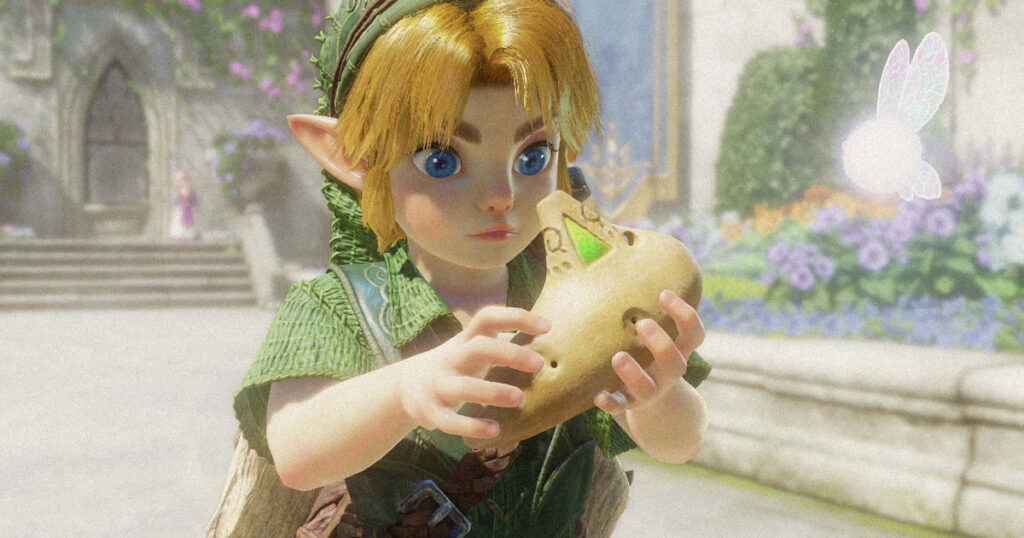
Zelda Ocarina of Time PC port in simple words
The short answer: NX2navi is a fan-made tool that turns the Ocarina of Time remake into native Windows code using static recompilation. It does not pretend to be a Switch 2. It does not include any game files, so you must supply your own dump of version 1.1.1.
Here are the key facts at a glance:
- Creator: tangerineturtle1 on GitHub
- Method: static recompilation, not emulation
- Graphics: a custom Vulkan renderer
- First launch: the launcher builds the game on your PC, which takes 10 to 25 minutes
- Status: early development, with known bugs
- Game files: not included, you need your own copy of version 1.1.1
How static recompilation works, with a simple example
Think of a cookbook written in a language you do not speak. You have two ways to cook from it.
Option one is to hire someone to stand beside you and translate every line out loud while you cook. It works, but it is slow, and the translator can get tired. This is how an emulator works. A Switch 2 emulator copies the console and translates the game’s instructions while you play, and that costs performance.
Option two is to translate the whole cookbook before you start. You do the work once, keep the translated book, and cook from it every time after that. This is static recompilation. The game’s instructions are converted into x86-64 code, which is the kind of code regular PCs understand, before you ever press play.
That is why the NX2navi launcher takes 10 to 25 minutes the first time. It is translating the cookbook. After that, the game starts like any other PC program.
A realistic example: one player’s weekend
Imagine a player called Arjun. He has a gaming PC with an RTX card, 16 GB of RAM and a 21:9 monitor. He bought the remake and loved it, but he wants the smoother frame rate and sharper picture that his PC can give.
He finds the Zelda Ocarina of Time PC port, reads the README and sees the first problem straight away. The tool needs a dump of his own game, version 1.1.1. Getting that file normally means jailbreaking a Switch 2, which is not something Nintendo allows and which may carry legal risk depending on where he lives.
Say he goes ahead anyway. He runs the launcher, waits about 20 minutes while it builds the game, and starts playing at a high frame rate. It looks great. Then, as the project warns, he hits a visual glitch, one crash, and a short stutter every time he enters a new area. That is normal for early software.
The tech is impressive and the result can be lovely, but the road to it is not simple or risk free. Many people reading about this port will find themselves in a similar spot.
System requirements for NX2navi
This is not a port for old laptops. According to the project, you need:
- 16 GB of RAM
- About 30 GB of free storage
- A GPU with Vulkan 1.3 and mesh shader support
- Your own dump of version 1.1.1
Memory use is one thing to watch. An earlier showcase on an RTX 5090 reportedly used 18.6 GB of VRAM. A newer showcase claims memory use has dropped a lot, but you should treat that as a claim until more people test it on different hardware.
Known issues you should expect
NX2navi is still labeled early development. The listed problems are:
- Visual bugs
- The occasional crash
- Brief stutters when entering new areas
None of these are surprising for a project this young. The Ocarina of Time remake is only about a week old on console, so the developer has had very little time. The speed of progress is impressive, but a first release is rarely a finished one.
Static recompilation vs a Switch 2 emulator
The Ocarina of Time remake was already running through a Switch 2 emulator on launch day, but it ran poorly. That is the usual story with emulators. They have to copy a whole console, so they need a lot of power and still struggle with new games.
Static recompilation does the translation once, ahead of time. The result is a regular PC program that is easier to optimize. The trade-off is effort, because each game needs a lot of work to convert. An emulator can run many games, while a recompiled port is built for one.
Fan-made PC ports are not new
Fan ports have been growing for years. RecompLauncher alone lists nearly 200 of them in one catalog. Zelda 64: Recompiled brought Majora’s Mask to PC in 2024, and Unleashed Recompiled did the same for the Xbox 360 version of Sonic Unleashed.
There is one big difference this time. Those projects revived games that were well over a decade old. The Ocarina of Time remake is a full-price release that is barely a week old. A game that new is still earning money for its publisher, and that changes how everyone involved will feel about it.
Why the legal risk is real
Nintendo has a long record of going after emulation and piracy:
- Yuzu’s developers agreed to pay $2.4 million and shut down in 2024.
- Ryujinx went offline months later after Nintendo contacted its lead developer.
- A court recently ordered a Reddit moderator to pay $4.5 million to Nintendo over Switch piracy.
Dumping a Switch 2 game generally means jailbreaking the console. Nothing stops someone from using a copy they never bought, so for many people this port will probably end up being plain piracy. The project’s own README tells users not to share their builds, which shows how aware the developer is of the danger.
This post is not legal advice. If you are unsure about the rules where you live, ask a qualified professional before you do anything with a console dump.
What this means for Zelda fans
If you only want to play the Ocarina of Time remake, the safest way is to play it on the console it was made for. NX2navi is more interesting as a technical story. It shows how quickly the community can build a native PC version of a brand new game.
It also raises a simple question that the games industry has not answered well. If players want 5K resolution, 240 FPS and ultrawide support, and publishers do not offer them, fans will keep trying to build them. Whether Nintendo reacts in court, in code or by releasing its own PC version, we will know more in the coming weeks.
Frequently asked questions
What is the Zelda Ocarina of Time PC port NX2navi?
It is a fan-made Windows port of the Ocarina of Time remake, created by a GitHub developer called tangerineturtle1. It uses static recompilation to convert the game into x86-64 code and draws it with a custom Vulkan renderer.
Is NX2navi an emulator?
No. An emulator mimics console hardware while you play. NX2navi translates the game once before you play, so it runs as a regular PC program.
Does NX2navi include the game?
No. You need your own dump of version 1.1.1. The launcher then builds the game locally, which takes 10 to 25 minutes the first time.
What PC do I need for NX2navi?
You need 16 GB of RAM, about 30 GB of storage and a GPU with Vulkan 1.3 and mesh shader support.
Does NX2navi support DLSS and FSR?
Yes. RTX owners get DLSS, while FSR 3.1 and its frame generation work on any GPU. HDR is also supported.
Is it legal to use NX2navi?
It depends on where you live and how you got your game file. Getting a dump usually means jailbreaking a Switch 2, and sharing builds is discouraged by the project itself. Nintendo has taken strong action against similar tools before.
The Zelda Ocarina of Time PC port shows what static recompilation can do. NX2navi gives a brand new game high resolution, high frame rates and ultrawide support in just over a week. It is still early, still buggy and still sitting in a risky legal area. Enjoy the technology as a story, and think carefully before you touch a project like this yourself.