
Universal Commerce Protocol makes AI shopping easier with Gemini Buy button

Google AI shopping is finally moving past the “look but don’t touch” phase. For years, we have used AI to find ideas, but we always had to leave the app to actually spend money. That is changing right now. Google just announced a massive shift that turns their Gemini AI into a legal proxy for your wallet. It is called the Universal Commerce Protocol (UCP), and it is the most honest attempt yet to stop you from ever visiting a retailer’s actual website again.
Your browser tabs could be saying goodbye soon
In the old world, shopping was a series of friction points. You would search on Google, click a link to a store, realize you forgot your password, find a different store, and eventually manually type in your credit card info. Google AI shopping wants to erase every single one of those steps.
By partnering with heavy hitters like Walmart, Shopify, and Target, Google has created a “common language” for machines. This means when you tell Gemini you need a “heavy-duty waterproof tent for under $200,” it doesn’t just give you a list of links. It talks directly to the store’s inventory, checks the stock, applies your loyalty points, and presents a “Buy” button right inside the chat. Not only does this simplify the process, it also gives you the freedom to do others things, rather than just going to and fro between tabs.
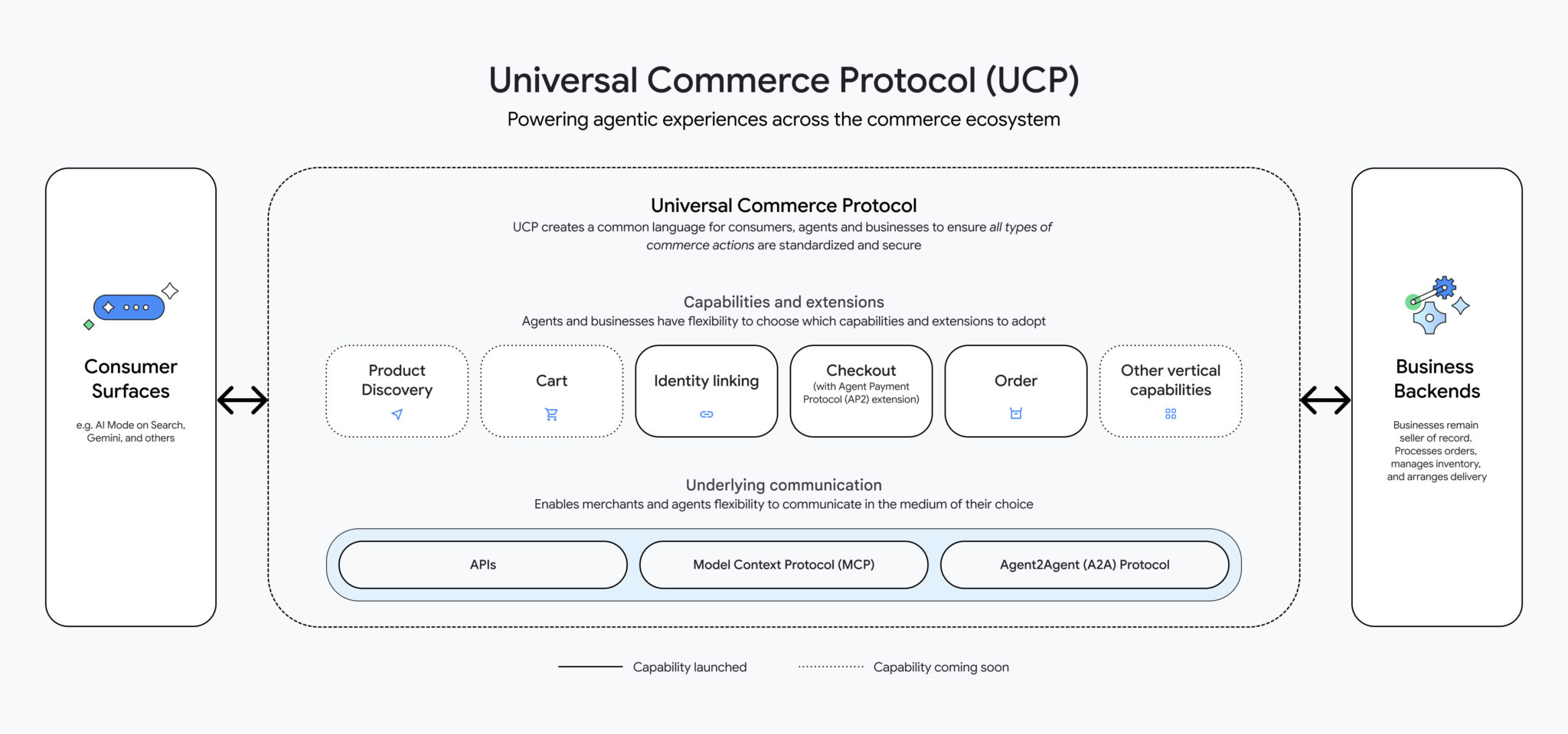
Say hello to the ‘Buy for Me’ era
What really got me excited about this update is “agentic” commerce. This is a fancy way of saying you are giving the AI permission to act on your behalf. You can set a price watch on a specific pair of boots, and the AI will monitor the web 24/7. When the price of the object hits the amount you have set, you will receive an alert, and if at that point, you are in the mood and financial comfort to make the purchase, you can simply use Google Pay then and there and buy the item.
Obviously, this now makes the whole shopping experience rather bland as this agent will not engage in window shopping or care about how good the website is, in order to make a purchase decision. It will only look at the parameters and take action. This is good news for people who hate shopping. It is bad news for brands that rely on “window shopping” or impulse buys.
Is this feature safe or just another data grabbing operation?
We have to talk about the catch. To make this work, you have to link your accounts. If you link your Walmart account to Gemini, Google sees your entire purchase history. While Google claims this helps them give better recommendations, it also means they are building the most detailed profile of your spending habits ever created.
There is also the “hallucination” risk. We have all seen AI get facts wrong. If an AI misinterprets “3-person tent” as “3-pack of tents” and hits the buy button, who is responsible for the return? Google is trying to solve this with “cryptographic proof of consent,” but the reality is that we are trusting a chatbot with our bank accounts.
We will see less and less middle man websites going forward
Retailers are in a tough spot. On one hand, Shopify and Walmart are jumping on board because they don’t want to lose out on sales. On the other hand, they are slowly losing their direct connection to the customer. If you never visit Walmart.com because you bought everything through Gemini, Walmart becomes just a warehouse in the background.
Google is effectively turning the entire internet into one giant, searchable vending machine. It is efficient, it is fast, and it is a little bit cold. But for the average person trying to find a specific item in a hurry, it is exactly what they have been waiting for.
Google AI shopping features, including the native checkout button, are currently rolling out to users in the United States. International expansion is planned for later in 2026 as more global retail partners join the protocol.







[…] severity, making it a critical update for maintaining digital safety and stability on Windows, macOS, and […]