
Meta AI will officially replace ChatGPT on WhatsApp

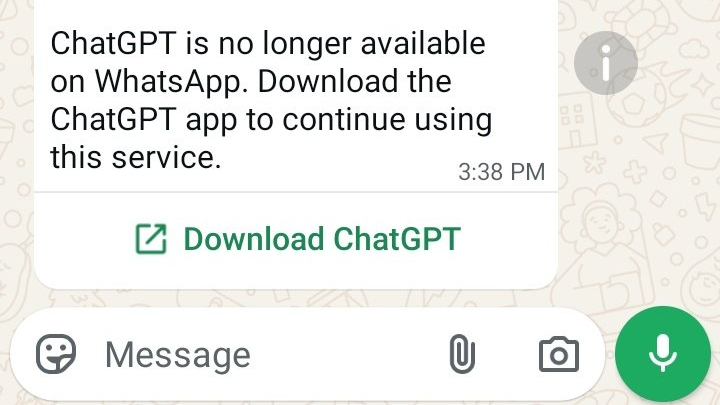
If you have been using ChatGPT or any other AI assistant on WhatsApp, today is the last day you can do that. Meta has officially pulled the plug on third party AI chatbots operating through WhatsApp, and the new rules are now in full effect as of January 15, 2026. What started as a policy announcement back in October has now become reality, and it changes how people can access AI tools through one of the world’s most popular messaging platforms.
What triggered this change?
Meta updated its WhatsApp Business API terms back in October 2025 to specifically ban what it calls general purpose AI chatbots. This includes any AI assistant that can answer open ended questions about basically anything, like ChatGPT from OpenAI, Perplexity’s search assistant, and smaller services like Luzia and Poke. The policy was written to target AI model providers who were using WhatsApp as a distribution platform for their assistants rather than businesses using AI to help their customers.
The distinction might sound technical, but it matters a lot. If you are a company using an AI bot to answer customer service questions, help people track orders, or book appointments, you are fine. Your business can still use AI on WhatsApp as long as the bot is helping with specific business tasks rather than acting as a general purpose assistant that can chat about anything.
This is why Meta made this move
Meta has given a few reasons for the change, and they all make sense from the company’s perspective even if users are not happy about it. The first reason is infrastructure. These general purpose AI bots were generating absolutely massive amounts of traffic on WhatsApp’s systems. When millions of people are having long, complex conversations with AI assistants, asking them to analyze documents, generate images, and answer random questions all day long, that puts a huge strain on the servers that need to process all those messages.
The second reason is money. WhatsApp’s Business API is how the platform makes money. It charges businesses based on different types of message templates like marketing messages, authentication codes, and support conversations. But AI assistants having free flowing conversations with users did not fit into any of those categories. Meta could not figure out how to charge these AI companies for all the traffic they were generating, which meant they were using WhatsApp’s infrastructure for free while racking up huge server costs.
The third reason and probably the most important one, even though Meta frames it differently. The company has been pushing Meta AI hard across all its platforms over the past year. If millions of people are already chatting with ChatGPT or Perplexity inside WhatsApp, they have no reason to try Meta’s own AI assistant. By kicking out the competition, Meta ensures that anyone who wants to use an AI chatbot on WhatsApp has only one option, and it happens to be the one Meta controls.
What happens to the ChatGPT users?
OpenAI announced that ChatGPT would no longer be available on WhatsApp after January 15. If you were using the 1-800-ChatGPT number to chat with the AI through WhatsApp, that service stopped working today. OpenAI pointed people toward their website, mobile app, and desktop applications as alternatives. The functionality is basically the same, you just cannot access it through WhatsApp anymore.
Microsoft faced the same problem with Copilot. The company’s AI assistant was also available through WhatsApp, and that access ended today as well. Perplexity, which had built a decent user base by letting people search the web through an AI chatbot on WhatsApp, is in the same boat. All these companies now need to figure out how to maintain their user bases without access to WhatsApp’s three billion users.
The Legal pushback is very real
Obviously, not everyone thinks Meta’s policy change is fair. The European Union launched an antitrust investigation into the new rules, questioning whether Meta is abusing its dominant position by forcing out competitors. Italy joined that investigation, looking at whether the policy violates competition laws. Most recently, Brazil ordered Meta to suspend the policy entirely. The Brazilian competition authority said Meta needs to pause the ban while they investigate whether it creates an unfair advantage for Meta AI.
Interestingly, Meta told AI providers they can keep offering their chatbots to users in Italy even after January 15, probably because of the regulatory pressure. Whether this exception expands to other countries depends on how these investigations play out over the coming months. If the EU decides Meta violated antitrust rules, the company could face fines up to 10 percent of its global revenue, which would be a massive financial hit.
How does this affect the regular WhatsApp user?
For the average person who was using ChatGPT on WhatsApp, this is frustrating. WhatsApp is already open on phones all day for most people. Being able to quickly ask an AI assistant a question without switching apps or opening a browser was genuinely convenient. Now if you want to use ChatGPT or any other third party AI, you need to leave WhatsApp and open a different app or website.
This is still a blessing in disguise, as it now opens the canvas to trying out various AI apps. Gemini from Google has been making waves off late, which Anthropic’s Claude is also a very capable AI application that you can try out, if you are looking to switch loyalties. Now, if you are someone who wants the goodness of all major AI models under one roof, then Perplexity AI is the best bet. This does require a subscription however, while Gemini offers their base models for free and Claude allows limited free use.
As of today, all these AI models have dedicated apps on the Google Play Store and Apple App Store.






[…] tokens are the basic units of processing that users buy when they run AI models. Every time you ask ChatGPT a question, generate an image with DALL-E, or use any AI powered service, you are consuming tokens. Those […]
[…] combinations. You can map it to activate the flashlight, open the camera, take screenshots, launch WhatsApp or payment apps, toggle vibration mode, or activate any installed […]
[…] were originally named in the litigation, both companies have already settled out of court, leaving Meta and YouTube to face the jury […]
[…] you are a hardcore developer or someone who just uses AI to help with daily tasks, there is a lot to unpack here. From adaptive thinking levels to a context […]
[…] big news recently is how India’s Sarvam AI beats Google Gemini and ChatGPT on specific, highly technical benchmarks that matter for the Indian context. Specifically, the […]