
READ THIS before you buy the Motorola Signature

The Motorola Signature costs approximately ₹1,05,000, which places it directly against established flagships from Samsung, Apple, OnePlus, and Xiaomi that have spent years refining their flagship offerings. Motorola wants you to believe this phone justifies its premium positioning through a combination of cutting-edge specifications, seven years of Android updates that match Google and Samsung’s commitments, and design choices that prioritize thinness over conventional thinking.
The phone measures just 7mm thick while weighing only 186 grams, making it one of the slimmest and lightest flagship phones available in 2026. Inside that slim body sits a Snapdragon 8 Gen 5 processor with up to 16GB RAM and 1TB storage, a 6.8-inch LTPO AMOLED display running at 165Hz with peak brightness of 6200 nits, a 50MP main camera with a large 1/1.28 inch sensor and optical image stabilization, IP68 and IP69 water resistance, 90W fast charging that reaches 50% in 15 minutes, and 50W wireless charging.
The specification sheet looks thoroughly impressive until you start examining what Motorola left out and where they made curious decisions about component selection and design priorities.
Personally, I have been a bit of a Motorola fanboy in the past, having used almost all of their devices until the Lenovo takeover, but the one thing I have always admires was the base to upper mid-range bracket that the brand focussed on. To see a Motorola device cost as much does raise eyebrows and so, it is only fair that we take a closer look at the new Motorola Signature so that you can ultimately decide if this is the smartphone you want to invest in.
Raw performance and Gaming capabilities
The Snapdragon 8 Gen 5 processor using Qualcomm’s third-generation Oryon cores represents genuinely cutting-edge performance that places this phone among the fastest available in early 2026. The chip runs at 3.8 GHz on the two Phoenix L performance cores and 3.32 GHz on the six Phoenix M efficiency cores, delivering benchmark scores around 2.9 million points on AnTuTu 10 according to typical results for this processor. The Adreno 840 GPU handles graphics processing with capability to run any mobile game at maximum settings with smooth frame rates, though sustained performance depends on thermal management that we’ll discuss shortly.

The combination of 12GB or 16GB RAM using LPDDR5X specification and UFS 4.1 storage provides flagship-level memory performance that keeps apps running smoothly and loads content quickly. The storage options ranging from 256GB to 512GB to 1TB give buyers flexibility, though the lack of microSD expansion means you’re locked into whatever capacity you choose at purchase. For most people, even 256GB provides ample space for apps, photos, and videos, while the 1TB option seems designed more for specification comparison charts than genuine user needs.
Design, Display and Build Quality
The display is where Motorola invested significant resources to create something that looks impressive on specification sheets and actually delivers in daily use. The 6.8-inch LTPO AMOLED panel runs at 1264 x 2780 resolution, which works out to 449 pixels per inch with text and images that look genuinely sharp. The LTPO technology allows variable refresh rates from 1Hz when displaying static content up to 165Hz when scrolling or gaming, which saves battery power compared to displays locked at high refresh rates.
The 165Hz maximum refresh rate is higher than the 120Hz or 144Hz found on most competitors, making scrolling feel incredibly smooth though the difference between 144Hz and 165Hz is subtle enough that most people won’t notice in blind testing.
The peak brightness specification of 6200 nits sounds extraordinary and represents legitimate capability in HDR content where small portions of the screen display bright highlights, though typical full-screen brightness in sunlight is probably closer to 2000 to 2500 nits, which remains excellent for outdoor visibility. The display supports Dolby Vision and HDR10+ for enhanced video content, and the Corning Gorilla Glass Victus 2 protection provides flagship-level scratch and impact resistance that should survive normal use without requiring screen protectors.

The build quality reveals some curious decisions that make you wonder about Motorola’s priorities at this price point. The front uses Gorilla Glass Victus 2, which is proper flagship protection that should survive normal use without shattering. The frame is aluminum alloy, which provides structural rigidity while keeping weight down compared to stainless steel frames. But the back material isn’t specified beyond mentioning “Pantone colors” in Carbon or Martini Olive, and user opinions suggest the back might be plastic rather than glass, which seems odd for a phone costing ₹1,05,000.
Some sources mention silicone polymer eco leather as a back material option, which provides better grip than glass and won’t crack if dropped, but lacks the premium feel that buyers expect when spending this much money. The IP68 and IP69 ratings provide dust-tight protection and water resistance up to 1.2 meters for 30 minutes plus resistance to high-pressure water jets, which represents genuine protection that should prevent damage from rain, splashes, and accidental submersion.
At 7mm thick and 186 grams, the phone feels impressively slim and light in your hand, though the thinness raises questions about thermal management and whether the phone can sustain peak performance during extended gaming or video recording sessions.
The audio setup includes stereo speakers with Dolby Atmos tuning and support for 24-bit/192kHz Hi-Res audio over both wired USB-C and wireless Bluetooth connections. The speakers should get reasonably loud with decent clarity, though the slim body limits speaker chamber size which affects bass response and overall audio quality. There’s no 3.5mm headphone jack, which at this price point is expected rather than disappointing since flagship phones abandoned this port years ago.
Connectivity package and Battery Life
The connectivity options include all the current-generation features you’d expect from a flagship phone in 2026. Wi-Fi 7 tri-band support provides future-proofing and maximum wireless speeds on compatible routers, Bluetooth 6.0 offers improved range and battery efficiency compared to older versions, and the USB Type-C 3.1 Gen 2 port supports DisplayPort 1.4 for external display connections.
The inclusion of NavIC alongside GPS, GLONASS, Galileo, and BeiDou provides accurate positioning even in challenging environments, and the ultrasonic fingerprint sensor under the display works more reliably than optical sensors especially with wet or dirty fingers.
The battery capacity of 5200mAh seems modest compared to Chinese competitors offering 6500mAh or 7600mAh batteries in phones that are barely thicker than this one. Motorola’s EU energy label claims 52 hours of endurance rating with 1200 cycle lifespan, which suggests the battery should last through a full day of moderate use and retain 80% capacity after approximately three years of daily charging.
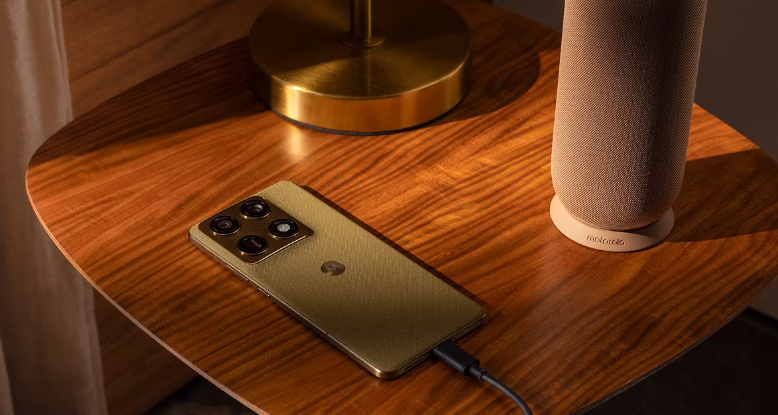
The Silicon-Carbon battery chemistry provides better energy density than traditional lithium-ion, which explains how Motorola fit 5200mAh into a 7mm thick phone, but the capacity limitation means heavy users will need to charge daily rather than enjoying the two-day or three-day battery life that larger batteries enable. The 90W wired charging reaches 50% in 15 minutes according to Motorola’s claims, which represents fast but not exceptional charging speed when competitors offer 100W, 120W, or even 150W charging that fills batteries even quicker.
The inclusion of 50W wireless charging is genuinely valuable for people who prefer wireless charging convenience despite slower speeds, and Motorola deserves credit for including this feature when some competitors omit wireless charging to save costs.
Camera performance
The camera system consists of a 50MP main sensor with f/1.6 aperture, 1/1.28 inch sensor size, 1.22µm pixel size, multi-directional PDAF, and optical image stabilization. The 1/1.28 inch sensor is genuinely large, similar to what you’d find in dedicated camera phones from brands like Vivo or Xiaomi’s photography-focused models, and the f/1.6 aperture lets in plenty of light for both photography and video.
The specifications mention “Triple” camera setup but only detail the main sensor, which suggests the other sensors are likely ultrawide and either telephoto or macro cameras that Motorola chose not to emphasize.
The presence of laser autofocus assists with quick, accurate focusing in various lighting conditions, and the dual-LED flash provides illumination for night photography though computational photography has largely replaced reliance on camera flash. The camera can record 8K video at 30fps with Dolby Vision HDR, 4K at up to 120fps for slow-motion, and includes 10-bit HDR10+ recording for enhanced dynamic range in video content. The gyro-EIS works alongside optical image stabilization to produce smooth handheld video that looks professional without gimbal stabilization.

The practical reality of camera performance depends heavily on image processing software, and Motorola’s track record here has been inconsistent compared to brands like Samsung, Google, and Apple that have invested heavily in computational photography algorithms. In good lighting conditions, this camera should produce excellent photos with accurate colors, good dynamic range, and plenty of detail that holds up when you crop or zoom in.
In challenging lighting conditions like indoor restaurants, evening scenes, or backlit subjects, the large sensor and bright aperture provide hardware advantages, but the final image quality depends on how well Motorola’s software handles noise reduction, dynamic range optimization, and color balance.
The 50MP selfie camera with dual-pixel PDAF and the ability to record 4K video at 60fps suggests Motorola is targeting users who care about selfie quality, though the f/2.0 aperture is less bright than the rear camera and the 1/2.93 inch sensor is significantly smaller, which means selfie quality won’t match the rear camera’s capability.
Software and Sustainability
The software situation is where Motorola makes its boldest claim and biggest commitment. Android 16 right from launch means you’re starting with the latest Google software, and Motorola promises seven major Android updates plus additional security patches, which matches Google’s commitment with Pixel phones and Samsung’s commitment with Galaxy S series devices. Seven years of updates means this phone should receive Android 23 in 2033, keeping it current through the entire practical lifespan of the device.
Motorola’s “My UX” interface is essentially stock Android with minimal customization, which means the phone feels clean and responsive without manufacturer bloatware or heavy interface modifications that change how Android works. The Smart Connect feature, which Motorola previously called Ready For, provides desktop-like functionality when connected to external displays, turning the phone into a productivity workstation similar to Samsung’s DeX feature.
For business users who want one device for both mobile and desktop computing, this capability adds genuine value beyond the standard smartphone feature set.
The EU energy label provides transparency about repairability, durability, and environmental impact that phones sold in other markets don’t disclose. The Class A energy rating indicates good battery efficiency, the 52 hour endurance rating with 1200 cycle lifespan suggests the battery should last three to four years of daily use before capacity degradation becomes noticeable, the Class B free fall rating with zero falls indicates Motorola didn’t test or doesn’t claim any drop resistance beyond what the materials provide, and the Class B repairability rating suggests moderate difficulty for repairs compared to phones with better modular designs.
These ratings provide useful information for buyers who care about long-term ownership costs and environmental impact, though the zero fall rating seems disappointing for a flagship phone where buyers might expect some tested drop resistance.
Is this the smartphone for you?
When you examine the Motorola Signature as a complete package competing against established flagships, several patterns emerge that explain both its appeal and its limitations. The seven-year update commitment genuinely matters for people who want to keep their phones for extended periods without worrying about security vulnerabilities or missing new Android features. The Snapdragon 8 Gen 5 processor with ample RAM and fast storage provides performance that will remain competitive for years even as apps and games become more demanding.
The 165Hz LTPO AMOLED display with exceptional brightness produces a visual experience that rivals or exceeds competitors. The slim, light design makes the phone comfortable for daily carry without the bulk and weight of larger devices. But the 5200mAh battery limits endurance compared to competitors with 6500mAh or larger batteries that last multiple days between charges.
The camera hardware is capable but the image processing software doesn’t quite match Samsung, Google, or Apple’s computational photography refinement. The build materials, particularly the possible use of plastic for the back panel, feel inappropriate for the ₹1,05,000 price point when buyers expect premium materials throughout.
The competition at ₹1,05,000 includes the Samsung Galaxy S25 which offers superior camera processing, longer battery life, and more refined software despite using a similar processor. The OnePlus 15 provides comparable performance with larger battery capacity and faster charging at slightly lower prices. The Xiaomi 17 Pro delivers similar specifications with more aggressive pricing and often better camera hardware. Even Apple’s iPhone 16 sits in this price range with the advantages of iOS, the Apple ecosystem, and resale value that Android phones struggle to match.
The Motorola Signature makes sense for buyers who specifically value seven years of updates combined with clean Android software and don’t want Samsung’s OneUI or Xiaomi’s HyperOS. It makes sense for users who prioritize thinness and light weight over battery capacity and are willing to charge daily in exchange for a slimmer phone. It makes sense for people who want flagship performance and display quality without paying the absolute highest prices that Samsung and Apple charge for their Ultra and Pro Max models.
The Motorola Signature does not make sense for photography enthusiasts who want the absolute best camera processing, because Samsung, Google, and Apple all produce more consistently excellent photos in various lighting conditions. It doesn’t make sense for heavy users who need two-day or three-day battery life, because the 5200mAh capacity limits endurance compared to phones with larger batteries.
It doesn’t make sense for buyers who expect premium materials throughout when spending over one lakh rupees, because the possible plastic back panel undermines the flagship positioning. And it doesn’t make sense for people who want the absolute best value in flagship performance, because Chinese competitors offer similar or better specifications at lower prices though without the seven-year update commitment.
TattwaTech Score
7.5 out of 10. The Motorola Signature delivers genuinely flagship performance, an exceptional display, and the most important long-term commitment of seven years of Android updates that makes this phone a sensible investment for extended ownership. The slim design and light weight make daily use pleasant, and the clean Android software appeals to people who dislike heavy manufacturer customization.
But the modest battery capacity, inconsistent build material choices, and camera processing that doesn’t quite match the best competitors prevent this from being an unqualified success at ₹1,05,000. Buy it if you value long-term software support, clean Android, and slim design over battery endurance and premium materials throughout.
Skip it if you need the absolute best camera processing, maximum battery life, or expect flawless execution in every aspect when spending this much money.





[…] or even higher in some markets. But those phones also cost two or three times as much as what the Nothing Phone 4a Pro will likely be priced at. Keeping the charging speed at 50W helps Nothing control costs while still […]
[…] atmosphere around the track shifted noticeably when Lewis Hamilton stepped into the Ferrari cockpit for the afternoon session. Seeing a seven-time world champion in the iconic red suit is a moment […]
[…] semiconductor and quantum device fabrication, yield refers to the percentage of sites where a component forms correctly out of all attempted […]