
READ THIS before you buy the Lava Agni 4

The Lava Agni 4 costs ₹24,999, though early-bird offers frequently bring it down to ₹22,999, which places it directly in the battlefield where Poco, Realme, Motorola, and a dozen other Chinese manufacturers wage war with aggressive specifications and even more aggressive marketing. But here’s where things become interesting. Lava hasn’t spent the last 24 months trying to out-spec everyone on every single line of a spreadsheet.
Instead, they’ve focused on what they call “Mechanical Integrity” and “Software Purity,” which sounds like marketing nonsense until you actually hold the phone and realize they’re serious about both concepts. This phone targets what Lava calls the “Pragmatic Power User,” which translates to someone who wants a device that feels expensive, works instantly, and doesn’t treat their home screen like a billboard for third-party advertisements that generate revenue for the manufacturer.
The Agni 4 represents the culmination of this strategy, and for the first time, an Indian smartphone brand has produced something that doesn’t need qualifiers like “good for an Indian phone” or “decent considering the price.” This is simply a good phone that happens to be made in India, and that distinction matters more than you might initially think.
So, without further ado, let’s take a look at the Lava Agni 4 so that you can ultimately decide whether this is the smartphone for you.
Design, Display, And Build Quality
The most immediate shock when removing the Agni 4 from its packaging is the material choice. While almost every competitor at ₹25,000 has moved to high-quality polycarbonate to save costs and reduce weight, Lava has opted for a high-grade aluminum alloy frame. The phone feels cold to the touch, a sensation usually reserved for flagship devices costing upwards of ₹50,000, and this metal frame is sandwiched between Corning Gorilla Glass 5 on the front and matte AG glass on the back.
The Lunar Mist and Phantom Black colorways are sophisticated and resist fingerprints effectively, and the device weighs 208 grams, giving it a heft that implies durability rather than bulk. It feels like a tool you can depend on rather than a toy you need to baby.
The physical dimensions measure 160.7mm tall, 75.3mm wide, and 8.6mm thick, which makes it noticeably more compact than phones with 6.78-inch displays while still providing a large 6.67-inch screen. The bezels measure just 1.7mm according to Lava’s claims, creating that expensive uniform symmetry you normally find on phones costing twice as much. The flat display rather than curved edges makes screen protector installation straightforward and eliminates accidental edge touches, which alone makes the phone more practical for daily use.
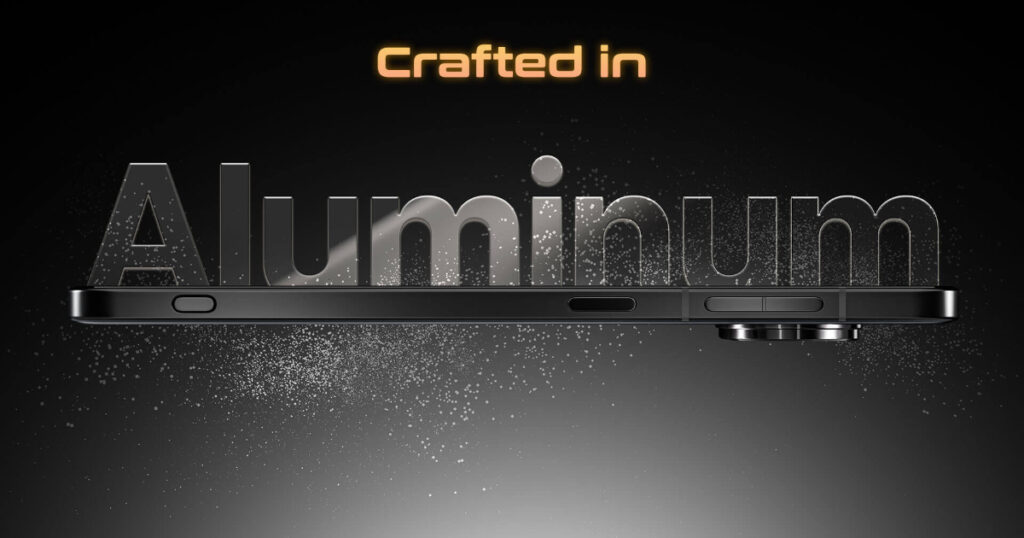
The IP64 rating provides dust-tight protection and resistance to water splashes, which means the phone can survive rain and accidental spills but shouldn’t be submerged. This is adequate protection for most real-world scenarios where phones actually get damaged, and Lava’s focus on what they call the “Super Anti-Drop Diamond Frame” suggests they’ve reinforced the internal structure to survive drops better than conventional designs.
The Action Key sits on the lower right side of the frame, following the trend established by Apple’s iPhone Pro series but with Lava’s own implementation. This programmable button supports three distinct triggers: single press, double press, and long press, and Lava claims you can configure over 100 different shortcut combinations. You can map it to activate the flashlight, open the camera, take screenshots, launch WhatsApp or payment apps, toggle vibration mode, or activate any installed application.
The utility is genuine, though the placement is controversial because it sits quite low on the frame. If you have average-sized hands, you’ll need to shuffle the phone down in your palm to reach the button with your thumb, and if you have smaller hands, this becomes a two-handed operation. Lava presumably placed it here to prevent accidental presses, but the trade-off is reduced convenience, and whether this compromise makes sense depends on how frequently you actually use the button.
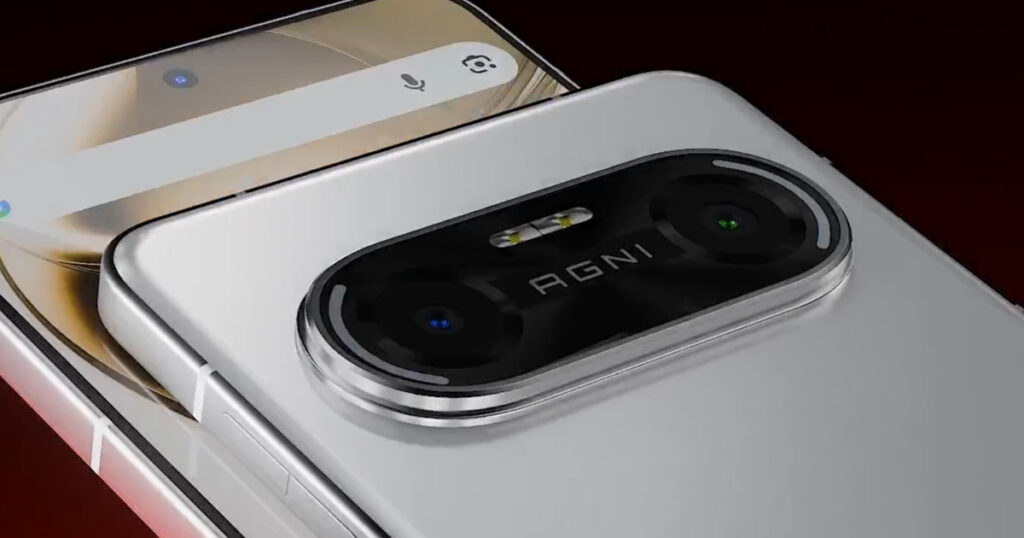
The rear camera module uses a horizontal pill-shaped design with the “AGNI” branding centered between the dual cameras and dual-tone flash positioned at the top. Two thin LED strips sit at both ends of the camera deco, adding visual interest without being ostentatious. This design language feels more refined than the Agni 3’s experimental dual-display approach, suggesting Lava has moved from attention-grabbing gimmicks toward mainstream flagship execution.
The inclusion of a USB Type-C 3.2 Gen 1 port represents a major technical win because almost every competitor at this price uses USB 2.0. The 3.2 standard enables significantly faster data transfers and, crucially, display output. You can connect this phone directly to a monitor or television using a USB-C to HDMI adapter for presentations or gaming, which is virtually unheard of at ₹25,000 and demonstrates Lava’s focus on practical features that benefit actual users rather than marketing bullet points.
The screen is a 6.67-inch 1.5K AMOLED panel, and that resolution matters more than it sounds. By moving from Full HD+ (1080p) to 1.5K (1220 x 2712), Lava has increased pixel density to 446 pixels per inch, making text look laser-sharp and icons appear painted onto the glass. The 120Hz refresh rate is standard for this segment, but the peak brightness of 2400 nits is genuinely impressive, ensuring outdoor legibility even under the harsh glare of a tropical afternoon.
The High Brightness Mode settles around 1300 nits according to real-world testing, which provides plenty of brightness for HDR content from Netflix, Amazon Prime, and YouTube. The display supports 10-bit color depth, which is still rare at this price point and provides noticeably smoother color gradations than the standard 8-bit panels used by most competitors. The combination of 1 billion colors, HDR support, and that high pixel density creates a visual experience that genuinely competes with phones costing ₹40,000 or ₹50,000, and the flat panel eliminates the usability compromises that curved displays introduce.
Camera Performance
The Agni 4 features a dual rear camera setup consisting of a 50MP main sensor with f/1.9 aperture, 1/1.55-inch sensor size, 1.0µm pixel size, PDAF autofocus, and optical image stabilization, plus an 8MP ultrawide camera with 112-degree field of view. The front camera uses a 50MP Samsung JN1 sensor for selfies and video calls. Let’s establish expectations immediately because this matters. Lava removed the telephoto lens that was present on the Agni 3, which represents a downgrade in camera versatility even though the main sensor has improved.
This decision makes it seem like Lava prioritized other components over camera hardware, and whether this trade-off makes sense depends on your photography priorities.
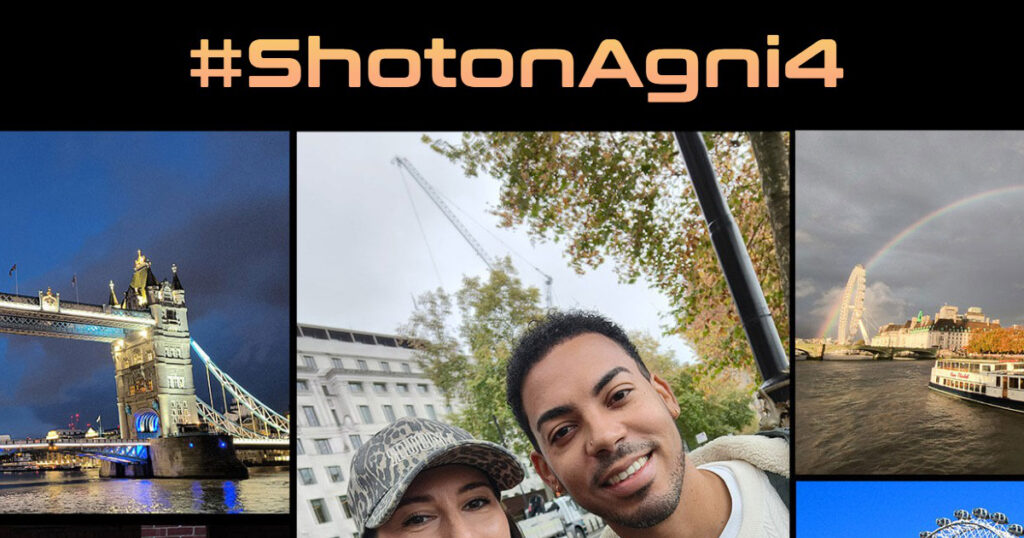
The 50MP main sensor with its 1/1.55-inch size is genuinely competitive for this price segment, larger than the sensors in many phones costing similar money. In bright daylight, this camera captures vibrant, sharp images with good detail retention and commendable dynamic range. Lava’s image processing tends to favor punchy colors, which means reds and greens often look slightly more vivid than they appear in reality.
This appeals to users who want Instagram-ready photos straight from the camera without editing, though photography purists might prefer more neutral color science. The optical image stabilization genuinely helps keep night shots sharp by compensating for hand shake during the longer exposures required in low light. The camera produces acceptable low-light photos with some digital noise in shadow areas, but this isn’t a night vision camera that magically illuminates dark scenes.
For social media posting and everyday photography, the low-light performance is more than adequate, though dedicated camera phones produce cleaner results with better shadow detail.
The 8MP ultrawide camera is the weakest component of the camera system, using a small sensor that loses detail quickly in anything less than bright light, and the color temperature often doesn’t match the main sensor perfectly. You’ll notice the color shift when switching between main and ultrawide cameras, which creates consistency issues if you care about accurate color reproduction.
The ultrawide serves its purpose for capturing expansive scenes or group photos where everyone needs to fit in the frame, but the quality doesn’t match the main camera and you shouldn’t expect miracles. The 50MP selfie camera produces detailed selfies in good lighting with adequate dynamic range, and the ability to record 4K video at 60fps from both front and rear cameras is genuinely noteworthy.
Most competitors cap selfie video at 1080p, making the Agni 4 one of few phones at this price offering 4K60 selfie recording, which matters enormously for content creators who vlog or record themselves for YouTube, Instagram, or TikTok.
Lava included what they call “EIS + OIS” hybrid stabilization that combines electronic image stabilization with the optical system, ensuring handheld footage looks cinematic rather than shaky. The camera app includes AI scene detection optimized for Indian skin tones, which Lava claims improves portrait mode and beauty effects for Indian users. There’s Dual Conversion Gain technology to enhance dynamic range and reduce noise, Dual-View Video Mode that records from both front and rear cameras simultaneously, and document correction for photographing text with automatic perspective correction.
Lava also added AI Photo Editor functionality similar to Google’s Magic Eraser, letting you remove unwanted people or objects from photos after capture. The camera system works well for everyday photography, produces good enough results for social media, and the 4K60 video capability from both cameras genuinely adds value. But if photography is your primary phone use case and you need consistently excellent results in varied lighting conditions, phones like the Realme GT series or Nothing Phone at similar prices offer more sophisticated image processing even if their sensors are sometimes smaller.
Processor Performance And Gaming Performance
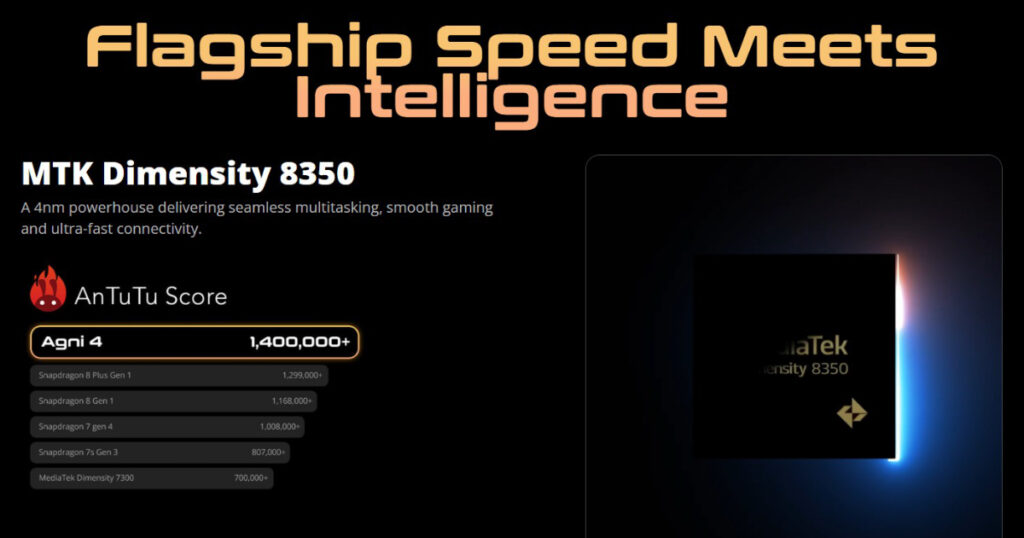
The MediaTek Dimensity 8350 processor built on a 4nm manufacturing process represents solid mid-range performance rather than cutting-edge flagship power. The chip features an octa-core configuration with one Cortex-A715 core running at 3.35 GHz, three Cortex-A715 cores at 3.20 GHz, and four Cortex-A510 efficiency cores at 2.20 GHz, paired with the Mali-G615 MC6 GPU.
According to AnTuTu 10 benchmark testing, the Agni 4 scores approximately 1.4 million points, which places it firmly in upper mid-range territory below flagship processors like the Snapdragon 8 Gen 5 but above budget chips like the Dimensity 7000 series. For perspective, this represents roughly 40% better performance than the Dimensity 7200 that powered the previous Agni 3, marking a genuine generational improvement rather than incremental gains.
But here’s where Lava’s component selection becomes crucial. While competitors like OnePlus Nord CE or Motorola Edge stick to UFS 3.1 storage to save money, the Agni 4 uses UFS 4.0 storage, which represents current-generation memory technology usually reserved for flagships.
UFS 4.0 delivers sequential read speeds around 4200 MB/s compared to UFS 3.1’s 2100 MB/s, which means app installation happens nearly twice as fast, large files like high-resolution videos or heavy games load with zero stutter, and the phone feels responsive in ways that don’t show up in processor benchmarks. Lava paired this with 8GB of LPDDR5X RAM running at higher frequencies than LPDDR5, providing faster memory access that helps with multitasking.
The phone keeps more apps open in the background without needing to refresh them, and switching between applications happens instantly without reloading delays.
For thermal management, Lava utilizes a 4300mm² vapor chamber cooling system that helps dissipate heat during demanding tasks. In BGMI mobile gaming, the phone consistently hits 60fps at high graphics settings according to user testing. In Call of Duty Mobile, 90fps is achievable with reduced settings. Under a 30-minute stress test, the phone gets warm around 44 to 45 degrees Celsius, but it doesn’t throttle performance aggressively the way some phones do.
The metal frame dissipates heat across its surface, which means the phone may feel hotter to your hand than a plastic phone would even if the internal processor is actually running cooler. This is a characteristic of metal construction rather than a thermal problem, and the vapor chamber prevents the processor from reaching temperatures that would require severe throttling. Lava included Game Booster Mode that optimizes system resources for gaming by closing background apps, allocating more RAM to the active game, and adjusting thermal limits to prioritize sustained performance over battery life.
The practical reality is that the Dimensity 8350 with UFS 4.0 storage creates a phone that feels faster in daily use than its benchmark scores suggest. Apps launch instantly, large games load quickly, photo galleries scroll smoothly even with thousands of images, and multitasking between demanding applications happens without noticeable lag.
You’re not getting flagship-level performance that can handle the absolute most demanding games at maximum settings, but for the vast majority of users who browse social media, watch videos, play popular mobile games, and run multiple messaging apps simultaneously, this combination provides more than adequate performance. The UFS 4.0 storage in particular provides a quality-of-life improvement that you notice every time you interact with the phone, making it feel more expensive than it actually costs.
Connectivity And Battery Life
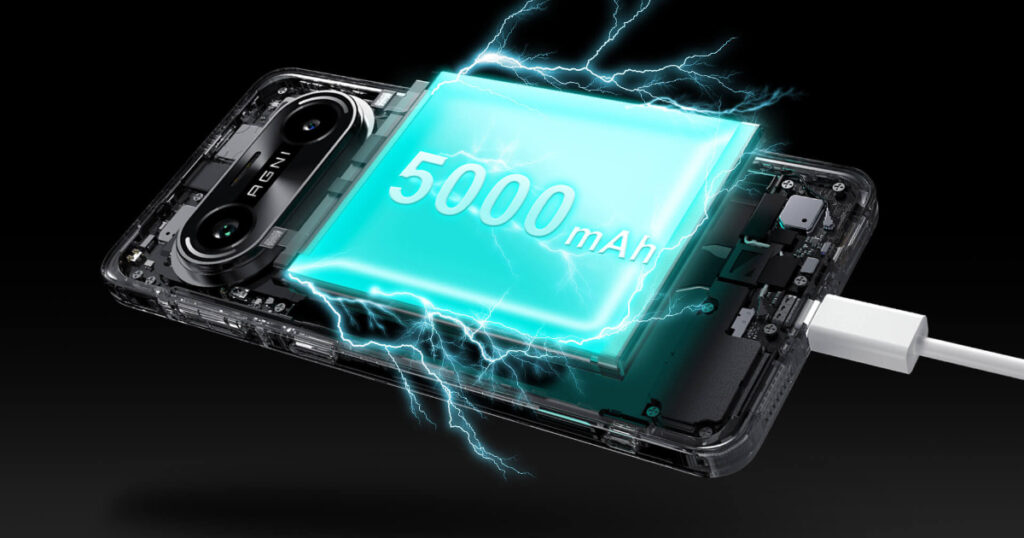
The Agni 4 uses a 5000mAh lithium-polymer battery, which seems conventional compared to Chinese competitors offering 6500mAh or even 8000mAh capacities, but battery life depends on more than just capacity numbers. In standard usage cycles including WhatsApp messaging, YouTube video streaming, light mobile gaming, and 5G connectivity, the phone comfortably lasts a full day according to user reports.
You can expect approximately 7 to 8 hours of screen-on time with moderate mixed usage, though hardcore gamers will need a midday top-up by 6 PM if they spend hours playing demanding titles. Lava claims the phone delivers up to 14 hours of YouTube and OTT streaming, which aligns with the screen-on time reports from actual users.
The 66W HyperCharge fast charging reaches 50% capacity in approximately 19 minutes and full charge in around 51 minutes according to Lava’s claims, which real-world testing confirms. The charger is included in the box, which seems obvious but increasingly many manufacturers are removing chargers to reduce costs and packaging size. The charging speed is fast enough that a quick morning charge while preparing for work provides sufficient power for the entire day, and you can get several hours of usage from just 15 minutes of charging if you’re in a rush.
There’s no wireless charging, which at ₹25,000 is a reasonable omission because wireless charging adds cost and most budget-conscious buyers would rather have better components elsewhere. The battery uses conventional lithium-polymer chemistry rather than the newer Silicon-Carbon technology found in more expensive phones, which explains the 5000mAh capacity rather than 6000mAh+ in similarly-sized devices.
The connectivity suite includes 14 5G bands covering n1, n2, n3, n5, n7, n8, n20, n28, n38, n40, n41, n66, n77, n78 SA/NSA, providing comprehensive compatibility with current and future Indian 5G networks as they expand. The phone supports Wi-Fi 6E with dual-band connectivity, Bluetooth 5.4 with A2DP and LE for reliable wireless connections, GPS and GLONASS for positioning though notably missing Galileo, BeiDou, QZSS, and NavIC that some competitors include.
There’s an infrared port for controlling televisions and air conditioners, FM radio that works with wired headphones, and dual nano-SIM support for using two phone numbers simultaneously. The absence of NFC is disappointing because contactless payments through Google Pay and similar services require NFC, and this omission limits payment flexibility compared to phones that include NFC.
The USB Type-C 3.2 port provides not just charging and data transfer but display output for connecting to external monitors, which combined with the infrared remote and FM radio demonstrates Lava’s focus on practical features that benefit Indian users even if these features aren’t sexy marketing points.
The audio setup includes dual stereo speakers with reasonable volume and clarity, though they lack the deep bass found in more expensive flagships with larger speaker chambers. The speakers get loud enough for watching videos or casual music listening without headphones, and the stereo separation creates better spatial audio than single-speaker phones.
There’s no 3.5mm headphone jack, following industry trends, and audio quality over the USB Type-C port is adequate for wired headphones. The under-display optical fingerprint sensor responds reasonably quickly and works reliably in most conditions, though ultrasonic sensors found in more expensive phones work better with wet or dirty fingers.
Software And User Experience
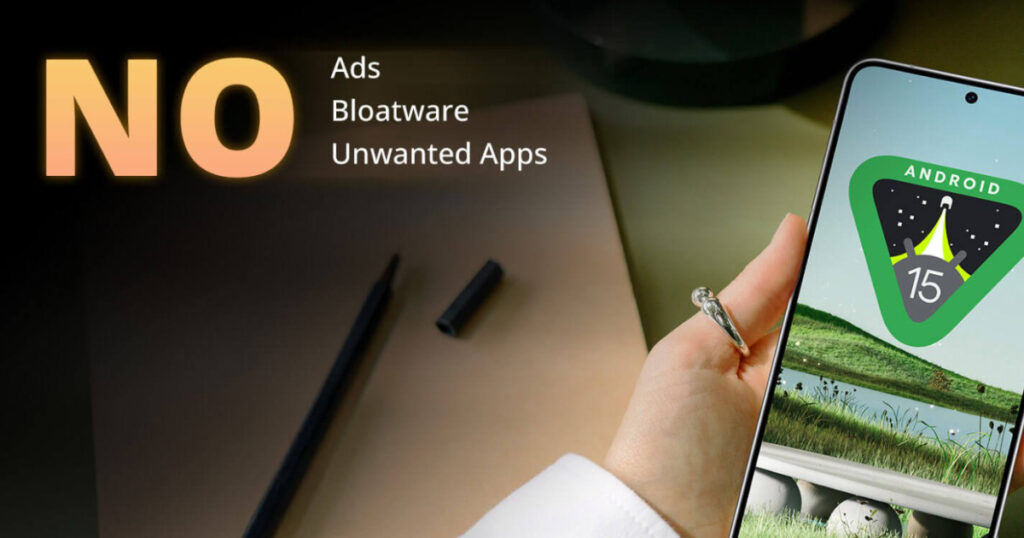
This is the single most compelling reason to choose the Agni 4 over any Poco or Realme device, and it deserves extended discussion because software experience affects every interaction with the phone. The Agni 4 ships with Android 15 right out of the box, and when you turn it on for the first time, your app drawer is empty of junk. There are no pre-installed shopping apps, no “Hot Games” folder filled with casino apps, no system-level advertisements in the notifications panel or settings menu, and no duplicate apps that replicate Google’s functionality with inferior alternatives.
It is as close to a Google Pixel experience as you can get without buying a Pixel, and for people familiar with the bloatware nightmare that plagues Xiaomi, Realme, and even Samsung phones, this clean approach feels like breathing fresh air after being trapped in a smoky room.
Lava promises 3 years of major OS updates and 4 years of security patches, which means the phone should receive Android 16, Android 17, and Android 18, keeping it current through at least 2028. This represents better long-term support than most mid-range phones receive, and it demonstrates Lava’s commitment to keeping their devices secure and functional long after purchase. The speed of these updates won’t match Google or Samsung’s immediate rollouts, but the commitment itself matters more than delivery speed for most users who aren’t obsessed with having the latest Android version the day it releases.
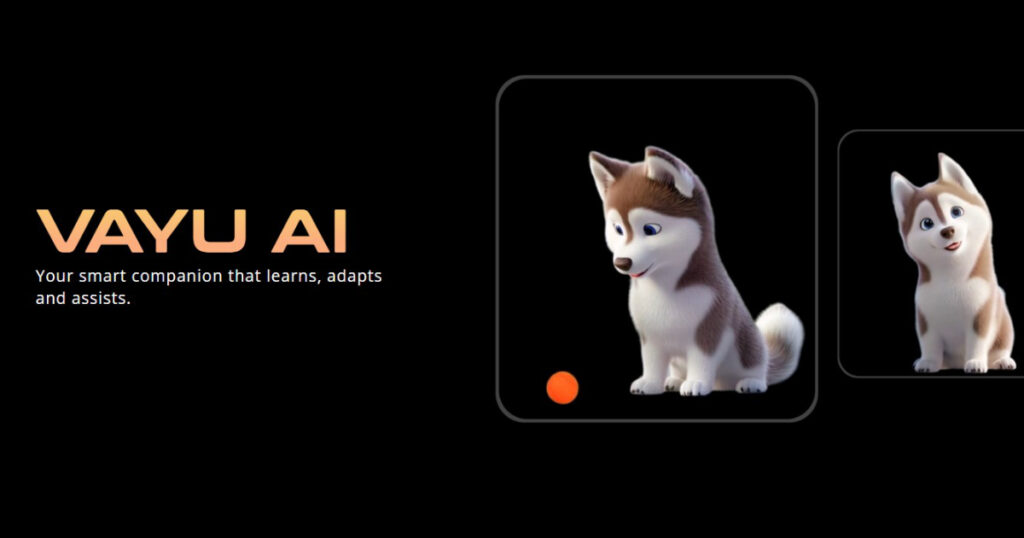
Lava integrated their “Vayu AI” (meaning “Air” in Hindi) to add modern utility without cluttering the interface. The AI suite includes several features that range from genuinely useful to gimmicky depending on your usage patterns. AI Call Summary can transcribe and summarize phone calls, which is currently most accurate in English though Hindi support is improving. AI Photo Editor provides functionality similar to Google’s Magic Eraser, letting you remove unwanted people or objects from photos with reasonable accuracy though not perfect results.
AI Tutors targeted at students can help solve math problems by photographing equations or provide English grammar feedback by analyzing written text. There’s an AI Companion, a small animated dog that sits on your home screen and serves as a voice-activated shortcut to system functions like “Set an alarm” or “Open Camera,” which looks cute but some users will find annoying and others will appreciate as a convenient interface.
The Vayu AI emphasizes natural conversation and context awareness, attempting to feel less robotic than traditional voice assistants. You can give it custom instructions for repeated tasks, interact with it through the home screen widget, and access various AI Agents including Math Teacher, English Teacher, Male and Female Companions for conversation practice, Horoscope readings, Text Assistant for writing help, Call Summary for transcription, Photo Editor for image manipulation, and Image Generator for creating AI artwork.
The phone also includes Google’s Circle to Search functionality, letting you circle anything on screen to search for it without leaving the current app. Whether these AI features represent genuine utility or marketing gimmicks depends heavily on your usage patterns. Students will find the tutoring features helpful, content creators will appreciate the photo editing capabilities, and most users will probably ignore the AI Companion dog after the novelty wears off.
The combination of stock Android with Lava’s AI additions creates a software experience that feels clean and modern without the aggressive monetization that ruins other Android phones. There are no ads in the weather app, no sponsored content in the file manager, no notification spam promoting Lava’s partners, and no pre-installed apps that can’t be uninstalled. For users tired of fighting their phone’s software to create a usable home screen, the Agni 4’s approach is refreshingly respectful of your time and attention.
The AGNI promise
Lava is attempting to solve the biggest hurdle for Indian brands, which is trust. Many buyers hesitate to purchase Indian phones because they worry about after-sales service, warranty claims, and whether the company will still exist in two years when the phone needs repair. Lava introduced the “Agni Promise” to address these concerns directly. If your phone develops a hardware fault within the warranty period, Lava will send a technician to your house for free service at home.
If the phone cannot be fixed on-site for a major hardware issue, they offer a replacement policy that provides a new device rather than dragging you through weeks of repair. This service commitment is genuinely valuable for buyers in Tier-2 and Tier-3 cities who might not have easy access to service centers, and it demonstrates Lava’s understanding that Indian buyers need confidence in after-sales support before they’ll trust homegrown brands.
Additionally, Lava announced a “Demo at Home” campaign running from November 20 to 24 in Bengaluru, Delhi, and Mumbai, where company engineers visit interested buyers at their homes to guide them through the device and let them experience the design and features before purchase. This is a no-obligation experience where potential buyers can handle the phone, ask questions, and decide whether it meets their needs without pressure to buy.
While this campaign is limited to three cities and a short timeframe, it represents innovative thinking about how to build trust with customers who are skeptical about Indian smartphone brands.
Is the Lava Agni 4 the smartphone for you?
The Lava Agni 4 makes sense for people who value build quality, software purity, and practical features over raw specifications and brand prestige. It makes sense for users tired of ads and bloatware on their phones who want a clean Android experience without paying Google Pixel prices. It makes sense for people who frequently transfer large files for work and benefit from USB 3.2 connectivity and UFS 4.0 storage speeds.
It makes sense for buyers who want to support a homegrown brand that’s actually innovating rather than copying Chinese manufacturers. It makes sense for users who appreciate thoughtful design choices like the metal frame, flat display, and programmable Action Key even if that key’s placement is imperfect. And it makes sense for people who need a device that feels like a premium slab of metal and glass rather than yet another plastic phone with impressive specifications but cheap construction.
The Lava Agni 4 does not make sense for photography enthusiasts who need perfect color science and consistently excellent results in every lighting condition, because the camera hardware and image processing don’t match dedicated camera phones despite being good enough for social media. It doesn’t make sense for people with very small hands because the phone is large and the Action Key placement requires adjustment or two-handed operation.
It doesn’t make sense for mobile gaming enthusiasts who want the absolute most powerful processor available, because the Dimensity 8350 is capable but not flagship-level and more powerful options exist if you’re willing to sacrifice build quality. It doesn’t make sense for users who need NFC for contactless payments, because the Agni 4 inexplicably omits this feature. And it doesn’t make sense for buyers who prioritize brand recognition and resale value, because Lava lacks the mainstream appeal of Samsung, Apple, or even Xiaomi, which affects resale value even if the phone itself is excellent.
The competition at ₹25,000 includes the Poco X7 Pro offering slightly better raw gaming performance but plagued by bloatware and plastic-heavy construction. The Motorola Edge 60 Fusion is slimmer and lighter but feels less premium due to the plastic frame and offers slower UFS 2.2 or UFS 3.1 storage. The Samsung Galaxy A series provides better brand value and slightly more refined cameras but gets obliterated by the Agni 4 in charging speed, storage speed, and raw value-for-money.
The Nothing Phone (3a) Lite offers unique glyph lighting and arguably better cameras but uses slower storage and has similar or higher pricing. The OnePlus Nord CE5 uses the same Dimensity 8350 processor but typically costs more and doesn’t include the Action Key or USB 3.2 connectivity. Each competitor makes different compromises, and the Agni 4’s particular combination of metal construction, clean software, and fast storage represents a unique value proposition that isn’t replicated elsewhere at this price.
TattwaTech Score
8.4 Out Of 10
The Lava Agni 4 is not just good for an Indian phone. It is a good phone, period. It rewards users for looking past brand logos and evaluating what actually matters in daily use. By prioritizing build quality over spec sheet numbers, storage speed over larger batteries, and software purity over feature bloat, Lava has created a device that belongs in 2026 rather than feeling like a budget compromise.
The aluminum frame, UFS 4.0 storage, and bloatware-free Android represent fundamental quality-of-life improvements that affect every interaction with the phone, while the 1.5K display, capable cameras, and thoughtful features like the Action Key and USB 3.2 port demonstrate genuine innovation rather than copying competitors. The Agni 4 proves that Indian brands can compete on quality and execution rather than just price, and it represents the most compelling argument yet for buying homegrown technology.




[…] a card sized computer that can be used for everything between electronics projects to more arduous tasks like media playback and even word processing. Think of it this way – A credit card sized mother board which, when […]