READ THIS before you buy the OPPO K14x

The Oppo K14x costs ₹14,999 for the base variant with 4GB RAM and 128GB storage, or ₹16,999 for 6GB RAM with the same 128GB storage, with an effective launch price of ₹13,499 after bank discounts during the sale period. This places it squarely in the brutally competitive sub-₹15,000 segment where every brand fights for survival by making different compromises. Oppo has decided to prioritize battery endurance above absolutely everything else, installing a 6500mAh battery in a phone that measures 8.6mm thick and weighs 212 grams.
That battery capacity genuinely impresses, matching phones costing twice as much and promising multiple days between charges. But here’s where things become complicated. To fit that massive battery while keeping costs down to ₹15,000, Oppo made compromises that affect daily usability in ways that battery life alone can’t compensate for. The phone uses a 720 x 1570 pixel HD+ display, which is the same resolution budget phones used in 2018.
It uses the MediaTek Dimensity 6300 processor, which scores around 424,000 points on AnTuTu 10 and represents entry-level performance that struggles with anything beyond basic tasks. And it ships with only 4GB or 6GB of LPDDR4X RAM, which by 2026 standards feels inadequate for phones claiming to target students and early career professionals who actually use their devices heavily.
The Oppo K14x succeeds at being a battery champion but fails at being a well-rounded phone, and understanding this distinction is crucial before you decide whether the trade-offs make sense for your usage patterns.
This phone targets users who prioritize endurance over everything else, people who would rather charge every three days with a mediocre screen than charge daily with a sharp display. Whether that describes you determines whether this phone is a smart purchase or a frustrating compromise.
Design, Display, And Build Quality
The Oppo K14x measures 166.6mm tall, 78.5mm wide, and 8.6mm thick while weighing 212 grams, making it noticeably larger and heavier than mainstream budget phones but acceptable considering the 6500mAh battery inside. The construction uses glass on the front with Corning protection though the specific Gorilla Glass version isn’t mentioned, a plastic frame, and a plastic back.
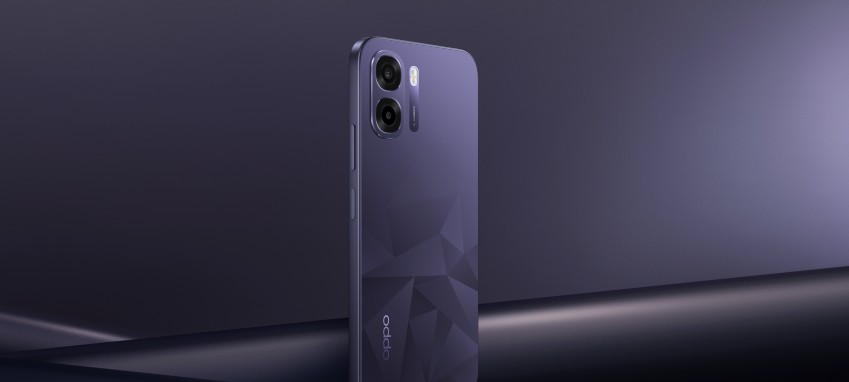
The Prism Violet and Icy Blue color options feature what Oppo calls a prism design with a matte finish on both the back panel and frame, providing decent grip and reasonable fingerprint resistance. At ₹15,000, plastic construction is perfectly acceptable and actually preferable to the glass backs that crack when dropped. The plastic here feels solid rather than cheap, though it obviously lacks the premium feel of metal frames or glass backs found on more expensive devices.
The IP64 rating provides dust-tight protection and resistance to water splashes from any direction, which means the phone can survive rain and accidental spills but shouldn’t be submerged in water. Interestingly, this represents a downgrade from the IP65 rating on the previous K13x, though IP64 remains standard for this price segment and provides adequate protection for most real-world scenarios where phones actually get damaged.
The side-mounted fingerprint sensor integrated into the power button responds quickly according to early user reports, and this physical sensor placement works more reliably than under-display optical sensors particularly with wet or dirty fingers. The phone includes a 3.5mm headphone jack, which remains valuable for budget buyers who own wired headphones and don’t want to deal with Bluetooth connection hassles or charging requirements.
The 6.75-inch IPS LCD display uses 720 x 1570 pixel resolution, which works out to just 256 pixels per inch. To put this in perspective, the iPhone 16 has 460 pixels per inch. Budget phones from 2024 routinely offered Full HD+ displays at 1080 x 2400 pixels with 395+ ppi. Even Oppo’s own budget offerings from previous years included Full HD+ panels. The decision to use HD+ resolution in 2026 feels like cost-cutting that went too far, and the pixel density limitation becomes immediately obvious when viewing text, icons, or photos.
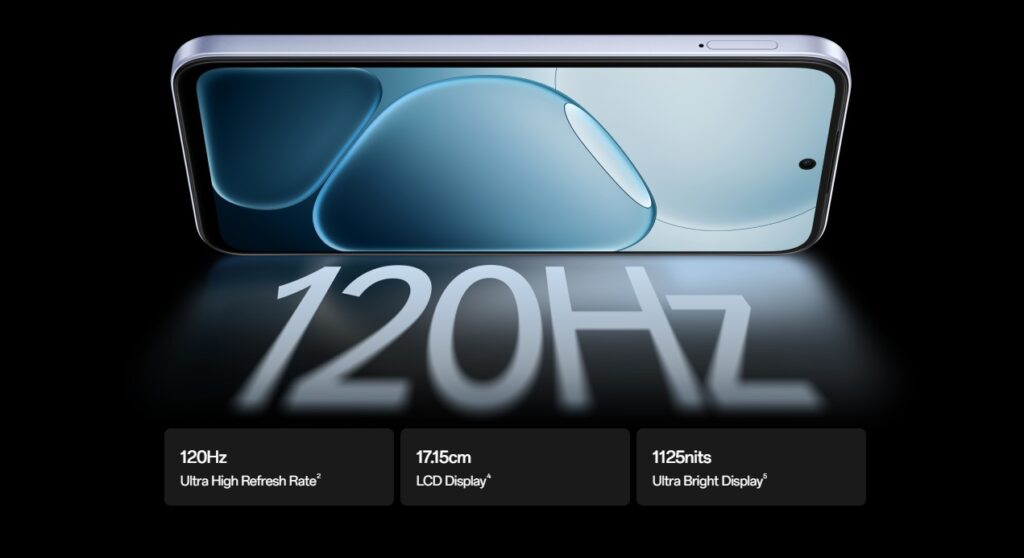
Individual pixels are visible when you look closely at text, fine details appear fuzzy rather than sharp, and photos look noticeably less crisp than on phones with higher resolution displays. The 120Hz refresh rate helps make scrolling feel smooth and animations look fluid, which partially compensates for the low resolution by making the interface feel responsive even if it doesn’t look particularly sharp.
The display achieves 700 nits typical brightness and 1125 nits peak brightness according to Oppo’s specifications, which provides adequate outdoor visibility in most conditions though not the exceptional sunlight legibility of phones with 1600+ nit peak brightness. The IPS LCD technology rather than AMOLED means blacks look gray rather than truly black, colors appear less saturated than AMOLED panels, and power consumption is higher because the entire backlight remains on even when displaying mostly dark content.
For watching videos, the combination of HD+ resolution, IPS LCD technology, and decent brightness creates a viewing experience that’s acceptable but unexciting, adequate for YouTube and streaming services but noticeably inferior to phones with Full HD+ AMOLED displays that cost only slightly more.
Camera Performance of the OPPO K14x
The Oppo K14x features a dual rear camera setup consisting of a 50MP primary sensor with f/1.8 aperture and PDAF autofocus, plus a 2MP depth sensor that exists mainly to enable portrait mode rather than contributing meaningful photographic capability. The front camera uses a 5MP sensor with f/2.2 aperture. Let’s establish realistic expectations immediately. Budget phone cameras in 2026 generally produce acceptable photos in bright daylight and struggle in anything less than ideal conditions, and the K14x follows this pattern with few surprises.
The 50MP main sensor captures decent photos in bright outdoor lighting with adequate detail, reasonable color accuracy, and acceptable dynamic range. Oppo’s image processing tends toward slightly oversaturated colors that make photos look more dramatic on the phone screen even if they don’t represent reality accurately. This appeals to users who want Instagram-ready photos without editing, though photography enthusiasts might prefer more neutral color science.
In medium lighting conditions like indoor spaces with overhead lights or cloudy outdoor days, image quality deteriorates with noticeable noise, reduced dynamic range where bright areas blow out and shadow areas lose detail, and colors that appear muted compared to bright daylight photos. In low light conditions like restaurants, evening scenes, or dimly lit interiors, the camera struggles significantly despite Oppo including a dedicated night mode.
Low-light photos show visible grain, lack fine detail, suffer from color casts where white balance goes wrong, and generally look soft rather than sharp.
The 2MP depth sensor assists with portrait mode by providing depth information for background blur, but portrait mode quality depends more on software edge detection than the depth sensor itself. Portrait shots in good lighting show acceptable subject separation with background blur that looks natural enough for social media, though edge detection sometimes fails around hair, glasses, or other complex shapes.
The 5MP selfie camera produces acceptable selfies for video calls and social media posts in good lighting, but struggles in less ideal conditions with noticeable noise and loss of detail. The front camera maxes out at 1080p video recording at 30fps, which is adequate for video calls but nothing special.
Oppo included AI-powered features to enhance photography including AI Eraser for removing unwanted objects from photos, AI Reflection Remover for reducing reflections in photos taken through glass, AI Best Shot that captures multiple frames and selects the sharpest one, AI Unblur that attempts to sharpen blurry photos, AI Portrait Mode with enhanced subject recognition, AI Recompose that suggests better framing for photos, and Dual-View Video Mode that records from both front and rear cameras simultaneously.
These AI features provide genuine utility when they work correctly, though the underlying camera hardware limitations mean you’re still starting with mediocre photos that AI processing can only improve so much. The camera can record 1080p video at up to 60fps from the rear camera, which produces acceptable footage for social media with reasonable stabilization though nothing approaching the quality of phones with OIS or more sophisticated stabilization systems.
The practical reality is that photography enthusiasts should look elsewhere because the K14x’s camera system represents exactly what you’d expect from a ₹15,000 phone in 2026. The camera is adequate for documenting daily life, acceptable for social media posts, and perfectly serviceable for WhatsApp and Facebook sharing where images get compressed anyway. But if you care about photo quality beyond basic functionality, phones like the Realme Narzo series or Samsung Galaxy M series at similar prices often offer better cameras even if their batteries are smaller.
Processor Performance And Gaming Capabilities
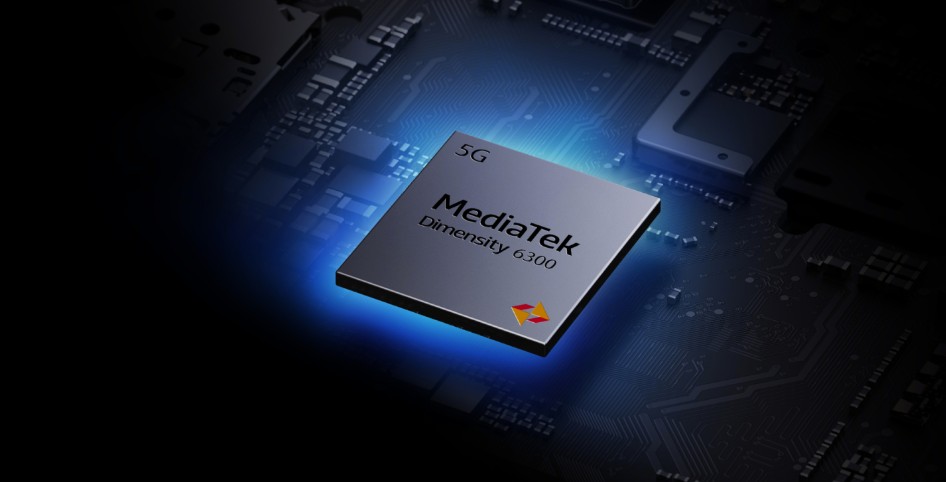
The MediaTek Dimensity 6300 processor built on a 6nm manufacturing process represents Oppo’s decision to prioritize battery life over processing power. The chip features an octa-core configuration with two Cortex-A76 cores running at 2.4 GHz and six Cortex-A55 efficiency cores at 2.0 GHz, paired with the Mali-G57 MC2 GPU.
According to AnTuTu 10 benchmark testing, the Dimensity 6300 scores approximately 420,000 to 430,000 points, placing it firmly in entry-level territory significantly below mid-range processors like the Dimensity 7000 series or Snapdragon 7 Gen series that score 700,000+ points. To provide context, this processor delivers roughly equivalent performance to the Snapdragon 695 from 2022, which means you’re getting three-year-old performance levels in a 2026 phone.
For daily tasks like browsing social media apps, watching YouTube videos, scrolling through Instagram or Facebook, using WhatsApp and other messaging apps, and taking photos, the Dimensity 6300 handles everything adequately without noticeable lag. Apps open reasonably quickly, the interface remains responsive during normal use, and basic multitasking between a few apps works acceptably.
Where you’ll feel the limitations is during more demanding activities. Heavy multitasking with many apps running simultaneously causes noticeable slowdowns as the phone struggles to keep everything in memory. Complex photo editing with multiple filters and adjustments takes noticeably longer than more powerful phones. Opening large files or switching between demanding apps shows loading delays.
The 4GB or 6GB of LPDDR4X RAM paired with 128GB of UFS 2.2 storage creates a memory subsystem that’s adequate but unexciting, with the limited RAM particularly constraining multitasking capability and the older UFS 2.2 storage noticeably slower than UFS 3.1 or UFS 4.0 found in mid-range phones.
For gaming, the Mali-G57 MC2 GPU with just two cores represents minimal graphics capability. Casual games like Candy Crush, Subway Surfers, Temple Run, and similar lightweight titles run fine at high settings. Popular games like BGMI (Battlegrounds Mobile India) and Free Fire are playable at low to medium graphics settings with 30fps frame rates, though you’ll need to accept reduced visual quality and occasional frame drops during intense combat.
More demanding games like Genshin Impact, Call of Duty Mobile at high settings, or Honkai Star Rail struggle significantly with low frame rates, frequent stuttering, and the need to run at minimum graphics settings just to maintain playability. The phone includes improved thermal management according to Oppo, which helps prevent severe throttling during extended gaming sessions, though the processor simply lacks the power for smooth high-end gaming regardless of cooling.
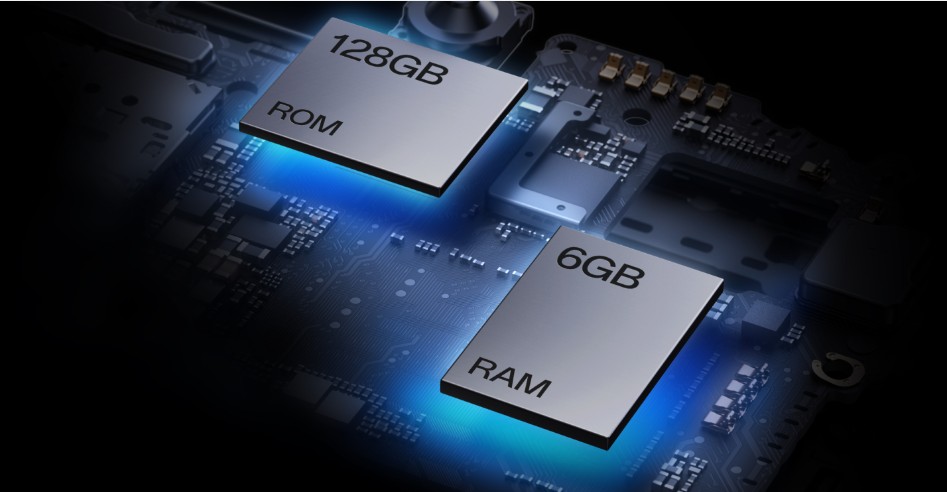
Oppo paired the Dimensity 6300 with either 4GB or 6GB of LPDDR4X RAM with virtual RAM expansion that can add up to 8GB of additional RAM by using storage as memory. The 4GB base variant is genuinely inadequate in 2026 when even budget phones commonly include 6GB or 8GB RAM, and the virtual RAM expansion doesn’t fully compensate because storage-based RAM is significantly slower than physical RAM.
The 6GB variant represents the minimum acceptable configuration, and even then you’ll notice apps reloading when switching between them because 6GB doesn’t provide enough headroom for true heavy multitasking. The 128GB of UFS 2.2 storage provides adequate space for apps, photos, and videos, with microSD expansion available for additional storage, though the UFS 2.2 specification means slower app loading and file transfers compared to faster storage technologies.
The practical reality is that the Dimensity 6300 in 2026 represents a phone that handles basic tasks adequately but struggles with anything demanding. For users whose phone usage consists primarily of social media, messaging, video streaming, and light photography, the performance is acceptable. For users who play games regularly, edit photos, or demand smooth performance from their devices, the Dimensity 6300 will frustrate with its limitations.
Connectivity And Battery Life
The battery is why this phone exists, and everything else represents compromises made to achieve exceptional battery endurance at ₹15,000. The 6500mAh battery uses conventional lithium-polymer chemistry rather than the newer Silicon-Carbon technology found in more expensive phones, which means the phone is thicker and heavier than it would be with newer battery technology but achieves that impressive capacity at budget pricing.
In normal usage patterns including social media browsing, WhatsApp messaging, YouTube video streaming, occasional photography, and web browsing with mixed Wi-Fi and 5G connectivity, user reports suggest the K14x delivers two full days of use with moderate screen-on time, potentially stretching to three days with lighter usage. Heavy users who spend hours gaming, streaming video continuously, or using the phone intensively all day will still get a full day plus additional hours, which beats most budget phones that require daily charging.
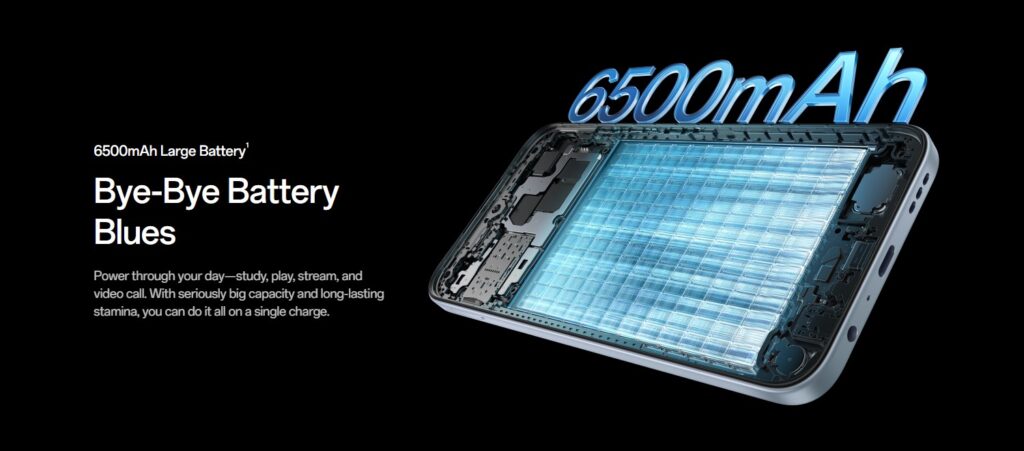
The 45W fast charging reaches approximately 50% capacity in around 30 minutes and full charge in roughly 70 to 75 minutes based on typical charging curves for 6500mAh batteries with 45W charging, though Oppo hasn’t published official charging time specifications. The charger is included in the box, which seems obvious but increasingly manufacturers are removing chargers to reduce costs.
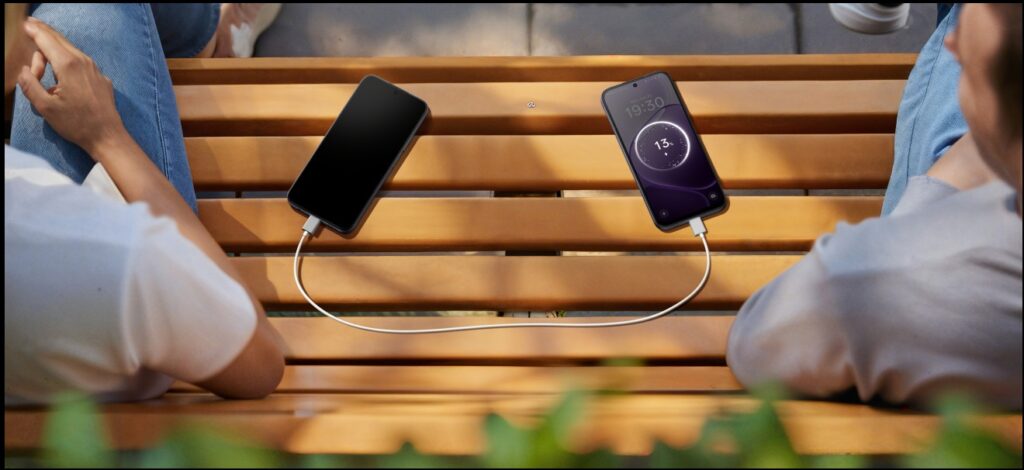
The charging speed is adequate without being exceptional, providing enough speed that morning charging while preparing for work or school provides sufficient power for the day. The phone includes reverse wired charging capability, allowing you to use the K14x’s large battery to charge other devices through a cable, which is useful for charging wireless earbuds, smartwatches, or helping friends with dead phones.
The practical psychological shift that comes with a 6500mAh battery fundamentally changes smartphone ownership. Most people charge their phones every night out of habit, but with the K14x you’ll find yourself checking the battery percentage before bed, seeing 60% remaining, and deciding you’ll charge it tomorrow.
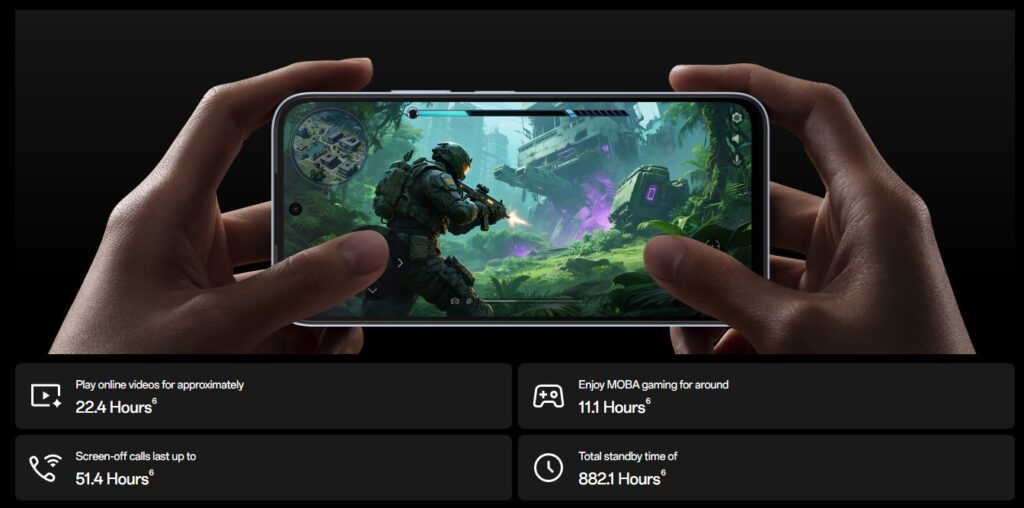
Except tomorrow it’s still at 35% so you wait another day. This elimination of daily charging routines and battery anxiety represents genuine value that’s difficult to quantify in specifications but matters enormously in daily life. You stop planning activities around charging opportunities, stop carrying power banks, and stop worrying about whether your phone will last through the day.
The connectivity features include 5G support for SA/NSA networks with 11 bands covering n1, n3, n5, n8, n28, n38, n40, n41, n48, n77, n78, providing comprehensive compatibility with Indian 5G networks. The phone supports dual-SIM functionality with two nano-SIM slots, Wi-Fi 5 (802.11ac) with dual-band 2.4GHz and 5GHz connectivity, Bluetooth 5.4 with A2DP and LE for wireless accessories, GPS with Galileo, GLONASS, and QZSS for accurate positioning.
The absence of NFC is disappointing because contactless payments through Google Pay and similar services require NFC, forcing users to carry physical cards or use QR code payments instead of convenient tap-to-pay functionality. The infrared port is unspecified, the USB Type-C 2.0 port provides charging and data transfer though only at USB 2.0 speeds rather than faster USB 3.0 or 3.1, and the inclusion of a 3.5mm headphone jack provides compatibility with wired headphones without requiring adapters.
Software And User Experience
The Oppo K14x ships with ColorOS 15 based on Android 15, giving users the latest Google software paired with Oppo’s heavy customization layer. ColorOS 15 includes extensive visual customization options, numerous added features, and unfortunately the return of bloatware and pre-installed apps that Oppo includes to generate revenue. When you first turn on the phone, you’ll find apps like HotApps, HotGames, and various shopping apps pre-installed, along with promotional notifications encouraging you to install additional apps or games.
Users will need to spend time uninstalling or disabling apps they don’t want, though some system apps can’t be fully removed. The aggressive battery optimization helps achieve the impressive battery life but will kill background apps unless specifically whitelisted, which can be annoying for messaging apps, music players, or other services you want running continuously.
Oppo hasn’t announced the update commitment for the K14x, but based on their track record with budget phones, expect two major Android updates (Android 16 and Android 17) plus security patches for two to three years. This is adequate for a budget phone but significantly shorter than the four years of updates Samsung provides or the seven years Google offers on Pixel devices, meaning the phone will feel outdated sooner from a software perspective even if the hardware remains functional.
The ColorOS interface includes features like Smart Sidebar for quick access to frequently used apps, App Cloner for running multiple instances of social media apps, Game Space for optimizing gaming performance, and various customization options for themes, icon packs, and always-on display designs.
The software experience feels typical of Oppo’s budget offerings with some genuinely useful features mixed with bloatware and aggressive monetization through pre-installed apps and notifications. Users familiar with ColorOS will know what to expect, while users coming from cleaner Android implementations like stock Android or Samsung’s OneUI might find the heavy customization and bloatware annoying.

What is the closest competition for the OPPO K14x
The sub-₹15,000 segment in 2026 is brutally competitive with nearly every manufacturer offering devices that make different trade-offs. The Oppo K14x prioritizes battery endurance while compromising on display resolution and processor performance.
Competing options include the Lava Agni 4 at ₹25,000 offering superior specifications across the board but costing ₹10,000 more, the Samsung Galaxy M15 5G with Full HD+ AMOLED display and similar battery capacity at comparable pricing, the Realme Narzo 70 5G offering better processor and display at similar prices, the Poco M7 Pro providing superior gaming performance with similar battery life, and various options from Xiaomi’s Redmi series that balance specifications differently.
The K14x represents excellent value specifically for users who prioritize battery life above everything else and can accept the HD+ display and entry-level processor. For users who want balanced specifications or prioritize display quality and performance, competing phones at similar or slightly higher prices offer better overall packages even if their batteries are smaller.
Is the OPPO K14x the smartphone for you?
The Oppo K14x makes sense for users who prioritize battery endurance above absolutely everything else and rarely do anything more demanding than social media, messaging, and video streaming. It makes sense for people who travel frequently or work in environments where charging opportunities are limited, making multi-day battery life genuinely valuable. It makes sense for users on tight budgets who need 5G connectivity and acceptable performance for basic tasks without spending more than ₹15,000.
It makes sense for people upgrading from very old phones where even the HD+ display and entry-level processor represent improvements over their current devices. And it makes sense for users who primarily use their phones for communication and media consumption rather than gaming or productivity.
The Oppo K14x does not make sense for users who watch lots of video content and will notice the HD+ display’s inferior quality compared to Full HD+ panels. It doesn’t make sense for mobile gamers who want smooth performance in popular games, because the Dimensity 6300 struggles with anything beyond casual titles. It doesn’t make sense for heavy multitaskers who run many apps simultaneously, because the limited RAM causes frequent app reloading.
It doesn’t make sense for photography enthusiasts who want consistently good photos in varied lighting conditions. It doesn’t make sense for users who expect their phones to remain relevant for three or four years, because the entry-level specifications will feel outdated faster than more capable hardware. And it doesn’t make sense for users who value display quality and are willing to charge daily in exchange for a sharper screen.
TattwaTech Score – 6 Out Of 10
The Oppo K14x succeeds at exactly one thing, which is providing exceptional battery endurance at a budget price point. The 6500mAh battery genuinely delivers multi-day usage that eliminates battery anxiety and represents real value for people who prioritize endurance over everything else. But every other aspect of this phone represents compromises that went too far in pursuit of that battery capacity and ₹15,000 price point.
The 720p HD+ display in 2026 feels like returning to 2018, the Dimensity 6300 processor provides 2022-level performance when phones should look forward not backward, and the limited RAM constrains multitasking in ways that will frustrate heavy users. The camera is adequate but unexceptional, the software includes annoying bloatware, and the missing NFC eliminates modern payment convenience.
For users whose phone usage truly consists of basic communication, media streaming, and occasional photography, and who genuinely value three-day battery life over everything else, the K14x offers acceptable functionality at a competitive price.
For everyone else who wants balanced specifications, display quality, or performance capability, the K14x’s compromises will become frustrating quickly, and spending slightly more money on phones with Full HD+ displays and better processors provides noticeably superior daily experience even if those phones require daily charging. The K14x is a battery champion that forgot smartphones should excel at more than just enduring.