
Huawei FreeBuds Pro 5 Review: Great Sound and ANC, But There Is a Catch

The Huawei FreeBuds Pro 5 deliver some of the best sound and noise cancellation available under $250. But there is a catch that every non-Huawei user needs to know before buying. This review covers everything, including the features that are limited to Huawei phones and what you actually get on any other device.
Huawei FreeBuds Pro 5: First Look and Key Specs
The FreeBuds Pro 5 are Huawei’s latest flagship wireless earbuds, launched globally in February 2026 at £179.99 (around $243 or €206). They follow the FreeBuds Pro 4 from late 2024 and bring several meaningful upgrades: a new dual-engine noise cancellation system, Bluetooth 6.0, a higher IP57 water resistance rating, and the option to connect via Huawei’s proprietary NearLink 2.0 protocol if you own a compatible Huawei device.
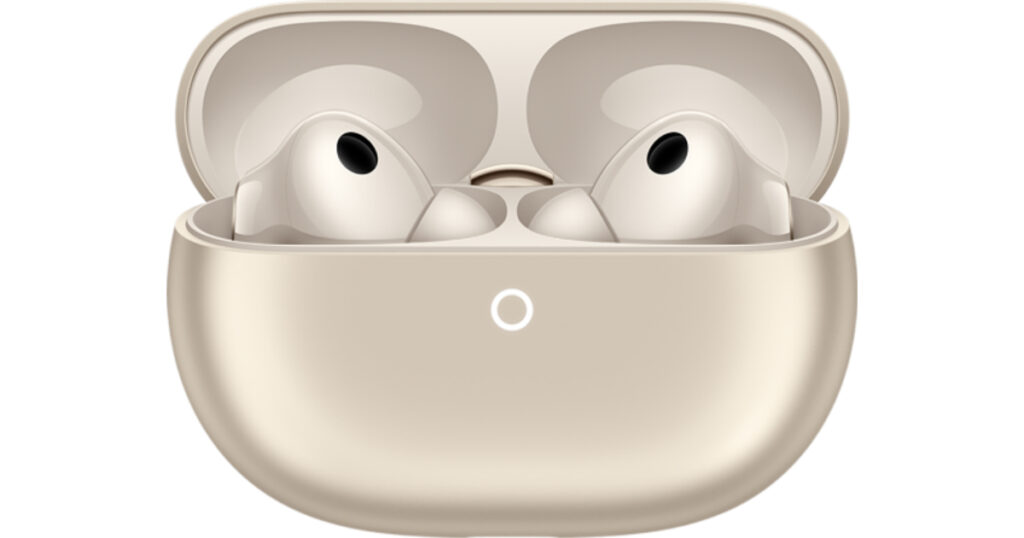
On paper, the FreeBuds Pro 5 compete directly with the Apple AirPods Pro 3 ($249), the Sony WF-1000XM5 ($299), and the Samsung Galaxy Buds 4 Pro. The price advantage is real. Even at full price, the FreeBuds Pro 5 cost less than every named competitor. The question is whether the feature set holds up outside the Huawei ecosystem.
| Spec | Detail | What It Means |
| Weight | 5.5g per earbud, 43g case | Lighter than Pro 4, comfortable for all-day use |
| Driver system | Dual-driver: ultra-linear dual-magnet (bass) + micro-planar membrane (highs) | Separate drivers for low and high frequencies reduce distortion |
| Chipset | Kirin A3 | Huawei’s latest audio chip with faster AI processing |
| Best codec (Huawei phone) | L2HC 5.0 via NearLink 2.0 at up to 4.6 Mbps | Near-lossless 48kHz/24-bit audio if you have a Huawei Mate 80 or Pura 80 |
| Best codec (other phones) | LDAC at up to 990 Kbps | Still excellent high-quality audio, standard on most Android phones |
| ANC microphones | 8 total: 3 silicon mics + 1 bone conduction mic per earbud | Bone conduction mic picks up your voice even with ANC running |
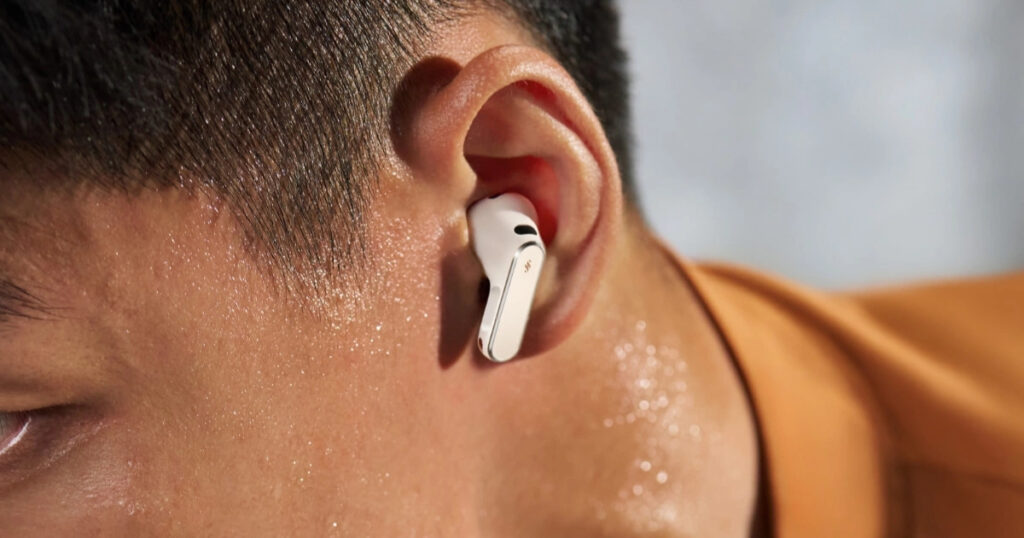
| IP rating | IP57 (earbuds), IP54 (case) | Upgrade over Pro 4’s IP54. Protected against sweat, rain, and splashes |
| Bluetooth | Bluetooth 6.0 with dual-device connection | Connect to two devices at the same time |
| Battery (buds only) | Up to 9 hours (ANC off), up to 6 hours (ANC on) | Competitive with AirPods Pro 3 (8h ANC off, similar with ANC on) |
| Battery (total with case) | Up to 38 hours | More total runtime than AirPods Pro 3 (30h total) |
| Charging | USB-C wired + wireless Qi | Works with standard wireless charging pads |
| Price | £179.99 / ~$243 / €206 | Less than AirPods Pro 3 ($249), Sony WF-1000XM5 ($299) |
Design and Comfort: Built for Long Listening Sessions
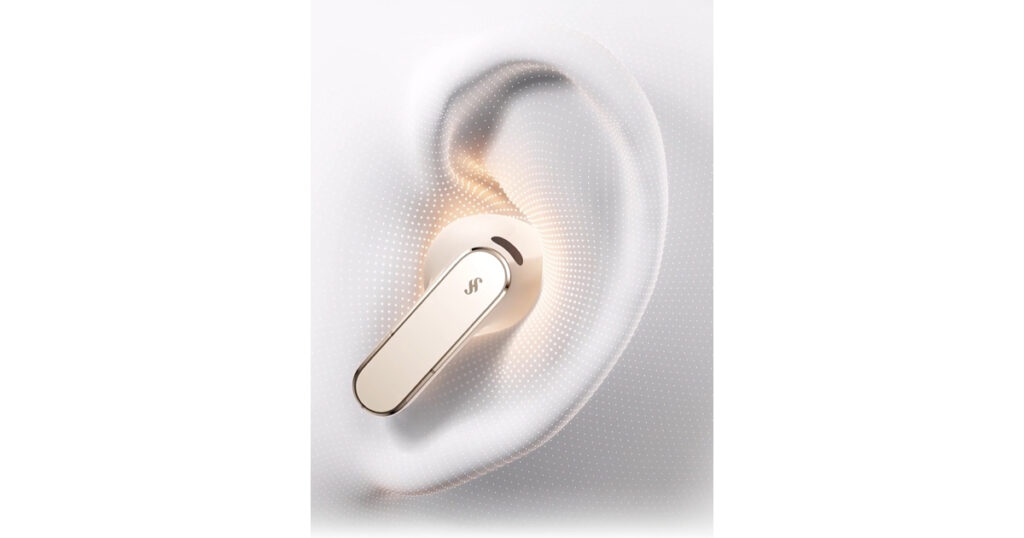
The FreeBuds Pro 5 use a stem-style design similar to AirPods, with a slightly stubby, oval shape and a mirror-like sheen on the stems. Each earbud weighs 5.5 grams. The case is smaller and lighter than the FreeBuds Pro 4, with a compact pebble shape and a halo ring LED that glows red, green, or white to show battery status.
Four colour options are available: white, black, sand gold, and dark blue. The dark blue version upgrades the charging case from plastic to vegan leather with a fingerprint-resistant finish. The other variants use Huawei’s new excimer film coating, which has a smooth, skin-friendly texture. Strong magnets keep the lid closed securely.
Comfort is one of the strongest points here. Huawei says it analysed over 10,000 human ear profiles and went through more than 1,000 earbud shapes and 60 ear tip iterations to reach this design. Multiple reviewers, including people who normally struggle with in-ear earbuds, reported being able to wear the FreeBuds Pro 5 for several hours without discomfort. The silicone ear tips are soft and conform to the ear canal. They come in multiple sizes.
One thing to note: unlike the FreeBuds Pro 4, the Pro 5 does not include foam ear tips in the box. Foam tips offer better passive isolation, which helps ANC performance. If you found the Pro 4’s foam tips useful, you can still use them on the Pro 5 since the nozzle size is the same. Third-party foam tips also work. The app even has a dedicated EQ setting to compensate for foam tip acoustics.
Sound Quality: Clean, Detailed, and Well-Balanced
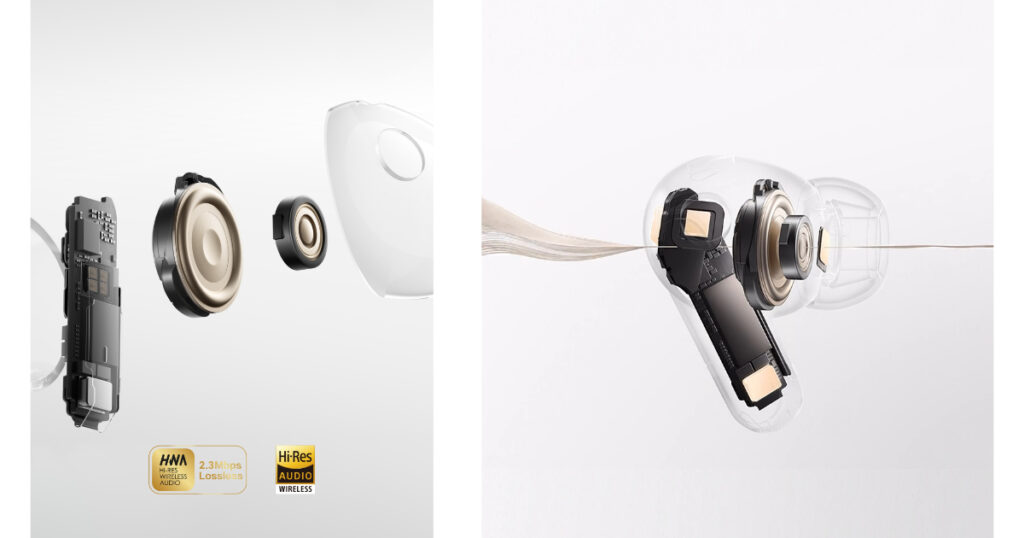
The FreeBuds Pro 5 use a dual-driver system where a low-frequency driver handles bass and a separate micro-planar membrane driver handles the midrange and treble. The benefit of separating these two tasks is that each driver can be optimised for its own frequency range, reducing crossover distortion (the muddiness that happens when one driver tries to handle too many frequencies at once).
Huawei also includes a dual DAC setup, where the bass signal and the mid-and-high signal are processed through separate digital-to-analogue converters before reaching the drivers. According to Huawei, this doubles crossover precision and reduces background DAC noise by 50 percent compared to a single DAC design.
In practical listening terms, the sound signature is refined rather than V-shaped. Bass is present and punchy but controlled and not boomy. Vocals are clear and natural without being pushed forward or artificially brightened. Treble is crisp without becoming sharp or fatiguing over long sessions. There is a noticeable sense of width and space for in-ear earbuds, which makes orchestral music and layered recordings sound more open than expected from this form factor.
The Huawei AI Life app provides eight preset EQ profiles developed in partnership with the Beijing Central Conservatory of Music. Profiles include Voice, Bass, and Movie mode. A 10-band customisable EQ is also available for people who want to tune the sound themselves. The Dynamic EQ feature adjusts the sound profile automatically based on your environment and volume level.
Lossless audio at 48kHz/24-bit is possible via L2HC 4.0 at 2.3 Mbps if you pair with a compatible Huawei device. On all other phones, the FreeBuds Pro 5 use LDAC at up to 990 Kbps, which is still a high-quality codec and noticeably better than standard SBC or AAC. iPhone users get AAC, which is lower quality than LDAC but still acceptable for most listening.
For audiophiles: the FreeBuds Pro 5 support spatial audio on Huawei devices. The app also promises device-agnostic head-tracked spatial audio (similar to Apple’s spatial audio) for all users, but this feature had not yet gone live in the app at the time of this review.
Dual-Engine ANC: How It Works and How Well It Performs
Huawei is calling the FreeBuds Pro 5 the world’s first earbuds with a Dual-Engine ANC architecture. Here is what that means in plain English.
Most earbuds use a single ANC system that processes noise across all frequencies together. The FreeBuds Pro 5 use each driver as its own independent noise-cancellation engine. The low-frequency driver targets rumbles like traffic, aircraft engines, and air conditioning. The high-frequency driver handles sudden sharp sounds like keyboard clicks, voices, and crowd chatter. These two systems work at the same time.
A MIMO AI Sensing model processes noise data up to 400,000 times per second to coordinate both engines. Huawei says this results in up to 220 percent more noise reduction compared to the FreeBuds Pro 4, with up to 204 percent improvement in gym environments and 220 percent in aircraft cabins.
Four ANC modes are available. Smart Dual Core (adaptive) adjusts intensity in real time based on your surroundings and even your ear canal shape. Cozy is for quiet spaces. General is for everyday environments. Ultra is for the highest noise environments. Within Awareness mode, you can choose Standard, Voice Awareness, or Adaptive Awareness.
Multiple reviewers who have used the AirPods Pro 3, Sony WF-1000XM5, and other top-tier earbuds describe the FreeBuds Pro 5 ANC as competitive or comparable. Low-frequency noise like traffic, trains, and aircraft cabin rumble is handled very effectively. Office chatter and background hum fade significantly. The ANC does not create the uncomfortable pressure sensation that some systems produce. Transparency mode is natural enough for conversation without removing the earbuds.
The call quality during noise cancellation is impressive. Huawei says the FreeBuds Pro 5 can reduce up to 100 dB of surrounding noise during calls while still picking up your voice even in wind speeds of up to 10 m/s. In practice, call quality is strong in most real-world situations. However, one detailed comparison found that in very high-noise environments, the FreeBuds Pro 5 filter ‘S’ sounds slightly more aggressively than the Pro 4, which can make your voice sound marginally more muffled in extreme conditions. This is not a problem in typical use but is worth noting for anyone who takes a lot of calls outdoors in loud areas.
The Ecosystem Catch: What Works on Every Device vs What Requires Huawei
This is the section every non-Huawei user needs to read carefully before buying.
The FreeBuds Pro 5 work with any Bluetooth device. iPhones, Android phones from Samsung, Google, OnePlus, and any other brand can pair with them and get good sound, functional ANC, and most core features. But several advanced features are exclusive to specific Huawei hardware running HarmonyOS 6 or later.
| Feature | Works on All Devices | Huawei Only |
| Standard ANC and Awareness modes | Yes | |
| LDAC codec (Android phones) | Yes (Android) | |
| AAC codec (iPhone) | Yes (iOS) | |
| Touch and gesture controls | Yes | |
| Dual-device multipoint connection | Yes | |
| Conversation Awareness (auto-pause for talking) | Yes | |
| 10-band EQ and EQ presets (via app) | Yes (via app) | |
| NearLink 2.0 wireless connection | Huawei Mate 80 / Pura 80 series only | |
| L2HC 5.0 codec at 4.6 Mbps (highest quality) | Huawei HarmonyOS 6 device only | |
| Head-tracked spatial audio | Huawei devices (feature pending app update) | |
| Real-time voice translation | Huawei devices only |
The Huawei AI Life app is available on iOS via the App Store. Android users on non-Huawei devices need to download it via APK from Huawei’s website, which is a minor inconvenience but not a blocker. The app controls EQ, ANC modes, gesture customisation, and firmware updates.
Battery Life: Strong Numbers That Hold Up in Practice
Huawei rates the FreeBuds Pro 5 for up to 9 hours of playback with ANC off, or 6 hours with ANC on. Total runtime with the charging case is up to 38 hours. The case holds a 537 mAh battery, and each earbud carries a 60 mAh cell.
The 38-hour total runtime is better than the Apple AirPods Pro 3 (30 hours total with case), the Sony WF-1000XM5 (36 hours total), and the Samsung Galaxy Buds 4 Pro (30 hours total). With ANC on, real-world testing by multiple reviewers confirms the 6-to-7-hour range holds up at moderate volume.
Charging is via USB-C and wireless Qi. Fast charging is supported, and the case recharges quickly enough to give meaningful extra battery in a short time. Both wired and wireless charging options cover most users’ day-to-day charging habits.
For most people, the battery life is not a concern. A full work day with ANC running is comfortable on a single charge, and the case provides several additional full charges.
Controls and App: Intuitive Once You Learn the System
The FreeBuds Pro 5 use stem-based gesture controls rather than touch panels on the earbud body. This matters because touch panels on the main body of an earbud typically require pushing the earbud further into your ear to activate, which can be uncomfortable. Stem gestures activate with a pinch or squeeze on the protruding part of the earbud.
The control scheme includes: double-tap to play or pause, triple-tap to skip tracks, swipe up or down on the stem to adjust volume, pinch and hold to switch ANC modes, and single pinch to play or pause on one bud configuration. Head gesture controls are also available: nodding accepts a call and shaking your head declines one. These can be turned off if you prefer.
Controls can be individually customised for each earbud through the AI Life app. Multiple reviewers found the controls accurate and reliable, with no significant accidental activations even when inserting or adjusting the earbuds.
The app provides access to EQ profiles, ANC mode selection, gesture customisation, Adaptive Volume settings, Dynamic EQ, and firmware updates. Gaming mode and Movie mode are also accessible through the app, reducing audio latency for gaming and enabling low-latency playback for video content.
Huawei FreeBuds Pro 5 vs AirPods Pro 3 vs Sony WF-1000XM5 vs Galaxy Buds 4 Pro
| FreeBuds Pro 5 | AirPods Pro 3 | Sony WF-1000XM5 | Galaxy Buds 4 Pro | |
| Price | ~$243 | $249 | $299 | $199 |
| Battery (buds, ANC off) | 9h | 8h | 8h | 7h |
| Battery (with case) | 38h | 30h | 36h | 30h |
| IP rating (buds) | IP57 | IP54 | IP54 | IP57 |
| Best codec (non-ecosystem) | LDAC (Android) | AAC | LDAC | SSC / LDAC |
| ANC quality | Excellent | Excellent | Excellent | Very Good |
| Works with any phone | Yes (with limits) | Best on iPhone | Yes | Best on Samsung |
| Wireless charging (case) | Yes | Yes | Yes | Yes |
The Sony WF-1000XM5 still leads the market on pure ANC performance and cross-platform compatibility, but at $299 it costs significantly more. The Apple AirPods Pro 3 are the obvious choice for iPhone users who want the deepest iOS integration. The Samsung Galaxy Buds 4 Pro are priced slightly lower and work best on Samsung devices. The FreeBuds Pro 5 offer the best balance of price, battery, and ANC performance for users who are not tied to any specific ecosystem.
What Changed vs FreeBuds Pro 4: Should You Upgrade?
If you currently own the FreeBuds Pro 4 and are wondering whether the Pro 5 is worth the upgrade, here is the honest comparison.
What genuinely improved:
- ANC: Dual-Engine ANC replaces the single-engine system. Real-world noise cancellation is meaningfully stronger, especially on low-frequency noise.
- IP rating: Upgraded from IP54 to IP57. The earbuds can now handle brief water submersion, not just splashes. The case also gets IP54 protection.
- Battery: Up to 38 hours total vs 31 hours total on the Pro 4.
- Bluetooth: Bluetooth 6.0 replaces Bluetooth 5.3. New internal antenna improves range by 38 percent and reduces interference.
- Weight: Slightly lighter than the Pro 4. Case is also narrower.
What stayed the same or got slightly worse:
- No foam tips: The Pro 4 included foam tips. The Pro 5 does not. You can use your Pro 4 foam tips on the Pro 5 since the nozzle size is unchanged.
- Microphone in extreme noise: In very loud environments, the Pro 5 filters ‘S’ sounds more aggressively than the Pro 4, which can make voices sound slightly more muffled on calls.
- Design: Very similar to the Pro 4. The shape is slightly more compact but the change is subtle.
If you own the FreeBuds Pro 4 and are on an iPhone or a non-Huawei Android device: the upgrade is moderate rather than dramatic. Better ANC and battery are the main gains. If you are on a Huawei device and want NearLink, the upgrade is stronger. If you are new to the FreeBuds Pro series, the Pro 5 is the better buy at a similar price to the Pro 4’s discounted current price.
Who Should Buy the Huawei FreeBuds Pro 5?
The right recommendation depends entirely on what phone you use and what matters most to you.
- Huawei phone users (Mate 80, Pura 80 series): This is the best version of the FreeBuds Pro 5. You get NearLink 2.0, L2HC 5.0, the full lossless audio experience, and every software feature. Strong recommendation.
- iPhone users: You get LDAC-equivalent audio via AAC (which is lower quality than LDAC), good ANC, all gesture controls, and access to most app features. You miss lossless audio and spatial audio. Still a compelling alternative to AirPods Pro 3, especially at the lower price.
- Android non-Huawei users (Samsung, Google, OnePlus, etc.): You get LDAC, which is excellent. ANC performance is the same as on Huawei devices. App features work via APK. You miss NearLink and lossless. Very strong value at this price.
- Upgrading from FreeBuds Pro 4: Worth it mainly if ANC performance, battery life, or water resistance matter to you. If you are satisfied with the Pro 4 on a non-Huawei device, the upgrade is nice but not urgent.
- Note for US buyers: There is no official US launch due to regulatory restrictions on Huawei products. The FreeBuds Pro 5 are available internationally through Amazon and other online retailers, but buyers should be aware of potential warranty and support limitations.
Final Verdict on the Huawei FreeBuds Pro 5
The Huawei FreeBuds Pro 5 are among the best-value premium wireless earbuds available right now. The sound quality is excellent, the ANC is genuinely competitive with AirPods Pro 3 and Sony WF-1000XM5 level performance, and the 38-hour total battery life is one of the best in this category. The price is lower than every direct competitor.
The catch is real but manageable for most buyers. If you do not own a Huawei device, you lose lossless audio and spatial audio head-tracking. On an Android phone, LDAC fills most of that gap. On iPhone, AAC is a noticeable step down in audio quality for attentive listeners but still acceptable for most people. The core experience, including sound, ANC, comfort, battery, and controls, is excellent on any platform.
BOTTOM LINE: If you are looking for premium ANC earbuds and want to spend less than $250, the FreeBuds Pro 5 are the best option available right now for Android users. iPhone users get a strong product with slightly limited codec quality but excellent everything else. The only buyers who should look elsewhere are those who want the deepest iPhone integration (AirPods Pro 3) or the widest cross-platform codec compatibility (Sony WF-1000XM5).





[…] While the rest of the world has been waiting for the next iterative update from the usual suspects, Huawei has decided to rip up the rulebook. The official launch of the Huawei Pura X Max in China marks a […]