
READ THIS before you buy the POCO X8 Pro Max

The POCO X8 Pro Max is the first globally available phone with the Dimensity 9500s chip, a 8,500mAh battery (9,000mAh in India), 100W fast charging, and Wi-Fi 7 at a starting price around Rs. 57,999. That is a strong spec sheet. But how does it actually perform, and what are the honest trade-offs? Here is everything you need to know before launch day.
POCO X8 Pro Max: Quick Facts Before We Begin
The POCO X8 Pro Max is a rebranded Redmi Turbo 5 Max, Xiaomi’s China-exclusive flagship mid-ranger from early 2026. POCO has brought this device to global and Indian markets under its own branding, with a few specification adjustments for different regions. This is a standard practice for the POCO brand and is worth understanding before reading any spec comparison, because some numbers differ between the Chinese original and the global or Indian version.
The global launch is confirmed for March 17, 2026, at 8:00 PM GMT+8, with the India launch following on approximately March 26, 2026. The phone will be sold in India through Flipkart. Expected colours are black, white, and green.
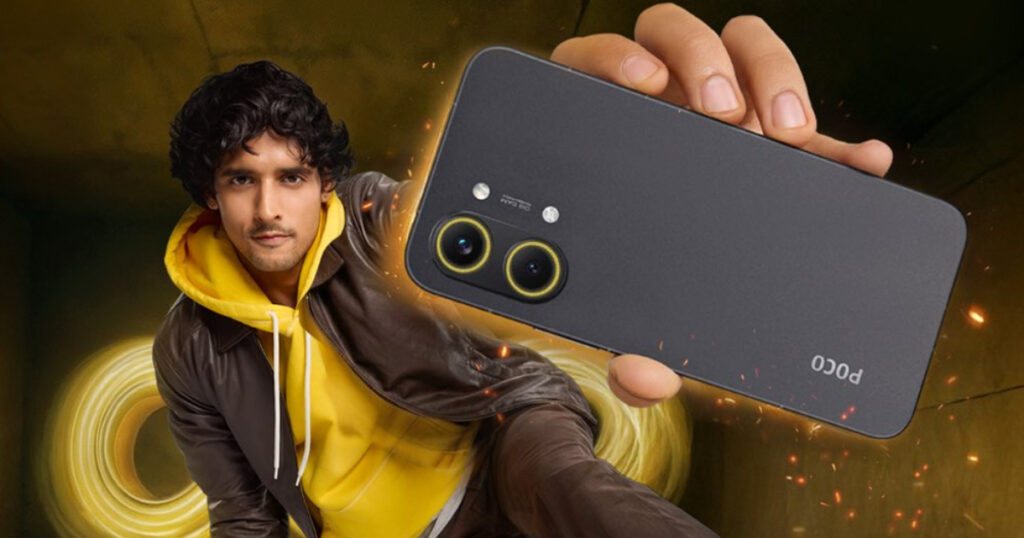
With that context set, here is a complete and annotated specs breakdown.
| Spec | POCO X8 Pro Max | What It Means |
| Chipset | MediaTek Dimensity 9500s, 3nm | Scaled-down flagship chip. Fast enough for all apps and most games. More detail below. |
| CPU | 1x Cortex-X925 @ 3.73GHz + 3x Cortex-X4 @ 3.3GHz + 4x Cortex-A720 @ 2.4GHz | High-performance configuration. Prime core is slightly slower than the full 9500’s 4.21GHz. |
| GPU | Mali-G925 Immortalis MC11 | 11-core GPU vs the 12-core Immortalis on the full Dimensity 9500. Gaming performance is strong but not peak flagship. |
| RAM / Storage | 12GB or 16GB LPDDR5x | 256GB or 512GB UFS 4.1 | Very fast memory and storage. Flagship-equivalent on these components. |
| Display | 6.83 inches, 1.5K OLED (2772×1280), 120Hz, up to 2000 nits, TCL M10 panel, 3840Hz PWM dimming | 1.5K is slightly sharper than Full HD. 3840Hz PWM reduces flicker for sensitive eyes. Not a 144Hz panel. |
| Main camera | 50MP Light Hunter 600 with OIS (f/1.75) | Huawei-developed sensor with larger pixels for better low-light. OIS reduces blur in handheld shots. |
| Ultra-wide camera | 8MP (f/2.2) | Basic ultra-wide. Acceptable in daylight, limited in low light. No telephoto in this setup. |
| Front camera | 20MP OV20B (f/2.24) | Capable selfie camera with good detail in normal light conditions. |
| Battery (global) | 8,500mAh lithium battery | Largest battery in this segment globally. Expect 15 to 20 hours of mixed screen-on time. |
| Battery (India) | 9,000mAh silicon-carbon battery | Silicon-carbon cells store more energy at the same physical size. India version gets a larger AND more energy-dense cell. |
| Charging | 100W wired fast charging + 27W reverse wired charging | 8,500mAh from 0 to 100% in about 50 to 55 minutes. 27W reverse charging can top up earbuds or a friend’s phone. |
| Fingerprint | Ultrasonic in-display fingerprint sensor | Faster and more reliable than optical in-display scanners. Works wet hands. |
| Water resistance | IP68 + IP69K | IP68 = 1.5m water for 30 minutes. IP69K = high-pressure hot water jets. Excellent dual rating. |
| Connectivity | Wi-Fi 7, Bluetooth 5.4, NFC, IR blaster, USB-C 2.0 | Wi-Fi 7 is the latest standard. IR blaster lets you use the phone as a TV remote. USB-C 2.0 is a notable limitation. |
| Speakers | Dual stereo speakers, Dolby Atmos | Good for a non-headphone media experience. |
| OS | HyperOS 3 based on Android 16 | Android 16 out of the box. Xiaomi has committed to OS updates but the exact update policy has not been confirmed. |
| Weight | Approximately 219g | Heavy for a mid-ranger but expected given the large battery. Thicker than the POCO X7 Pro. |
| Price (India, expected) | Starting from approximately Rs. 57,999 | Based on leaked European pricing (€529.90) converted and adjusted for India market. |
The Dimensity 9500s: What You Actually Get and What You Miss
The MediaTek Dimensity 9500s is the most important thing to understand about this phone before buying it. It is not the same as the Dimensity 9500, and the difference matters if you are comparing benchmark numbers from other phones.
Dimensity 9500 vs Dimensity 9500s: The Key Differences
The full Dimensity 9500 has a prime Cortex-X925 core running at 4.21GHz, three performance cores at 3.5GHz, and four efficiency cores at 2.7GHz. It also uses the more powerful Arm G1-Ultra GPU.
The Dimensity 9500s scales all of these back. The prime core drops to 3.73GHz, the performance cores go to 3.3GHz, the efficiency cores go to 2.4GHz, and the GPU is the Mali-G925 Immortalis MC11, which is the same family but with one fewer core (11 vs 12).
In practical terms, the 9500s is roughly 10 to 15 percent slower than the 9500 in CPU tasks, and slightly slower in GPU tasks. It is still meaningfully faster than the Dimensity 8500 Ultra in the standard X8 Pro.

Real Benchmark Numbers
Geekbench 6 scores from the pre-launch listing: single-core 2,659 and multi-core 8,369 for the global model. The Indian unit scored 2,616 and 8,401. These numbers put the phone above the Dimensity 9400-based devices from 2025 but roughly 10 to 12 percent below the Snapdragon 8 Gen 5-powered phones like the OnePlus 15R at $699.
AnTuTu from the Redmi Turbo 5 Max (same hardware): approximately 3,298,445 points broken down as CPU 952,789, GPU 1,130,421, memory 502,375, and UX 712,860. For reference, Snapdragon 8 Gen 5 phones typically score around 3,800,000 to 4,000,000 on AnTuTu.
What this means for gaming: the POCO X8 Pro Max can run Genshin Impact, BGMI, Call of Duty Mobile, and most demanding games at high to ultra settings smoothly. If you are a competitive gamer who needs the absolute peak frame rates and uses 144Hz-calibrated games, you would need a Snapdragon 8 Gen 5 device. For everything else, including the vast majority of Android gaming, the 9500s is more than capable.
The POCO X8 Pro Max does NOT have a 144Hz display. The panel runs at 120Hz maximum. Some competing phones at this price tier offer 144Hz. If refresh rate is a priority for gaming, factor this in.
The Redmi Turbo 5 Max Connection: What Is Different and Why It Matters
The POCO X8 Pro Max is a rebranded Redmi Turbo 5 Max, which launched in China in early 2026. Xiaomi frequently releases its Chinese lineup to global markets under the POCO or Redmi Global branding. This is not unusual and does not necessarily mean a worse product. But there are three specific differences worth knowing about.
Battery: 8,500mAh vs 9,000mAh
The Redmi Turbo 5 Max in China uses a 9,000mAh silicon-carbon battery. The global POCO X8 Pro Max carries an 8,500mAh standard lithium battery. The India variant is expected to match the Chinese version with a 9,000mAh silicon-carbon cell, which is a meaningful advantage.
Silicon-carbon batteries store more energy per unit volume than standard lithium-ion cells because carbon-silicon composite material can absorb more lithium ions. This means the India version gets a larger battery capacity in the same or similar physical space. It also charges slightly faster and maintains capacity for more charge cycles before degrading.
Connectivity: Wi-Fi 7 Confirmed
Some earlier leaks suggested the global version might be limited to Wi-Fi 6. The confirmed spec sheet shows Wi-Fi 7 on the POCO X8 Pro Max globally, which brings it in line with the Redmi original.
USB-C 2.0
Both the Chinese original and the global version use USB-C 2.0 rather than USB 3.2 or Thunderbolt. This means data transfers are limited to USB 2.0 speeds (480 Mbps) and the port does not support video output. For most users this is not a problem, but it is a notable spec cut for a phone at this price point, and it is worth knowing if you frequently transfer large files or connect your phone to a monitor.
Display: 1.5K OLED and 3840Hz PWM Explained
The 6.83-inch OLED panel on the POCO X8 Pro Max is a TCL M10 display with a resolution of 2772×1280 pixels. This resolution is labelled as 1.5K, which sits between the Full HD+ (1080p) displays on many mid-rangers and the 1440p QHD panels on premium flagships.
In practice, 1.5K on a 6.83-inch screen gives a pixel density of around 445 PPI. Text is sharp and images look crisp. The difference between 1.5K and 1440p at typical viewing distances is very difficult to see with the naked eye.
The 120Hz refresh rate makes scrolling and animations feel smooth. This is the standard for premium mid-range and flagship phones. The display lacks the 144Hz option found on some rivals including the iQOO Neo 10.
3840Hz PWM dimming is a display technology that changes how the screen handles brightness. Most OLED screens at lower brightness settings flicker rapidly to simulate lower brightness, a process called PWM (Pulse Width Modulation). This flicker can cause eye strain and headaches for some people, especially over long sessions. A higher PWM frequency (3840Hz is very high) reduces the perception of this flicker and makes the display more comfortable for extended use. This feature was previously found mainly in premium flagships costing significantly more.
Camera System: What the 50MP Light Hunter 600 Can and Cannot Do
The main camera uses a 50MP Light Hunter 600 sensor with an f/1.75 aperture and optical image stabilisation. Light Hunter is Xiaomi’s in-house sensor developed for better low-light performance through larger individual pixel sizes. OIS mechanically compensates for hand shake during handheld shots and video.
For a single-sensor experience focused on daily photography, the main camera performs well. Daylight shots are sharp with accurate colour. Night mode processes multiple exposures to reduce noise in low light. Video recording benefits from OIS, and the wide aperture helps in dim environments.
The Ultrawide Limitation
The 8MP ultrawide camera is the significant weak link. 8MP is lower resolution than the main sensor and significantly lower than the 50MP or even 12MP ultra-wide cameras on flagship phones. Ultrawide shots in daylight are acceptable but lack fine detail. In low light, the ultra-wide produces noticeably noisy images with reduced dynamic range.
This is a known compromise in POCO’s camera philosophy. Realme GT 7 Pro offers a 50MP ultrawide at a similar price point. If mobile photography with wide-angle shots is important to you, the POCO X8 Pro Max is not the strongest option at this price.
No Telephoto
The POCO X8 Pro Max has no telephoto lens. Digital zoom is available through the main sensor but it degrades quality above 2x magnification. For comparison, the iQOO Neo 10 also lacks a telephoto, but the Realme GT 7 Pro offers one. If zoom photography matters to you, this is a limitation to consider.
For buyers focused on the main camera and video: the 50MP Light Hunter 600 with OIS is genuinely good and competitive at this price. For buyers who shoot a lot of wide-angle or zoomed shots, the ultrawide and telephoto gap means you will need to manage expectations or consider rivals.
Battery Life: What 8,500mAh and 9,000mAh Actually Mean
Battery capacity is the headline spec for the POCO X8 Pro Max, and it deserves a realistic assessment beyond the marketing number.
The global 8,500mAh battery on the Dimensity 9500s should deliver approximately 14 to 18 hours of mixed screen-on time in typical use (web browsing, social media, messaging, some video). Heavy gaming will reduce this. Light use could push it further. No published real-world tests are available pre-launch, but comparable phones with 8,000mAh batteries and similar chipsets typically hit the 12 to 15 hour range in testing.
The India variant’s 9,000mAh silicon-carbon battery is expected to perform better: roughly 15 to 20 hours of mixed use is a reasonable estimate. This would make it one of the longest-lasting non-rugged smartphones available in India under Rs. 65,000.
100W wired fast charging means the 8,500mAh battery fills from zero in approximately 50 to 55 minutes. The 9,000mAh version will take slightly longer, estimated at around 55 to 60 minutes. This is fast for a battery of this size. Most flagships with 4,800 to 5,000mAh batteries at similar wattage charge in 25 to 35 minutes. No wireless charging is available.
27W reverse wired charging lets you use the phone as a power bank to charge another device, such as wireless earbuds, a smartwatch, or a friend’s phone with a USB-C cable.
POCO X8 Pro Max vs Competitors: Straight Comparison
At approximately Rs. 57,999, the POCO X8 Pro Max competes directly with the iQOO Neo 10, Realme GT 7, and sits below the OnePlus 13R on price.
| POCO X8 Pro Max | iQOO Neo 10 | Realme GT 7 | OnePlus 13R | |
| Chipset | Dimensity 9500s | Snapdragon 8s Gen 4 | Dimensity 9300+ | Snapdragon 8 Gen 3 |
| Battery | 8,500mAh / 9,000mAh (India) | 6,400mAh | 7,000mAh | 5,500mAh |
| Charging | 100W wired | 120W wired | 120W wired | 80W wired |
| Display | 6.83″ 1.5K 120Hz OLED | 6.77″ 1.5K 144Hz OLED | 6.78″ 1.5K 144Hz OLED | 6.82″ FHD+ 120Hz AMOLED |
| Main camera | 50MP Light Hunter 600, OIS | 50MP, OIS | 50MP Sony LYT-600, OIS | 50MP Sony IMX882, OIS |
| Telephoto | None | None | 50MP periscope 3x | None |
| IP rating | IP68 + IP69K | IP68 + IP69K | IP66 | IP65 |
| Expected price (India) | ~Rs. 57,999 | ~Rs. 52,999 | ~Rs. 54,999 | ~Rs. 45,999 |
The POCO X8 Pro Max has the largest battery and the strongest water resistance of this group. The iQOO Neo 10 and Realme GT 7 both offer 144Hz displays and faster charging, and the Realme adds a proper telephoto. If battery life and water resistance are your priorities, the POCO X8 Pro Max wins this comparison. If refresh rate, charging speed, or zoom photography matter more, the alternatives are worth a closer look.
HyperOS 3 and Android 16: What Is New and What to Expect
The POCO X8 Pro Max ships with HyperOS 3, Xiaomi’s custom Android skin based on Android 16. This is the same software found on the Xiaomi 17 series, although the feature set on a mid-range device may differ slightly from flagships.
HyperOS 3 includes an updated AI assistant, new app features, and a cleaner UI compared to HyperOS 1 and 2. Android 16 itself brings improved notification management, better privacy controls, and predictive back gesture animations. For daily users, the experience is smooth and feature-rich.
HyperOS has historically included significant pre-installed apps and some that cannot be uninstalled. The X8 Pro Max, like other POCO devices, is likely to have some bloatware. The POCO launcher does offer the option to switch to a more minimal experience, and many users set up third-party launchers. This is a personal preference issue rather than a performance one.
Xiaomi has committed to software support for its 2026 devices, though the exact number of Android OS updates and security patch years for the X8 Pro Max has not been officially announced at the time of writing. Expect this to be confirmed on or after launch day.
Who Should Buy the POCO X8 Pro Max and Who Should Not
Based on confirmed specs and benchmark data, here are four clear buyer profiles.
- Buy it if: battery life is your top priority. No other sub-Rs. 65,000 phone offers 8,500mAh to 9,000mAh with 100W charging. If you are a heavy user who needs the phone to last two full days or get through a long day of gaming, travel, or work without recharging, this is the phone to buy.
- Buy it if: you want near-flagship performance under Rs. 60,000. The Dimensity 9500s is a genuine step up from the 8-series chips in most mid-rangers. AnTuTu scores of 3.3 million and Geekbench multi-core around 8,400 put it in flagship-adjacent territory for day-to-day tasks and gaming.
- Skip it if: you are a serious mobile photographer. The 8MP ultrawide and the absence of a telephoto are real limitations. The Realme GT 7 with a 50MP periscope telephoto at a similar price is a better camera phone. The main camera is good but the overall camera system is not best-in-class at this price.
- Skip it if: you need a 144Hz display. The 120Hz OLED panel is good but iQOO Neo 10 and Realme GT 7 both offer 144Hz at competitive prices. If you play fast-paced games that support 144fps, those phones are more suitable.
- Upgrading from POCO X7 Pro? Yes, this is a meaningful upgrade. The Dimensity 9500s is significantly faster than the 8400 Pro in the X7 Pro. Battery capacity is much larger. IP69K water resistance and Wi-Fi 7 are new additions. If you are happy with the camera on the X7 Pro, you will be comfortable with the X8 Pro Max as well.
Note for US buyers: POCO does not officially sell in the United States. The X8 Pro Max is available globally including India, Europe, Southeast Asia, and Latin America but not through official US retail channels. Import options exist but carry no manufacturer warranty.
POCO X8 Pro Max FAQ
When does the POCO X8 Pro Max launch?
Global launch: March 17, 2026 (confirmed). India launch: approximately March 26, 2026. India sales will be through Flipkart.
What is the expected price in India?
Based on leaked European pricing (€529.90) and POCO’s India pricing history, the base variant (12GB + 256GB) is expected around Rs. 57,999. The 16GB + 512GB variant will likely be higher. Official prices will be confirmed at the March 17 launch event.
Does the India version have a bigger battery?
Yes. The India version is expected to ship with a 9,000mAh silicon-carbon battery compared to 8,500mAh in the global version. Silicon-carbon cells are more energy-dense than standard lithium cells, so the India version gets both more capacity and better charging longevity.
Is the Dimensity 9500s the same as the Dimensity 9500?
No. The 9500s has slower core speeds (3.73GHz prime core vs 4.21GHz on the full 9500) and a less powerful GPU. In Geekbench and AnTuTu tests, the 9500s is approximately 10 to 15 percent slower than the 9500. It is still a flagship-class chip and significantly faster than any 8-series chipset.
Does the POCO X8 Pro Max have wireless charging?
No. It supports 100W wired fast charging and 27W reverse wired charging, but there is no wireless charging. At this price point and with a battery of this size, wireless charging is rarely included.
Is the POCO X8 Pro Max good for gaming?
Yes for most games. The Dimensity 9500s handles Genshin Impact, BGMI, Call of Duty Mobile, and similar titles at high settings. The 120Hz display is smooth. If you need peak performance for titles optimised for 144Hz or Snapdragon-exclusive gaming features, look at iQOO Neo 10 or a Snapdragon 8 Gen 5 device instead.
Final Verdict
The POCO X8 Pro Max is a very strong value proposition for buyers whose priorities are performance, battery life, and durability. The Dimensity 9500s delivers near-flagship CPU and GPU performance at a significant price discount compared to Snapdragon 8 Gen 5 phones. The 8,500mAh to 9,000mAh battery is unmatched at this price. IP68 plus IP69K dual certification and Wi-Fi 7 are genuinely premium features that competitors at this price do not always offer.
The trade-offs are real. The 8MP ultrawide and absence of a telephoto make it a weak camera phone by 2026 standards for anyone who shoots beyond the main sensor. The 120Hz display is good but not best in class. USB-C 2.0 is a limitation for power users. HyperOS with bloatware will not suit everyone.
BOTTOM LINE: If you want the biggest battery and near-flagship chip in a phone under Rs. 60,000, the POCO X8 Pro Max is the clearest recommendation in India right now. If camera versatility or refresh rate matter more to you than battery and durability, the Realme GT 7 or iQOO Neo 10 deserve equal consideration at launch.






[…] gives publishers a few months to look at their upcoming release slates and decide how to approach this. The options are essentially the same ones games have faced […]
[…] LP50 G2 supports separate Admin and User passwords. The Admin account can reset the User password to restore access to data […]
[…] 2026 Honda CBR150R features gold-finished upside-down (USD) front forks. These forks do more than just look cool; they provide better front-end feel and stability under heavy braking compared to traditional […]