Apple WWDC 2026: Siri AI is here, but I’ll believe it when I see it

Every year, Apple puts on its Worldwide Developer Conference with the kind of polished confidence that makes you feel like you are watching history being made. And every year, I sit there and ask myself the same question: but will it actually work this time?
This year’s WWDC 2026 had more riding on it than most. It was Tim Cook’s last keynote as CEO. After two years of Apple Intelligence announcements that delivered considerably less than they promised, Apple arrived at Apple Park with something to prove. The headline act was Siri AI, a ground-up rebuild of the assistant that has been the butt of tech jokes for longer than anyone at Cupertino would like to admit.
My verdict? This looks like Apple’s real AI moment. But I will believe it when I actually use it.
Siri AI: finally here, but the bar is on the floor
Let’s be honest about where we are coming from. The Siri that exists today has been an embarrassment for a company of Apple’s stature. While Google Assistant got smarter and ChatGPT rewrote the rules entirely, Siri was still mishearing “remind me to call Mum” and opening the wrong app. Think about how many times you have switched to just typing something on Google because asking Siri felt pointless. Apple promised Apple Intelligence in 2024. It stumbled. It delayed. It hedged.
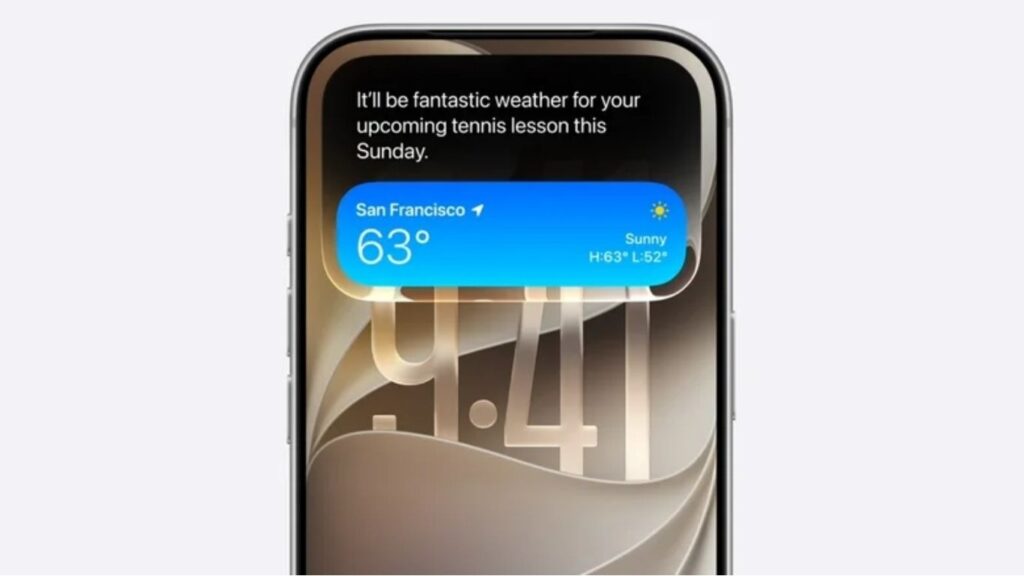
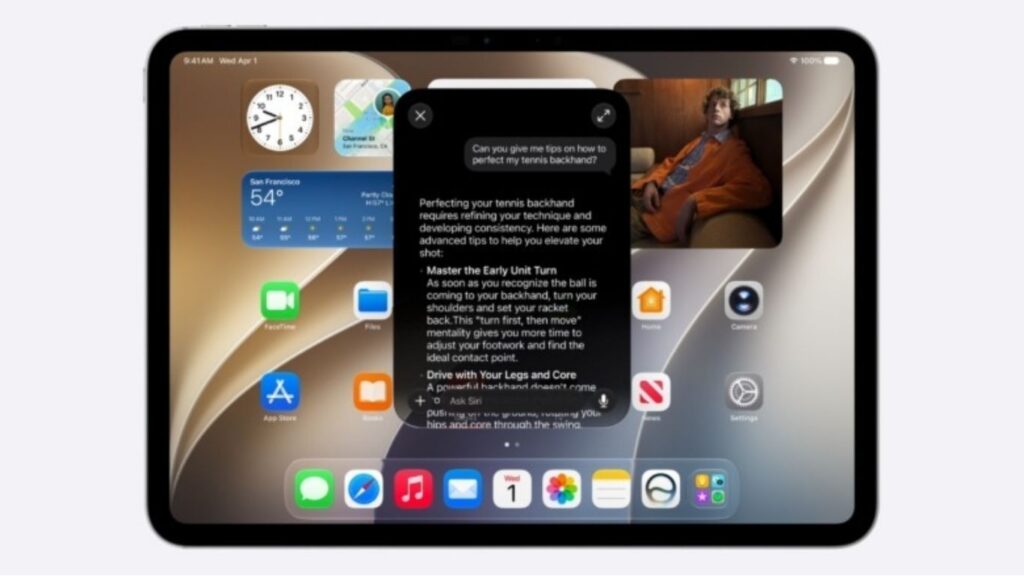
At WWDC 2026, Apple finally showed us the rebuilt product rather than another roadmap slide. Siri AI is now system-wide, context-aware, and conversational. It understands what is on your screen. It can work across your apps. It has a new interface, a new voice, and a new personality. You could be looking at a photo of your backyard and ask Siri AI how to set up a small workshop in it and it will understand exactly what you mean.
It is baked into Spotlight on macOS Golden Gate, it works in CarPlay, and it works with your AirPods. On paper, this is the Siri that should have existed three years ago.
Here is what I cannot get past though. The engine under the bonnet is Google Gemini.
Apple, the company that has built its entire identity on keeping your data on your device and controlling the full product stack, has quietly agreed to pay Google roughly a billion dollars a year to power their flagship AI feature. That is not a minor footnote. That is a fundamental shift in what Apple is. A company that once said “it just works” because they built everything themselves is now saying “it just works because Google built the hard part.”
To be fair, if Gemini makes Siri genuinely useful, the outcome matters more than the pride. But I have been burned before. The demos always look extraordinary. The keynote videos are always immaculate. What I will be watching for is whether Siri AI can handle the messy, ambiguous, real-world requests that people actually throw at it. Not “add the festival performances I like to my calendar” which is a carefully rehearsed demo. But things like “find that article I was reading on my phone last Tuesday” or “remind me about this when I get home.” That is where Siri has always fallen apart.
Colour me cautiously interested. Not convinced.
macOS Golden Gate and iOS 27: the unsung heroes of this keynote
While Siri AI grabbed the headlines, the performance upgrades buried in this keynote might actually be what most people notice first.
Apple is promising AirDrop transfers up to 80 percent faster, apps launching 30 percent quicker, and photos appearing in your camera roll 70 percent faster. If you have ever AirDropped a video to someone and stood there awkwardly watching a progress bar, you will appreciate this more than any AI feature. Apple also reworked its CPU scheduler to make older iPhones feel genuinely quicker, not just slightly less slow. Anyone on an iPhone 11 or later should feel the benefit without spending a single rupee.
That is real. That is tangible. That is the kind of thing Apple does not lead with because it does not look good in a keynote video, but it is what most of their users will actually notice day to day.
The Liquid Glass design situation is also evolving. Apple dropped this translucent design language on users last year to a pretty mixed reaction. People found it hard to read, visually noisy, and just a bit much. Now Apple is adding an opacity slider so you can tone it down or turn it off entirely. It is a small concession but a telling one. It says Apple was listening, even if they are not ready to fully admit the original design was a mistake.
macOS Golden Gate also gets a cleaner toolbar layout, sidebars that stretch edge to edge, and refreshed app icons. It is refinement rather than revolution, but thoughtful refinement is something Apple used to do extraordinarily well and it is good to see that instinct back.
Tim Cook’s exit and the Ternus era: long overdue
There is something almost fitting about Tim Cook taking his final bow at a WWDC dominated by AI. Because if there is one honest criticism you can make of his tenure, it is that he was a logistics and operations genius who steered Apple through its most profitable years, but not always through its most imaginative ones.
Under Cook, Apple became the world’s most valuable company. The Apple Watch launched. Services became a massive business. But the genuinely jaw-dropping hardware moments were rare. The Vision Pro was bold but launched at a price and maturity level that put it out of reach for almost everyone. iPhone innovation slowed to an annual spec bump. And on AI, Apple was simply, painfully late to a party that Google and Samsung had already been hosting for years.
John Ternus is a hardware man. He led the transition to Apple’s M-series chips, one of the most impressive engineering pivots in consumer tech history. His appointment as CEO from September 1st is a clear signal about where Apple thinks its next chapter should be written. It should be written in the products you hold, wear, and carry.
I think this change was long overdue. Not because Cook failed, because by most numbers he succeeded wildly. But Apple at its best has always been about products that stop you in your tracks, and the company needs someone at the top who has that instinct in their DNA. Ternus might be that person.
The real question is not whether he can manage the business. It is whether he has the product vision to know which hardware bets to make next. A thinner, more radical iPhone? A proper push into smart glasses? A Mac that genuinely excites people again? We will find out soon enough. But a CEO whose first love is the object in your hands is a better bet for Apple’s soul than one whose first love is the margin on a subscription bundle.
The EU situation: nobody looks good here
One of the more quietly explosive moments in the WWDC 2026 story is what did not make it to some users. Siri AI will not launch in the European Union because of the Digital Markets Act.
And I will say clearly: both sides of this argument have made a mess of it.
The EU’s Digital Markets Act was designed with good intentions. Stopping big tech companies from using their dominant platforms to crush smaller competitors is a reasonable goal. In practice though, the regulation moves at the speed of government while technology moves at the speed of light. EU regulators reportedly spent months unable to reach an agreement with Apple on how Siri AI should work under DMA rules, and the result is that European iPhone users are locked out of a feature that the rest of the world gets to use. That is a failure of regulation. Full stop.
But Apple is not clean here either. The company has a long history of using regulatory friction as a shield for its own competitive decisions. When something gets blocked, Apple frames it as a tragedy for consumers. When something they do not want to share, like access to their payment systems or app distribution channels, gets legally challenged, Apple frames that as a tragedy for consumers too. It is a convenient framing that always seems to put Apple on the side of the user.
Their statement on Siri AI in the EU was sympathetic in tone but vague enough to make you wonder how hard they actually tried to find a solution.
The people who lose are the actual users. Someone in Germany or France who bought an iPhone partly because of what Apple Intelligence could do, only to find out that a regulatory standoff means they are waiting indefinitely for features their friends elsewhere already have. That person did nothing wrong. They just happen to live in the wrong place at the wrong time.
This is not a technology problem.
It is a governance problem. Until regulators and tech companies stop treating each other as enemies to be defeated and start treating users as the actual stakeholders in the conversation, this will keep happening.
The bottom line
WWDC 2026 was, on balance, one of the more substantial Apple keynotes in recent memory. The Siri AI rebuild is real and ambitious. The performance improvements are meaningful and will be felt by hundreds of millions of people who never watch a keynote. The macOS Golden Gate refinements show a company paying attention. And the move from Tim Cook to John Ternus opens a chapter that I think Apple genuinely needed.
But substantial is not the same as revolutionary. Apple has promised so much, so publicly, for so long on AI that my excitement is staying measured until Siri AI is in my hand and actually doing what the keynote said it would.
Show me, Apple. Do not tell me.