Why GPT 5.6 government access sets a worrying global precedent

Why GPT 5.6 government access sets a worrying global precedent
GPT 5.6 is here. And yet, most people cannot use it. Not because it is not ready. Not because the servers are down. But because the US government asked for first access, and OpenAI said yes. On the surface, that sounds reasonable. Dig a little deeper, and it starts to look like a pattern that the world should pay close attention to.
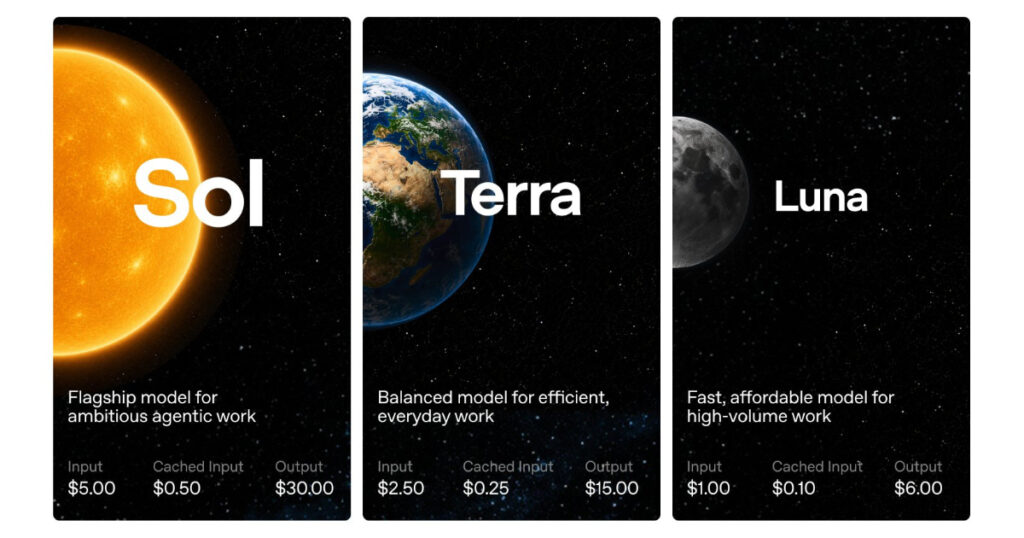
OpenAI has introduced three new models under the GPT 5.6 family: Sol, Terra, and Luna. Sol is the most powerful of the three, built for complex tasks in coding, biology, and cybersecurity. Terra is a balanced option that reportedly matches GPT 5.5 performance at half the cost. Luna is the lightweight, affordable pick for everyday use. Together, they represent a meaningful step forward in what AI can do. The problem is that most of the world is being asked to wait in line while Washington gets a front-row seat.
What OpenAI actually said
OpenAI confirmed that GPT 5.6 is launching as a limited preview for a small group of trusted partners. The company said it shared the models with the US government before release, and at the government’s request, decided against the open public launch it had originally planned.
Sam Altman addressed this on X, calling it the “bad news” in an otherwise exciting announcement. He acknowledged that gradual rollouts are a “quite reasonable” approach for increasingly powerful AI systems, but also admitted this was not the process OpenAI considers optimal. He said the company is actively working with the US administration to build a more transparent and repeatable framework for future model releases.
OpenAI also stated that it does not want government previews to become the default long-term approach. The company said it views this as a short-term step toward broader availability, not a new standard. That is a reassuring thing to say. Whether it holds up over time is a different question entirely.
The “safety” framing does not tell the whole story
OpenAI has described the GPT 5.6 family as being built with its “most robust safeguards to date.” Sol, in particular, is positioned as the company’s most capable model for cybersecurity tasks, with the ability to help identify and fix vulnerabilities while staying within internal safety limits. The new “max” reasoning mode and “ultra” multi-agent mode add further horsepower for complex problem-solving.
All of that sounds good. But it is worth asking: if safety is genuinely the priority, why does the most powerful AI for cybersecurity need to go to the government first? And why is the solution to safety concerns a government preview rather than, say, more time in internal testing?
When you look at the competitive landscape, a more grounded explanation emerges. OpenAI is in a race. Google, Anthropic, Mistral, and others are all moving fast. Being first to market matters enormously in this space. A government endorsement, even an informal one through a preview arrangement, carries weight. It signals legitimacy. It opens doors to contracts and policy influence. The OpenAI government access arrangement serves more than one purpose, and “safety” may not be the dominant one.
That does not mean the company is acting in bad faith. It means the framing deserves scrutiny.

Who actually pays the price for this delay
When an AI model release delay happens, the conversation in tech circles tends to focus on developers and enterprises in the US. But the people who are most affected are far less visible in those conversations: users, developers, and businesses outside the United States.
This is a pattern that the global AI access debate rarely addresses head-on. The entire framework here, the government preview, the trusted partner list, the phased rollout tied to a US executive order, is built around American institutions and American priorities. That is understandable from OpenAI’s perspective. It is a US company, subject to US law, operating in a competitive and politically charged environment.
But for a developer in Bangalore, a startup in Lagos, or a research team in Warsaw, the result is the same: the best tools are being held back not because of any concern about how those users might use them, but because of geopolitical processes they have no part in. The AI model release delay is not neutral. It has a geography, and that geography is not evenly distributed.
A precedent being built one release at a time
Perhaps the most important thing to understand about the GPT 5.6 situation is not what it means today, but what it could mean going forward. OpenAI said it does not want government previews to become standard. That is a position, but it is not a policy. And positions have a way of shifting when they prove convenient.
If this arrangement works, and the government gets what it wants with minimal friction, the incentive to repeat it only grows. Other AI companies watching from the sidelines will take note. Governments that did not ask for early access this time around may start asking. And the informal agreement that “this is just a one-time thing” can quietly become the industry norm before anyone has had a proper debate about whether that is acceptable.
The global AI access question then becomes something entirely different. It stops being about when models are ready and starts being about which governments have the relationships, the leverage, and the political will to claim a seat at the front of the queue. That is not a framework built around users. It is one built around power.
What a better process could look like
To be fair, OpenAI is not wrong that some kind of structured process for releasing increasingly capable AI is a good idea. A frontier model with advanced cybersecurity capabilities probably should not just appear on the internet one morning with no warning. The question is what that process looks like and who it serves.
A genuinely thoughtful framework would involve international bodies, not just the US government. It would be transparent about what is being reviewed and why. It would set time limits on preview periods so that OpenAI government access does not quietly extend from weeks to months. And it would prioritize the availability of AI tools to the people who need them, including developers, researchers, and businesses in parts of the world that are already behind in the global AI race.
Right now, none of that exists. What exists is an informal agreement between one company and one government, dressed up in the language of safety and responsibility. That may be better than nothing. But it is a long way from good.
The bottom line on GPT 5.6
GPT 5.6 is a genuinely exciting release. Sol’s capabilities in coding and cybersecurity, Terra’s cost efficiency, and Luna’s accessibility all point to real progress. If and when these models reach the public, they will be useful tools for a lot of people.
But the way this launch has been handled is worth sitting with. The safety framing is only part of the picture. The AI safety and competition dynamic inside OpenAI means these decisions are rarely driven by one thing alone. And the people who pay the steepest price for the delay are the ones with the least voice in the conversation.
OpenAI says broader availability is coming in the coming weeks. Let us hope that is true, and that the process for getting there does not quietly become the blueprint for every powerful model that follows.
What do you think? Should AI companies be required to give governments early access to frontier models? Or does that give too much power to too few? The conversation is only just beginning.