
Solid-state battery race heats up as Honda partners with QuantumScape

Solid-state battery bet: why Honda just partnered with QuantumScape
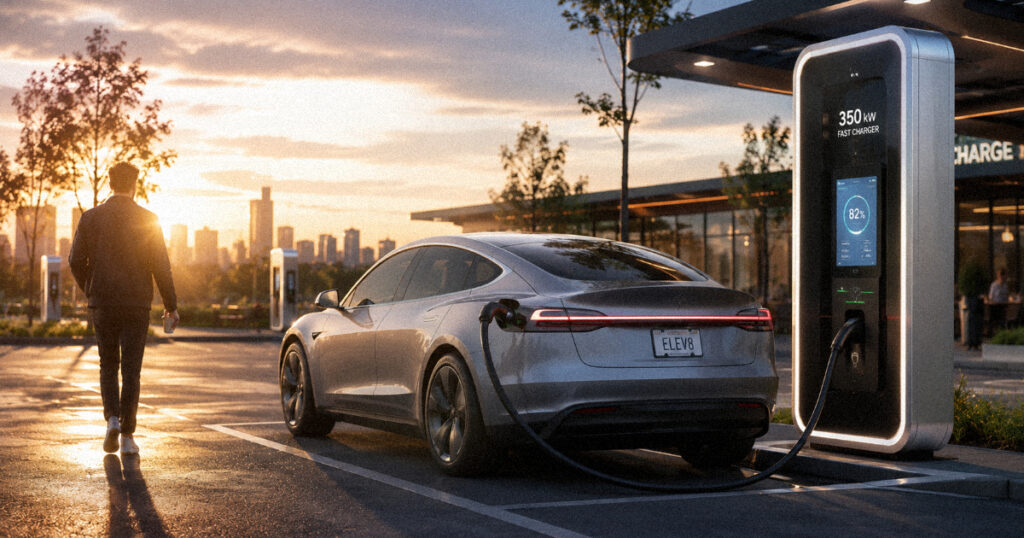
Imagine plugging in your electric car during a coffee break and driving off with an almost full battery before your coffee even gets cold. That is the promise behind the solid-state battery, and it is exactly why Honda just made a major move to get closer to that future.
In June 2026, Honda announced a new partnership with QuantumScape, an American battery development company based in San Jose, California. The deal focuses on researching and developing solid-state batteries, along with the manufacturing methods needed to actually build them at scale.
This comes at an interesting time for Honda, since the company recently pulled the plug on three EV models in North America, the Honda 0 SUV, the Honda 0 Saloon, and the Acura RSX, a move that contributed to its first annual financial loss in nearly 75 years. The QuantumScape deal suggests Honda is now leaning harder into solid-state battery technology as its long-term EV strategy.
What makes a solid-state battery different
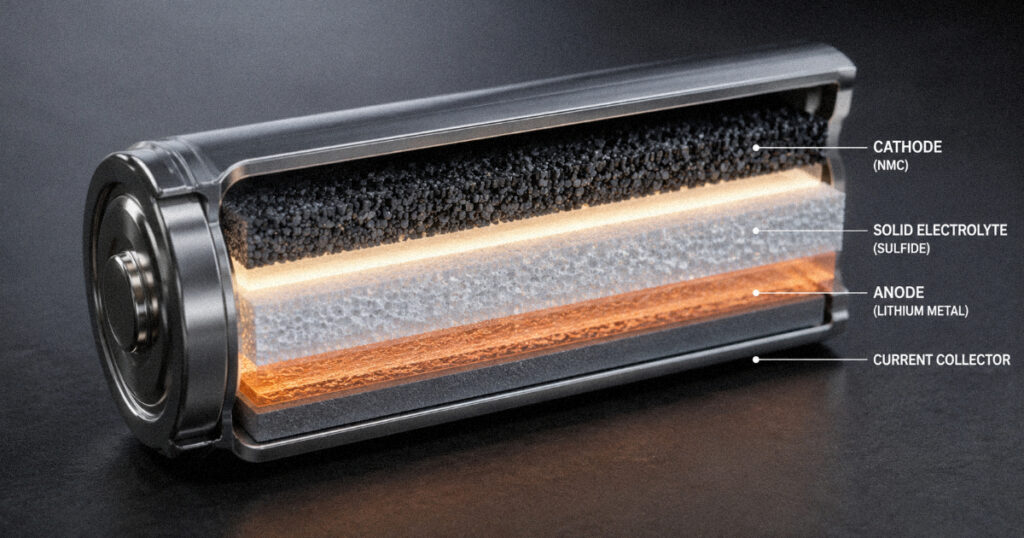
To understand why everyone is excited about this, it helps to know how a regular electric vehicle battery works today. Most EVs run on lithium-ion battery packs. Inside these batteries, electrolytes carry charged particles back and forth between two ends called the cathode and the anode. In a typical lithium-ion battery, this electrolyte is a liquid, usually made of lithium salts dissolved in a solvent.
A solid-state battery swaps out that liquid for a solid material instead, like an oxide, a sulfide, or a polymer. This small change opens the door to bigger upgrades elsewhere. For example, engineers can now use lithium metal for the anode instead of the carbon or silicon used today, which packs in more energy. QuantumScape actually builds its batteries without a traditional anode at all. Instead, the anode forms naturally the first time the battery is charged.
Think of it like upgrading from a water balloon to a solid rubber ball. Both can bounce, but one is far less likely to leak, break down, or catch fire under pressure.
Why this matters for electric vehicle battery range and charging
The benefits of a solid-state battery are not just technical trivia, they translate into real changes you would notice as a driver.
First, range. QuantumScape says its battery cells could help an EV go from a range of around 350 miles to somewhere between 400 and 500 miles. That is a meaningful jump, especially for long road trips where range anxiety is still a common concern for EV owners.
Second, charging speed. Honda estimates a solid-state battery could charge up to 80 or 90 percent in just minutes, not hours. If that holds up in real-world use, charging an EV could start to feel a lot more like refueling a gas car than waiting around at a charging station.
Third, safety. Solid electrolytes cannot leak the way liquid ones can, and they are not flammable. They also hold up better in extreme heat or cold, which means fewer battery failures and more consistent performance no matter the climate.
There is also a supply chain angle here. Moving away from graphite anodes could reduce the EV industry’s reliance on Chinese suppliers, which matters a lot for manufacturers trying to build more independent, resilient supply chains.
The catch: why solid-state batteries are not in showrooms yet
If solid-state batteries sound almost too good to be true, that is because there is still one big obstacle standing in the way, scale. Building these batteries in small quantities for things like medical implants or wearable devices is one thing. Producing them by the millions for cars is a completely different challenge, and the costs involved have kept every major manufacturer from bringing a fully solid-state EV to the consumer market so far.
That has not stopped companies from trying. Honda started its own solid-state battery project back in 2024 at a facility in Sakura City, Japan, and has been investing heavily ever since. With the QuantumScape partnership now in place, Honda plans to use QuantumScape’s Eagle Line facility to help produce its anode-free QSE-5 battery cells, the same kind of cell that already appeared in a Ducati motorcycle prototype. Honda says this technology could eventually double the range of its current EV lineup by the end of the decade, with a goal of reaching 100 percent EV sales by 2040.
Who else is racing to build a solid-state battery
Honda is far from alone in this race, and the competition is heating up fast.
In China, CALB has already begun mass producing a hybrid semi-solid battery, unveiling one for light commercial vehicles earlier this year. Stellantis and Mercedes-Benz have both partnered with a startup called Factorial to test semi-solid battery packs in real vehicles, including the Dodge Charger and the EQS sedan.
Chinese battery giants BYD and CATL both plan to begin small-scale solid-state battery production next year, and Dongfeng Motors is working on a solid-state EV aiming for an ambitious 600 mile range.
Japan’s other big automakers are moving too. Nissan recently teamed up with British battery firm Gelion, aiming to launch a fully solid-state EV lineup by 2028. Toyota, which already holds over a thousand patents in this space, has partnered with Sumitomo Metal Mining to produce cathodes and is also targeting a 2028 launch.
Western automakers are joining in as well. BMW started testing solid-state batteries in its i7 prototype last year. Volkswagen has poured over a billion dollars into Chinese battery maker Gotion High Tech and is now testing a battery with a claimed range of 620 miles. Even smaller players are getting involved, with luxury EV startup Karma Automotive planning to launch its Kaveya coupe using Factorial’s solid-state batteries in late 2027.
What this means for the future of electric cars
So where does this leave the average car buyer? For now, do not expect a solid-state battery powered EV in dealerships anytime soon. Scaling up this technology while keeping costs reasonable is still the biggest hurdle every manufacturer faces, and that is unlikely to change overnight.
That said, the sheer number of companies pouring money and research into solid-state battery development suggests the timeline may be shorter than many expect. Honda betting on QuantumScape is a strong signal that at least one major automaker believes this technology is close to becoming commercially viable, not just an interesting lab experiment.
In the meantime, keep an eye on semi-solid battery vehicles, since those hybrid designs are likely to hit the market first as a stepping stone toward full solid-state technology. If you are planning your next EV purchase in the next couple of years, the lithium-ion battery in your car today is still the safe bet. But the solid-state battery future that Honda, Toyota, Nissan, and others are racing toward could reshape what an electric vehicle battery looks like by the end of this decade.





[…] of AED 50,000 per track, alongside internship pathways, invitations to national and international technology and innovation events, and continued visibility to prospective employers across the participating […]