Tata Sierra Based Jeep SUV: What We Know So Far

Tata Sierra Based Jeep SUV: What We Know So Far
A Tata Sierra based Jeep SUV is now officially in the works, according to reports. Tata Motors Passenger Vehicles (TMPV) and Stellantis, the company that owns Jeep, have reportedly signed a formal agreement to build a new Jeep SUV on the same underlying platform as the Tata Sierra. Inside the teams, the project is called J1J.
If you follow Indian cars, this is a big story. Jeep has been in India for close to a decade, yet it has not had many new products. This deal could change that. In this post, I will explain what is happening, what the key terms mean, and why it matters, all in simple words.
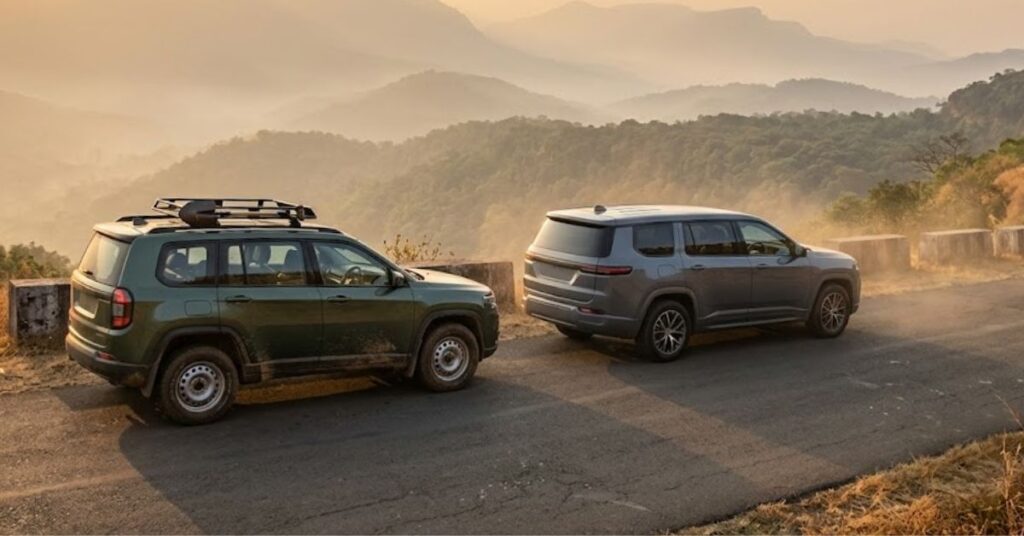
Before we dive into the details of the development, let’s take a quick look at the major talking points –
- Tata Motors Passenger Vehicles and Stellantis have reportedly signed a formal agreement to work together on product technology, platforms and vehicle architecture.
- The first result will be a new Jeep SUV, codenamed Jeep J1J, built on the Tata Sierra’s ARGOS platform.
- It is expected to come in petrol or diesel (ICE) and electric versions, likely using the same powertrains as the Sierra.
- It will get its own body, cabin and styling, so it will not look like a Sierra.
- A 4×4 version is likely, and the Sierra itself may get a 4×4 version sooner because of this deal.
- Production is likely at the FIAL joint venture plant in Ranjangaon, Maharashtra.
- The first launch is likely in the first half of 2028.
What Is the Tata Sierra Based Jeep SUV?
The simplest way to understand the Tata Sierra based Jeep SUV is to think of it as a Jeep wearing a different outfit on top of a Tata skeleton.
Cars are built on a platform. A platform is the base of the car: the floor, the frame, the mounting points for the engine or battery, and the suspension. The body you see and the cabin you sit in are built on top of that base.
The Jeep J1J will use the same base as the Tata Sierra, but Jeep will design everything you see and touch. That includes the outside styling, the seats, the dashboard and the features. Stellantis is also reportedly studying its own Jeep Renegade and Jeep Compass while developing this model, which tells us it wants the new SUV to feel like a proper Jeep.
The final name and the final design are still being decided.
The Tata Stellantis Partnership in Simple Words
The Tata Stellantis partnership is not brand new. The two companies have worked together for more than two decades, mainly on manufacturing, engines and the supply chain. Think of it like two neighbours who have shared tools and helped each other for years.
What is new is the next step. The formal agreement takes the partnership into vehicle development itself. That means designing a product together, not just building parts or sharing a factory.
Here is who gets what, according to the reports:
- Tata (TMPV) keeps ownership of the platform and licenses it to Stellantis. This can bring licensing money and help spread the cost of the platform across more vehicles.
- Stellantis gets a ready, modern platform and a trusted supplier base. This can reduce its development cost while adding a new Jeep to its line-up.
- Suppliers get higher volumes, because the same parts can be used across more than one vehicle.
What Is the ARGOS Platform?
The ARGOS platform is Tata’s newer, flexible vehicle architecture. ARGOS stands for All-Terrain Ready, Omni-Energy and Geometry Scalable. That sounds heavy, so here is what each part means:
- All-Terrain Ready: The platform is built to handle rough roads and can support four-wheel drive.
- Omni-Energy: One platform can carry different types of power, such as petrol, diesel and electric.
- Geometry Scalable: The size can be changed. Different lengths, widths and wheelbases are possible.
Think of it like a good Lego base plate. You can build different models on it without starting from zero each time. That is why Stellantis finds it attractive. A licensed, flexible platform can help it launch more products faster, and the Sierra is the first Tata to use it.
According to the reports, much of the platform will be kept as it is. Where needed, engineers will add structural changes and reinforcements so the Jeep body fits well and meets crash and overseas safety rules.
Jeep J1J: How Will It Be Different from the Sierra?
This is the question most buyers will ask. If both SUVs share a platform, will they feel the same?
The answer, based on the reports, is no. The Jeep J1J is expected to have a different upper body. In industry language this is called the top hat. It covers the exterior styling, the cabin layout, the seating setup, the interior features and the equipment.
Here is a simple example. Imagine two restaurants that share one big kitchen. The kitchen, the stoves and the suppliers are the same. But one restaurant serves street food in a casual setting, and the other serves a premium menu with a different look and feel. Customers walk in and see two very different places. The Jeep and the Sierra can work the same way.
The team is also reportedly working on Jeep-specific suspension tuning and off-road hardware, but the details are not clear yet.
Engines, Electric and 4×4: What Powers It?
The Jeep is expected to come with both internal combustion engine (ICE) and electric versions. It will likely use the same powertrains as the Sierra.
Here is what else the reports say:
- 4×4: A 4×4 version is likely because Jeep’s brand rules insist that every Jeep model offers a 4×4 option. The Sierra EV already comes with 4×4, and the platform has also been planned to take a 4×4 ICE drivetrain.
- Sierra 4×4 could come sooner: The Jeep partnership may speed up a Sierra 4×4, so it could arrive around the same time as the new Jeep.
- Range extender: A range-extender electric vehicle (REEV) version is being explored. This is an electric car with a small engine that charges the battery. No production decision has been made on it.
- Left-hand drive: A left-hand-drive version is being developed for overseas markets. A dedicated team in Pune is working on adapting the architecture.
Where Will the Jeep SUV Made in India Be Built?
The Sierra is built at Tata’s Sanand plant in Gujarat. The Jeep SUV made in India is likely to be built somewhere else: the Fiat India Automobiles Ltd (FIAL) joint venture plant in Ranjangaon, Maharashtra.
The plant is expected to be adapted for this project over the next 18 months. That fits with the likely launch window of the first half of 2028.
This also changes what the Ranjangaon plant does. Until now, the partnership there has mostly been about manufacturing. With this project, the plant would build a Jeep on Tata’s architecture. And because a left-hand-drive version is planned, the plant could serve buyers outside India and other right-hand-drive markets.
At its Investor Day on May 21, 2026, Stellantis said it wants to sell 100,000 locally produced vehicles globally in 2028 across its Tata and Dongfeng partnership programmes combined. It also spoke of exports to more than 50 countries across its wider portfolio. That includes the Tata-based Jeep and the Citroen Smart Car programme in India. Which markets will get the J1J has not been decided.
A Simple Example: What This Could Mean for a Buyer
Let me use an imagined buyer to show why this matters. This is only an example, not a real person.
Rohan lives in Pune. He is 34, drives a hatchback today, and plans to buy his first mid-size SUV in 2028. He likes the rugged look of a Jeep and wants a 4×4 for long weekend trips to the hills. But he also worries about three things: price, spare parts and service.
With a Jeep that shares its platform and many parts with a Tata, here is what could help Rohan, in theory:
- Shared parts can mean better supply and, over time, possibly lower running costs.
- A locally built vehicle usually avoids heavy import costs, which can help pricing.
- Both petrol or diesel and electric choices on one platform can let him decide based on how he drives.
Of course, prices, features and final specs are not out yet, so this is only a way to think about it. But it shows why platform sharing is not just a business story. It can shape what buyers pay and what they get.
Why the Tata Sierra Based Jeep SUV Matters
The Tata Sierra based Jeep SUV matters for three reasons.
It could revive Jeep in India. Jeep has stayed on the sidelines of the Indian market because of a lack of new products. A licensed platform that supports different powertrains, 4×4 and different wheelbases can help it add more products in less time.
It lowers risk for both companies. Tata shares platform costs and may earn licence money. Stellantis cuts development spending.
It puts India on the global map for car building. A Jeep designed and assembled here, then sent to many countries, shows how strong India’s car engineering and supplier base has become.

Frequently Asked Questions
What is the Tata Sierra based Jeep SUV?
It is a new Jeep SUV, codenamed J1J, that will be built on the same ARGOS platform as the Tata Sierra, but with its own Jeep body, cabin and features.
What does J1J mean?
J1J is the internal project codename for the Jeep SUV. It is not the final name of the car.
When will the Jeep J1J launch?
The first vehicle is likely to launch in the first half of 2028, according to sources.
Where will the Jeep SUV be made?
It is likely to be built at the FIAL joint venture plant in Ranjangaon, Maharashtra. The Sierra is built at Tata’s Sanand plant in Gujarat.
Will the Jeep be electric?
It is expected to have both ICE and electric versions. A range-extender version is also being explored, but no decision has been made.
Will it have 4×4?
A 4×4 variant is likely, as Jeep’s brand guidelines call for a 4×4 option on all its models.
Will the Jeep look like the Sierra?
No. The platform will be shared, but the exterior, interior and features are expected to be different.
Who owns the platform?
Tata Motors Passenger Vehicles keeps ownership and will license it to Stellantis.
The Tata Stellantis partnership is moving from sharing factories and parts to building a car together. If the plan holds, the Jeep SUV made in India could be one of the most interesting launches of 2028. It gives Jeep a fresh product, gives Tata a way to earn more from its platform, and could bring a rugged, well-priced SUV to Indian buyers.