
Google Search Live is testing in new markets after a botched global launch announcement

Google Search Live is on its way to more users around the world, but the announcement of that expansion came with an embarrassing footnote. On March 18, Google effectively had to walk back its own press communication within the same day it went out, clarifying that Search Live had not actually gone global yet and remains available only in the US and India, with testing underway in additional markets. That is the kind of miscommunication that tends to generate more attention than the actual product news, and in this case, the product news is genuinely interesting on its own.
So let us separate the two things and look at both with brutal honesty.
What Google Search Live actually is
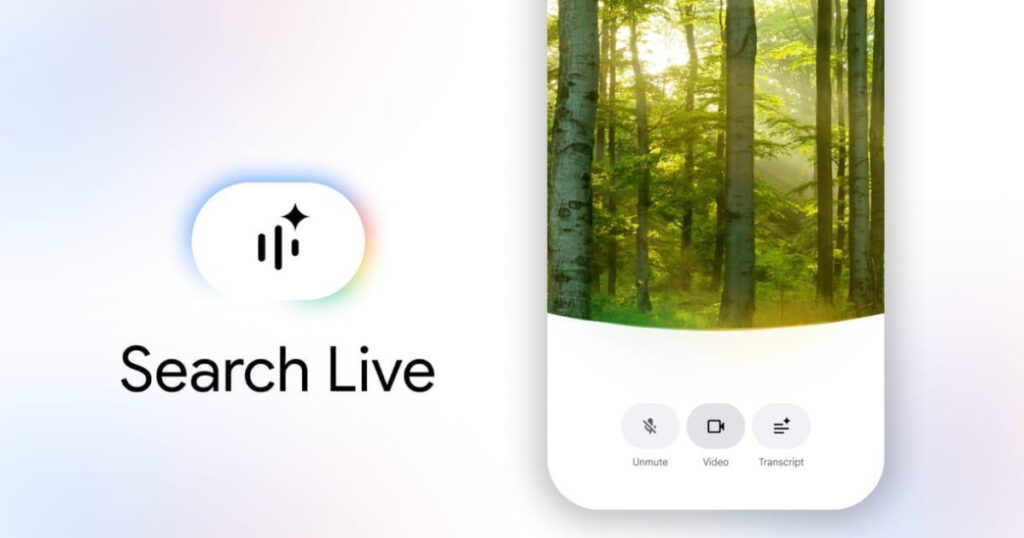
If you have not used it, Search Live is a feature inside the Google app that lets you point your phone’s camera at something in the real world and ask questions about what you see, in real time. Think of it as a live, conversational version of Google Lens. You could point it at a restaurant menu you cannot read, a piece of hardware you are trying to identify, a painting, a plant, a broken appliance, a landmark you have never seen before, anything, and have a back-and-forth conversation about it with Google’s AI rather than getting a static search result.
Google first showed this off at I/O 2025 and began rolling it out to US users. By September 2025, it was available to all US Google app users. India was added to that list alongside the US as the two confirmed active markets before this latest expansion push began.
The Gemini 3.1 Flash upgrade
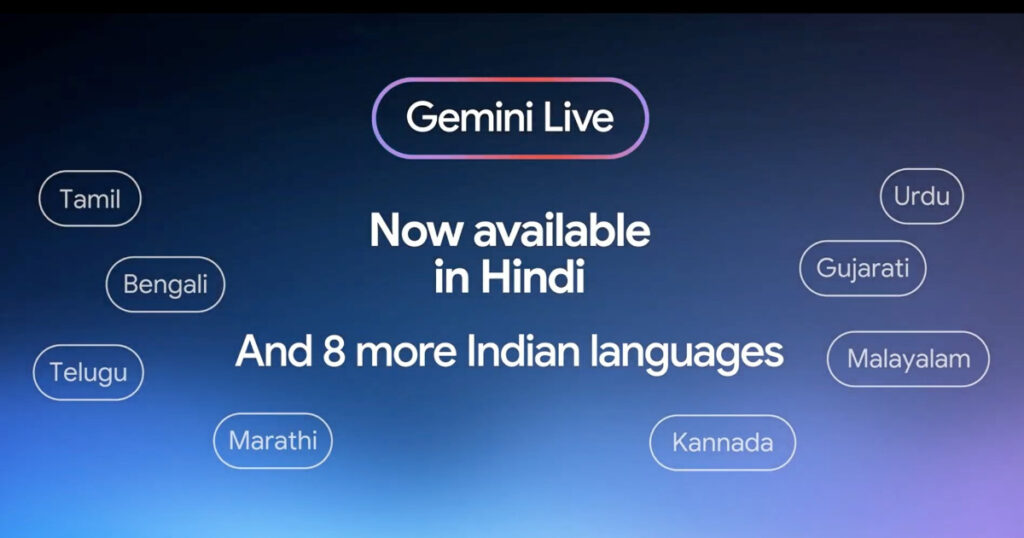
Alongside the wider rollout, Google has updated Search Live to run on its Gemini 3.1 Flash model, and the improvements here are practical rather than just on paper. The new model is natively multilingual, which is a meaningful change for a feature that is now actively being tested in markets where English is not the primary language. It is also supposed to bring more natural conversational flow and a faster, more reliable response time overall.
That multilingual capability is not a small addition. One of the real-world limitations of AI search tools in global markets has been how well they handle mixed-language inputs, regional accents, or non-English queries. Building multilingual support into the model itself rather than treating it as a translation layer on top is a more structural solution to that problem.

How to access Google Search Live right now
If you are in the US or India, Google Search Live is available through the Google app on both Android and iOS. Opening the app and looking below the search bar, you will find a “Live” button that kicks off the camera-based session. It is also accessible through Google Lens, where the same “Live” icon sits near the bottom of the screen. Both entry points lead to the same experience.
If you are outside those two markets, you are in the testing phase, which means availability is not guaranteed and will vary by region. Google’s statement did not give a specific timeline for when broader rollout would happen, only that testing in additional markets is underway.

The retraction, and what it says
Google’s initial announcement stated that Search Live was now available in more than 200 countries and territories. That is a very specific number, and it turned out to be wrong. A few hours later, Google reached out to media outlets to walk the statement back, clarifying that the global rollout had not actually happened, and offering an apology for the miscommunication.
The corrected statement read: “Search Live has not rolled out globally to all users. It remains available in the US and India, with testing currently underway in additional markets.”
Miscommunications happen in PR, but this one is notable because the original claim was so precise. Saying a feature is live in “more than 200 countries and territories” is not a vague overpromise. It is a number that implies someone checked. The retraction suggests that either the rollout was planned for that day and got pulled at the last moment, or the communication process broke down between the product team and the people writing the announcement.
Either way, it left the story in an odd spot where the actual news, a meaningful expansion is coming and a real upgrade is live, got overshadowed by the correction.
The bigger picture for Google AI Mode
Google Search Live is tied directly to Google’s AI Mode, the broader conversational search experience that Google has been building out as its answer to the AI search competition. The Live feature is the camera-first extension of that. As Google AI Mode continues to expand into more regions alongside Search Live, the visual query capability becomes a more compelling part of the overall package.
What Google is building here is a search experience where text, voice, and live camera input all feed into the same conversational model. Search Live is the camera piece of that puzzle. Getting it onto Gemini 3.1 Flash with native multilingual support is a genuine step toward making it useful in markets where the US-centric design assumptions of earlier AI tools have been a real friction point.
Whether the global rollout lands in weeks or months is still unclear. But the direction is obvious, and for users outside the US and India, Google Search Live is coming. The question is just when.





[…] Pro Tip: Use the same Google account you use for Google Search Console and Google Analytics for easier site […]