Tesla Full Self-Driving gets approved in Europe, but safety critics are not convinced

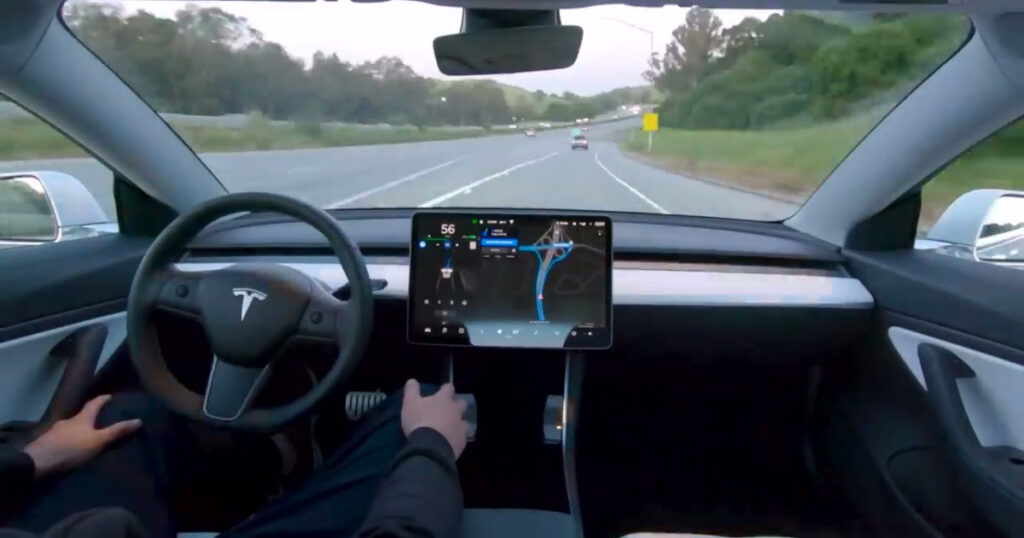
Tesla Full Self-Driving (Supervised) has officially received regulatory approval in Europe for the first time. The green light came from the RDW, the Dutch vehicle approval organisation, following an 18-month review process. However, the decision has drawn sharp criticism from road safety advocates who argue the technology has a troubling track record.
How Tesla got approval in the Netherlands
Over the past 18 months, Tesla worked closely with the RDW to demonstrate that its Full Self-Driving (Supervised) system was safe for use on European roads. The process involved logging close to one million miles with the system active, as well as conducting ride-along trials with approximately 13,000 people across several European countries.
After reviewing the data, the RDW concluded that the technology met the requirements for approval in the Netherlands. Tesla’s CEO Elon Musk has long aimed to expand the system beyond the United States, where it has been available for several years, and this marks the first meaningful step in that direction.
What safety critics are saying
Not everyone views this approval as a positive development. Dan O’Dowd of The Dawn Project, a road safety campaign group, described the RDW’s decision as “deeply troubling,” citing what he called Tesla FSD’s “myriad of well-documented safety defects.”
O’Dowd also pointed out that 59 people have been killed in over 3,000 crashes involving Tesla’s self-driving software in the United States since 2021.
Tesla, for its part, claims that when FSD (Supervised) is engaged, collisions are up to seven times less likely per kilometre driven compared to manual driving. However, separate reporting by Fortune found that Tesla’s Robotaxis, which use a similar camera-based AI system, crash four times more often than the average human driver.
The US National Highway Traffic Safety Administration (NHTSA) has also escalated its ongoing investigation into Tesla FSD to an “Engineering Analysis,” which will specifically look at how the system performs in conditions with reduced road visibility.
How the European version of Tesla Full self-driving differs from the US version
Tesla has made several modifications to the version of FSD (Supervised) that will go on sale in the Netherlands, based on feedback from the ride-along trials.
Key differences include:
- Drivers must complete a mandatory safety quiz before the system will activate
- The US version’s quirky speed profiles, labelled “Sloth” to “Mad Max,” have been removed in favour of a simpler “Max Speed” setting
These changes suggest Tesla is aware that European regulators and users have higher expectations around driver engagement and accountability than in some other markets.
What does the RDW actually say about the technology?
It is worth noting that even the organisation that approved the system has been careful with its language. The RDW has stated clearly that FSD (Supervised) is not a self-driving system, and that the driver remains responsible at all times and must stay in control of the vehicle.
This is an important distinction, because much of the debate around Tesla FSD centres on how the technology is marketed versus what it actually does. Technically, FSD (Supervised) is a Level 2 semi-autonomous system, comparable to the advanced driver assistance features offered by manufacturers such as Ford and BMW. The key difference is that Tesla’s marketing language has consistently implied a far greater degree of autonomy than the system currently delivers.
Will other European countries follow?
The approval in the Netherlands does not automatically mean Tesla Full Self-Driving will roll out across the rest of Europe. Individual member states retain their own regulatory oversight, and many are expected to take a cautious approach given the ongoing safety scrutiny in the United States.
The coming months will likely serve as a closely watched test case. If deployment in the Netherlands goes smoothly and data continues to improve, other European markets may feel more confident moving forward. If incidents occur, it could set back the broader rollout significantly.
For now, Tesla Full Self-Driving in Europe is live in one country, under specific conditions, with the driver firmly required to remain in control at all times.




[…] experiencing one of its most exciting periods in history. For a long time, many drivers felt that high-end electric cars were just a bit too expensive for the average household […]