India AI Mission: What Scindia’s “Intelligent India” Plan Means for You

The India AI Mission is no longer just a government project name. Telecom Minister Jyotiraditya Scindia says it is now the third pillar of a bigger plan that links phone networks, digital payments and artificial intelligence. He shared this vision in a keynote on Monday, 5 October 2026, at a conference the report calls KEC.
If that sounds heavy, do not worry. This post explains it in plain words, with a simple example, so you can see what it could mean for your life or business.

Quick Summary: The India AI Mission in a Nutshell
- The minister wants India to be a place that designs, builds, secures and scales technology for the whole world.
- He named three pillars: connectivity, compute (computing power) and trust.
- The India AI Mission has 38,000 GPUs, the powerful chips that train and run AI.
- He wants AI to reach small merchants and artisans, not only big banks and large companies.
- He also warned that AI-powered scams are a growing risk.
What Did the Minister Actually Say?
Scindia described India as a country that has become a builder of platforms. He summed up the goal with this call to action: “innovate in India, build in India, secure in India, scale in India”, and then serve the world from India.
He said the next big step is to connect intelligence with opportunity. That is where the India AI Mission comes in. It aims to build national AI capability, so that Indian companies and researchers do not have to depend fully on foreign computing power.
His main idea is convergence. When strong computing power meets the telecom network, digital payments and AI tools, ordinary people can benefit across the country. That is the heart of what he called “Intelligent India”.
From Digital India to Intelligent India
Digital India was about getting people online. Think of Aadhaar for identity, UPI for payments and cheap mobile data for everyone. The minister says the next phase is about making intelligence available to everyone, the same way.
He put it this way: AI should not stay with large banks and big corporates. It should help the smallest merchant and every single artisan too.
Think of the mobile phone. At first, only a few people had one. Today, a vegetable seller takes UPI payments on the same device. The minister hopes AI follows the same path, moving from boardrooms to bazaars.
The Numbers Behind the Plan
These are the figures the minister quoted. They come from his speech, so treat them as government claims until you check official data.
5G users: About 500 million today, with a target of 1 billion by 2030.
BharatNet: 650,000 villages connected with 100 Mbps links.
Aadhaar: 1.35 billion cards.
UPI: 21,500 crore transactions in FY25-26, worth $3.4 trillion, and now used in 11 countries.
India AI Mission: 38,000 GPUs for national AI computing.
Telecom equipment: India has entered the equipment manufacturing club after 50 years, using its own 4G stack run by BSNL across 100,000 towers. He said 5G is coming “very, very soon”.
The Three Pillars: Connectivity, Compute and Trust
The minister called these the “new digital trinity”.
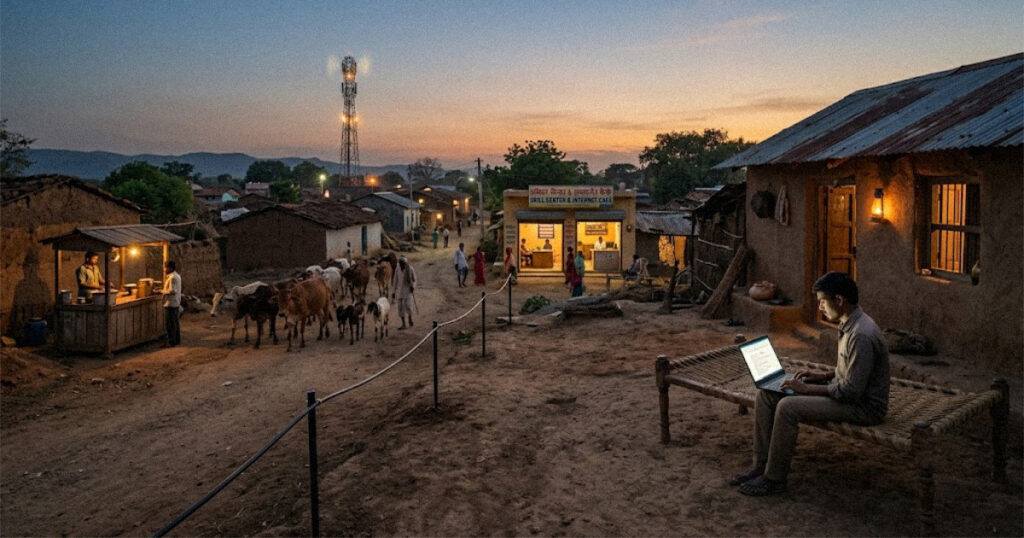
1. Connectivity: 5G in India was rolled out very fast, according to the minister. With BharatNet taking fast internet to villages, more people can use smart services from wherever they live. 5G also gives AI tools a quick, steady road to reach people.
2. Compute: AI needs huge computing power. GPUs are like a giant kitchen with thousands of cooks working at once. The India AI Mission provides that kitchen so Indian startups, students and researchers can build AI without paying heavy foreign cloud bills.
3. Trust: The best technology is useless if people fear it. This pillar is about keeping citizens safe as they go digital.
A Simple Example: How an Artisan Could Gain
Let us imagine a person, Lakshmi. She runs a small handloom business in a village. This is a made-up example, but it shows how the pieces could fit together.
Today, she sells mostly to traders who visit her village. They set the price, and she has little idea of what her sarees are worth in the city.
Now imagine the plan working as intended:
- Connectivity: A fast BharatNet link and a good 5G signal let her upload photos of her work.
- Compute and AI: A simple AI tool in her local language helps her write product descriptions, suggest fair prices and answer customer questions on chat.
- Payments: Customers pay through UPI, and money lands in her account in seconds.
- Trust: Safety systems check that the buyer is real and warn her about suspicious messages.
Lakshmi does not need to know what a GPU is. She only needs a phone and a tool that works. That is the promise of Intelligent India: big technology, simple experience.

The Dark Side: AI Fraud in India
The minister did not only praise the plan. He also warned about AI fraud in India and around the world. He said compromised identities can move across platforms, and AI can now copy human voices.
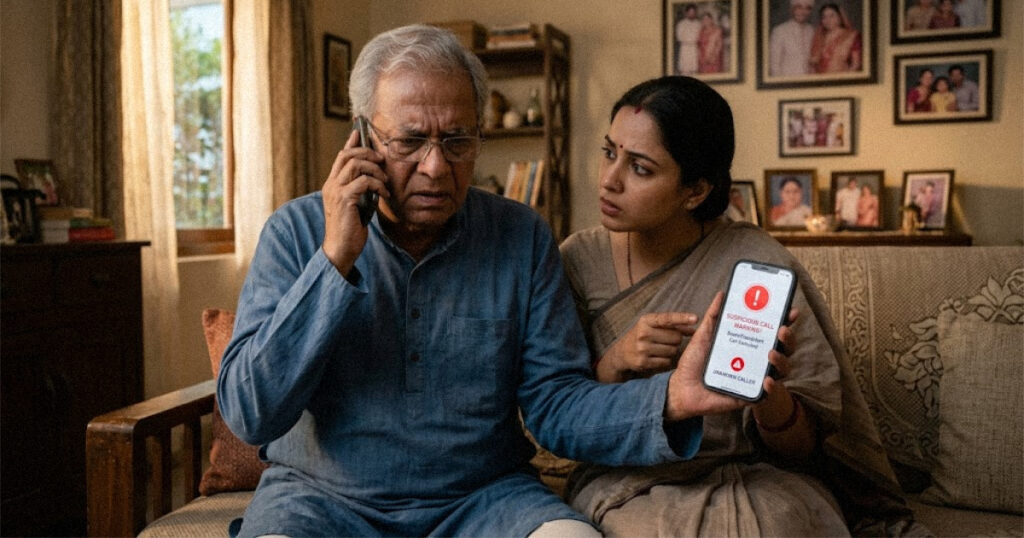
Picture this. An elderly father gets a call that sounds exactly like his son. The voice sounds scared and says, “I need money right now.” It is not his son. A scammer used an AI tool to copy the voice from a short video clip.
This is why Scindia argued for predictive trust instead of only reactive security. Reactive security acts after the damage is done, like locking the door after a theft. Predictive trust tries to spot the thief before he reaches the door. The minister said future systems must be smart enough to defend themselves.
Why This Matters for Everyday People
The India AI Mission affects more than technologists. Here is who could notice it first:
- Small shop owners: AI tools could help with billing, stock planning and customer replies.
- Farmers and artisans: Better price information and wider markets.
- Students and startups: Cheaper access to computing power for learning and building.
- Families: Stronger protection against scam calls and fake identities.
A Balanced View: What to Watch
Plans and speeches are one thing. Results are another. A few honest questions remain:
- Will the 38,000 GPUs be easy for small startups and students to use?
- Will AI tools work in all Indian languages and on basic phones?
- Will fraud protection keep up with fast-moving scammers?
- Will rural connections stay fast and reliable once many people use them?
The foundation looks strong. UPI is proof that India can build a platform that millions use daily. Whether AI follows the same story will depend on delivery.