
The Origin Story of Crocs: How a Boat Shoe became a global sensation

The Origin Story of Crocs
Few shoes divide people like Crocs. Some love them. Some cannot stand them. Yet over 20 years, this plain foam clog has gone from a boat show curiosity to a brand that sold about 129 million pairs in 2025. The origin story of Crocs is a story of luck, smart timing, a near collapse, and a comeback nobody saw coming.
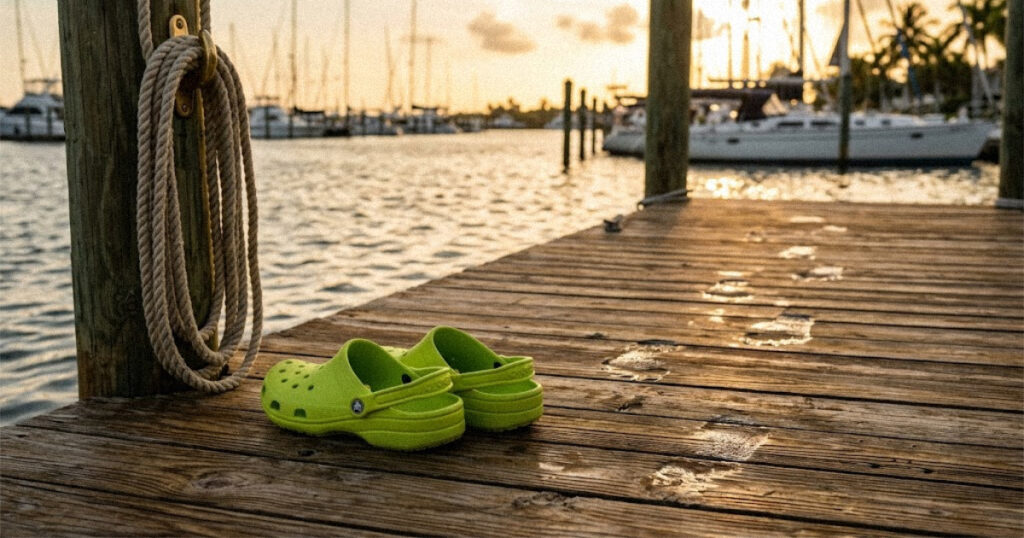
Quick answer: The origin story of Crocs began in 2002. Three friends from Boulder, Colorado, Scott Seamans, Lyndon “Duke” Hanson and George Boedecker Jr., chose to sell a foam boating clog designed by the Canadian company Foam Creations. Their first model, the Beach, sold out its first 200 pairs at the Fort Lauderdale Boat Show.
Crocs later bought the maker, went public in 2006, nearly failed in 2008, and recovered to pass $4 billion in yearly sales.
The Origin Story of Crocs: Three Friends and a Strange Clog
The origin story of Crocs does not start with a fashion idea. It starts with boats.
In 2002, three friends from Boulder, Colorado, came across a foam clog made by a Canadian company called Foam Creations. The shoe was light, soft, waterproof and hard to slip in. Boat owners could wear it on a wet deck without worry. The friends saw something others missed: a very comfortable shoe that people would want to buy.
They worked out a deal to sell the shoe in the United States and put their own name on it. The name “Crocs” came from the idea of an animal that is just as happy in water as on land. Their first tagline was “Get a Grip,” which fit the non-slip sole and the playful mood they wanted.
The Boat Show That Started Everything
In November 2002, the founders took the first Crocs model, called the Beach, to the Fort Lauderdale Boat Show in Florida. The first 200 pairs sold out. That was a small number, but it proved the idea worked.
As the story is often told, the team handed out pairs and told doubters who called the shoe ugly to simply try it on. Once people put them on, the comfort did the selling. That one habit explains a lot about how Crocs became popular in the early years. The product sold itself through the feel, not the look.

Why Croslite Foam Mattered So Much
The secret was the material. Crocs are made from Croslite foam, a closed-cell resin that is soft, light and easy to clean. It does not soak up water, it resists odor, and it gently shapes itself to the foot over time.
The founders understood how valuable this was. In 2004, Crocs bought Foam Creations, including its factory, so it would own the rights to Croslite. This was one of the smartest moves in Crocs history. Without it, a rival could have made the same shoe. With it, Crocs controlled what made the shoe special.
How Crocs Became Popular in the Mid-2000s
Once the company controlled Croslite foam, growth took off. A few things worked together:
- Comfort first: Nurses, chefs, gardeners and parents all wanted shoes they could stand in all day.
- Bright colors: The clogs came in many shades, which made them playful and easy to spot.
- Bold marketing: In 2005, a national campaign called “Ugly Can Be Beautiful” leaned into the shoe’s looks instead of hiding from them.
- Wide distribution: The shoes showed up in more stores and in more countries every year.
Crocs went public in February 2006 on the Nasdaq under the symbol CROX. The offering was reportedly worth over $200 million, one of the biggest ever for a footwear company at that time.
The Jibbitz Charms Idea That Made Crocs Personal
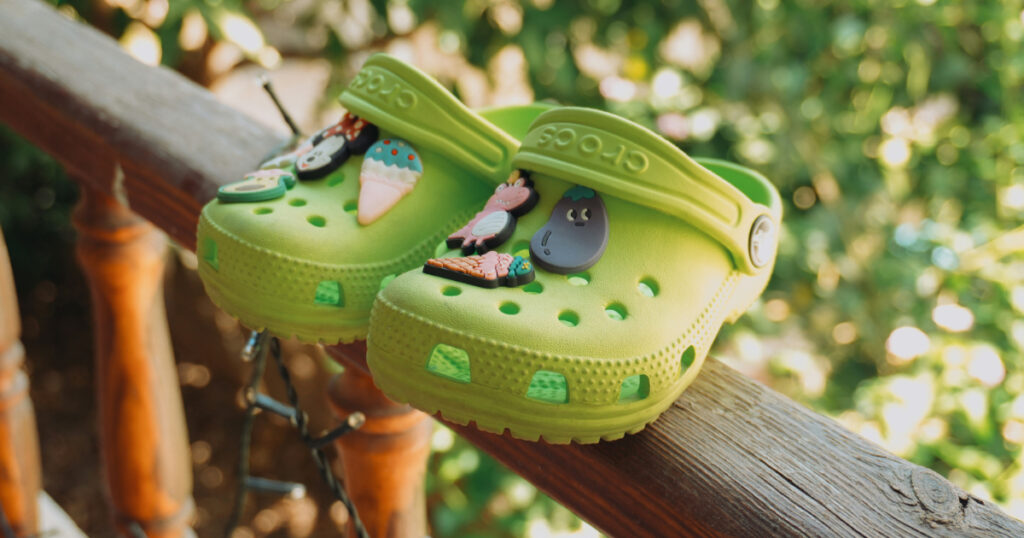
In December 2006, Crocs bought a small Colorado company called Jibbitz. Its idea was simple. Crocs have holes in them, and small snap-on charms fit right into those holes.
These Jibbitz charms turned a plain shoe into a way to show who you are. A child could add a favorite cartoon. An adult could add a joke or a hobby. The charms also gave customers a reason to keep buying after the first pair. By 2025, Jibbitz made up about 8% of Crocs sales.
The Crash: What Went Wrong in 2008
The Crocs history is not only a success story. After the fast rise, the company made a classic mistake: it grew too fast.
It built more factories, bought more companies and made far more shoes than people wanted. Then the 2008 financial crisis hit and shoppers cut back. In the second quarter of 2008, US sales fell 20% compared with the year before. Crocs closed a factory in Canada that employed about 600 people. Its stock price, which had climbed to around $70 at its peak, dropped to close to $1.
Part of the problem was fashion. A shoe that was everywhere in 2007 started to feel old to teenagers by 2008. Cheap foam flip-flops and copycat clogs also took market share.
The Comeback: How Crocs Became Popular Again
Crocs did not disappear. In 2014, a $200 million investment from the Blackstone Group helped steady the company, and Andrew Rees became CEO. His team cut back to what worked: the classic clog, a bolder brand voice, and special collaborations.
Then a few big moments changed how people saw the shoe:
- Fashion week: Balenciaga showed platform Crocs on the runway for its Spring/Summer 2018 collection.
- Music stars: Post Malone’s collaboration first launched in 2018. By December 2020 his fifth Crocs release sold out fast, and he gave 10,000 pairs to workers at 70 hospitals.
- Lockdown comfort: In 2020, people stayed home and wanted easy, comfortable shoes. Crocs had a record year, with sales of about $1.4 billion.
- Red carpet: In April 2021, Questlove wore gold Crocs to the Oscars, and the brand reported record sales for the first quarter of that year.
Another quiet reason Crocs came back is that healthcare workers never stopped wearing them. The clogs are easy to wipe clean and comfortable on long shifts.’
Crocs Today: A Brand Worth Over $4 Billion
In 2022, Crocs bought the casual shoe brand HeyDude for about $2.3 billion to grow beyond clogs. Results since then show both strength and challenge.
For the full year 2025, Crocs reported revenue of just over $4 billion. About $3.3 billion came from the Crocs brand and $715 million from HeyDude. Clogs made up 74% of sales. Growth outside the United States was strong, up 11% for the year, while North America was weaker. HeyDude had a hard year and the company recorded large write-downs tied to it.
So the story is still moving. Crocs is no longer a one-shoe company, yet its heart is still the clog that three friends took to a boat show.
What the Origin Story of Crocs Teaches Us
The origin story of Crocs offers a few grounded lessons:
- Own what makes you different – Buying Croslite foam rights protected the whole business.
- Do not hide what people tease you about – The “Ugly Can Be Beautiful” idea turned a weakness into a talking point.
- Growth can hurt – Making too much, too fast, nearly ended the company.
- Let customers make it theirs – Jibbitz charms gave people a way to play with the product.
- Comfort wins in the long run – Fashion changes, but tired feet never stop wanting relief.
Frequently Asked Questions
Who founded Crocs?
Crocs was founded in 2002 by Scott Seamans, Lyndon “Duke” Hanson and George Boedecker Jr. in Colorado.
Where did the Crocs design come from?
The first clog design came from the Canadian company Foam Creations. Crocs later bought the company in 2004.
What are Crocs made of?
They are made from Croslite foam, a closed-cell resin that is light, water-friendly and easy to clean.
What are Jibbitz charms?
Jibbitz charms are small snap-on decorations that fit into the holes of Crocs. Crocs bought the Jibbitz company in 2006.
Why did Crocs nearly fail in 2008?
The company expanded too fast, built too much inventory and then faced weak spending during the financial crisis.
How did Crocs become popular again?
Fashion collaborations, celebrity partners, a focus on the classic clog and the comfort-first mood of 2020 all helped.
The origin story of Crocs shows that a product does not need to look perfect to win. It needs to solve a real problem, and it needs a team willing to learn from mistakes. From a Florida boat show to more than $4 billion in sales, Crocs history proves that comfort, a little courage and a lot of color can take a simple foam clog around the world.